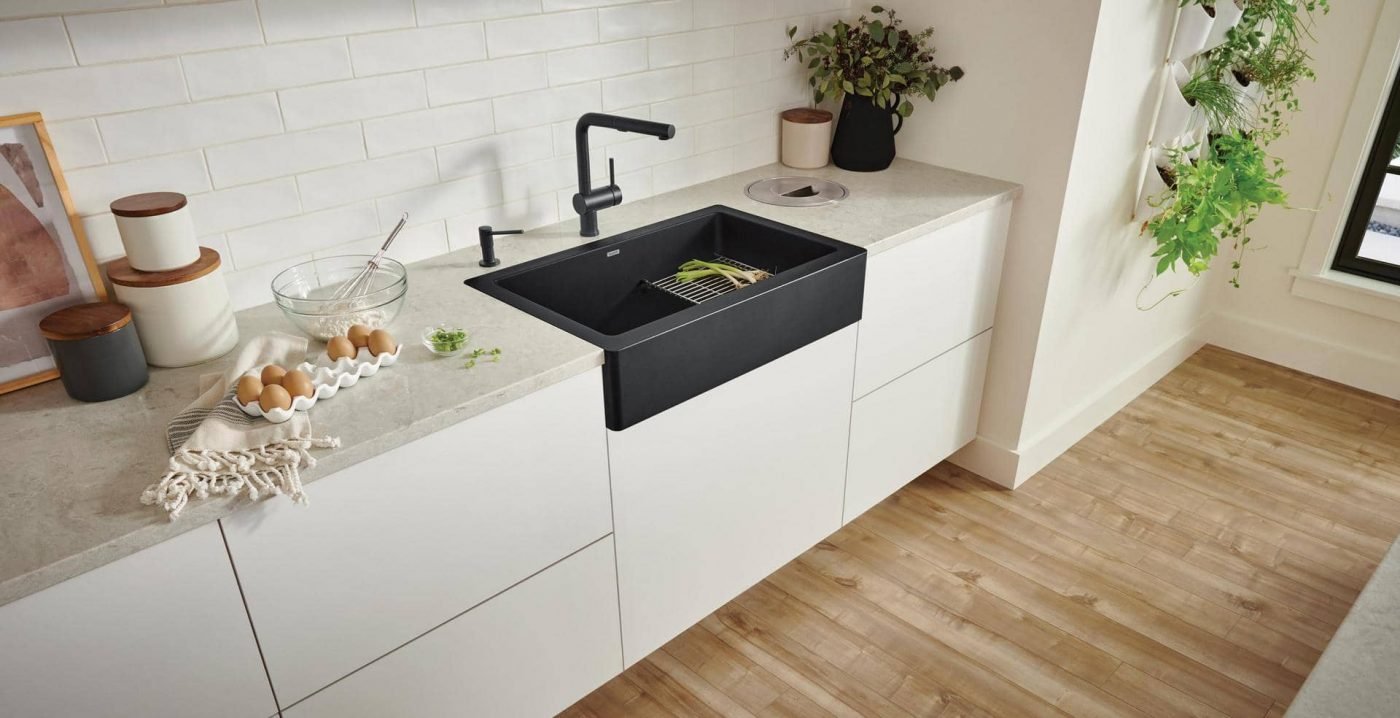
A farmhouse kitchen sink does more than hold dishes. It often sets the tone for the whole room, adding that familiar apron-front shape, extra washing space, and a sense of timeless character that works in everything from a rustic farmhouse kitchen to a cleaner modern farm kitchen.
If you are planning a remodel or just collecting inspiration, these ideas focus on sink styles, finishes, layouts, and pairings that can make your kitchen feel warmer, more functional, and more memorable. From classic white fireclay to compact options for very small kitchen ideas, each one is designed to help you shape a farmhouse kitchen that feels right for your home.
1. Classic White Apron-Front Sink With Shaker Cabinets
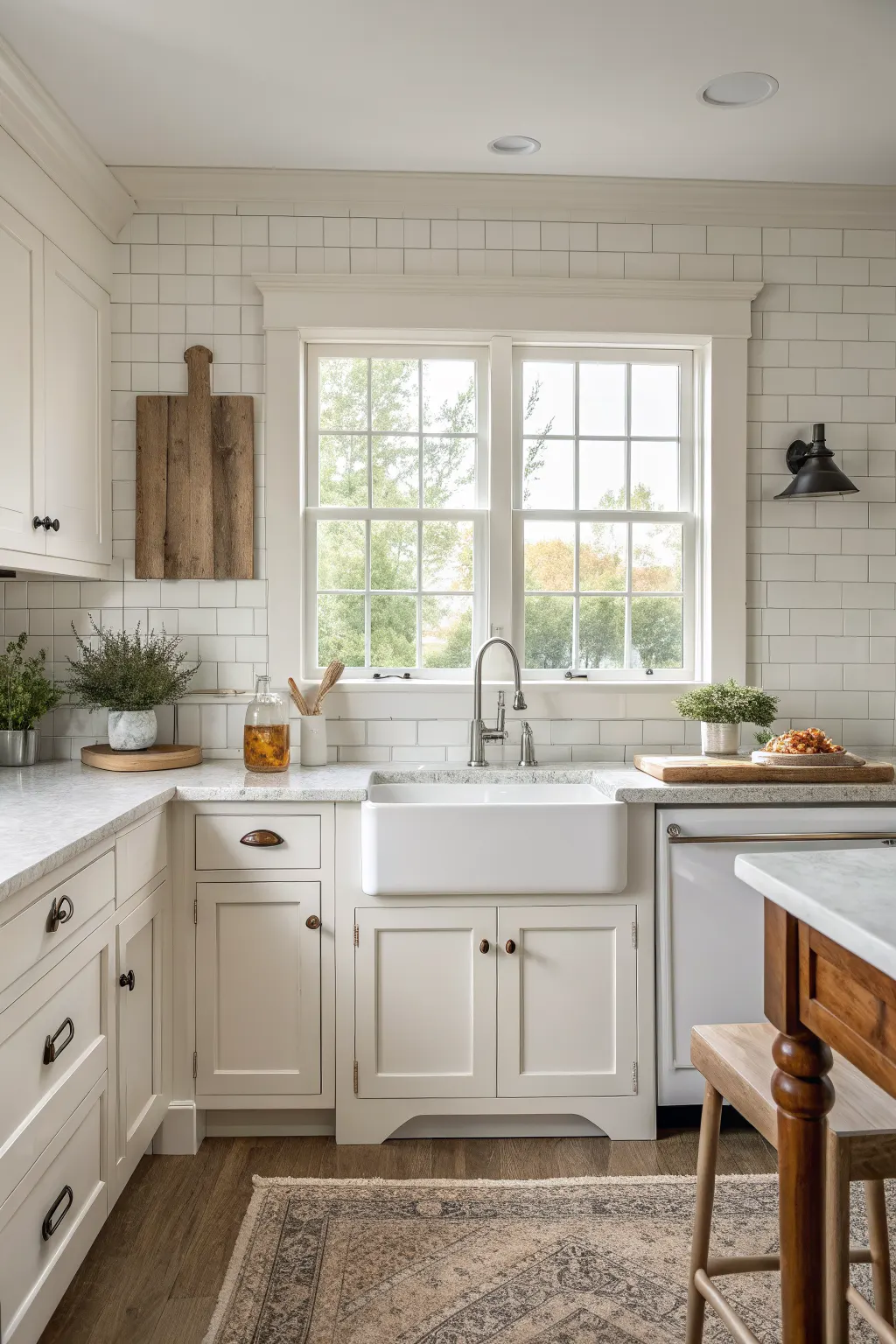
A white apron-front sink paired with shaker cabinets is one of the most enduring looks in a farmhouse kitchen. It feels clean, simple, and familiar without looking overly themed. The flat-front cabinetry keeps the room grounded, while the exposed sink front becomes a quiet focal point.
This combination works especially well with brushed nickel hardware, soft white walls, and a neutral backsplash. If you want a timeless base you can dress up later with wood accents, vintage lighting, or seasonal decor, this is a reliable starting point.
2. Deep Fireclay Sink for a True Country Farmhouse Kitchen
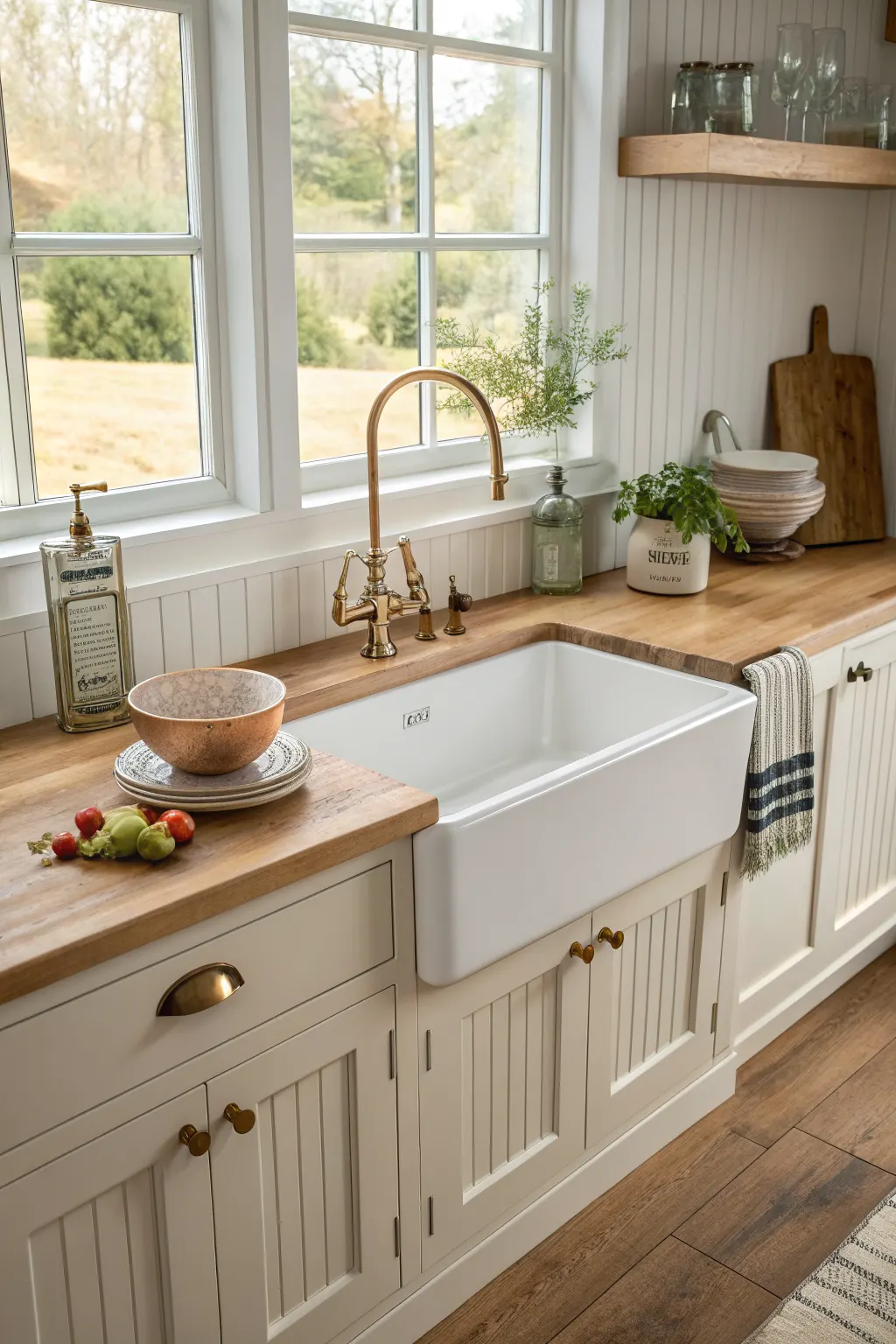
A deep fireclay sink leans into the traditional country farmhouse kitchen look. The generous basin makes everyday prep easier and gives you room for stockpots, baking trays, and large mixing bowls that would crowd a shallower sink.
Fireclay also has the crisp, substantial appearance many people want in a farmhouse kitchen. Pair it with beadboard details, warm wood floors, and classic cabinet latches if you want the sink to feel rooted in old-house charm rather than strictly modern styling.
3. Matte Black Farmhouse Sink in a Modern Farm Kitchen
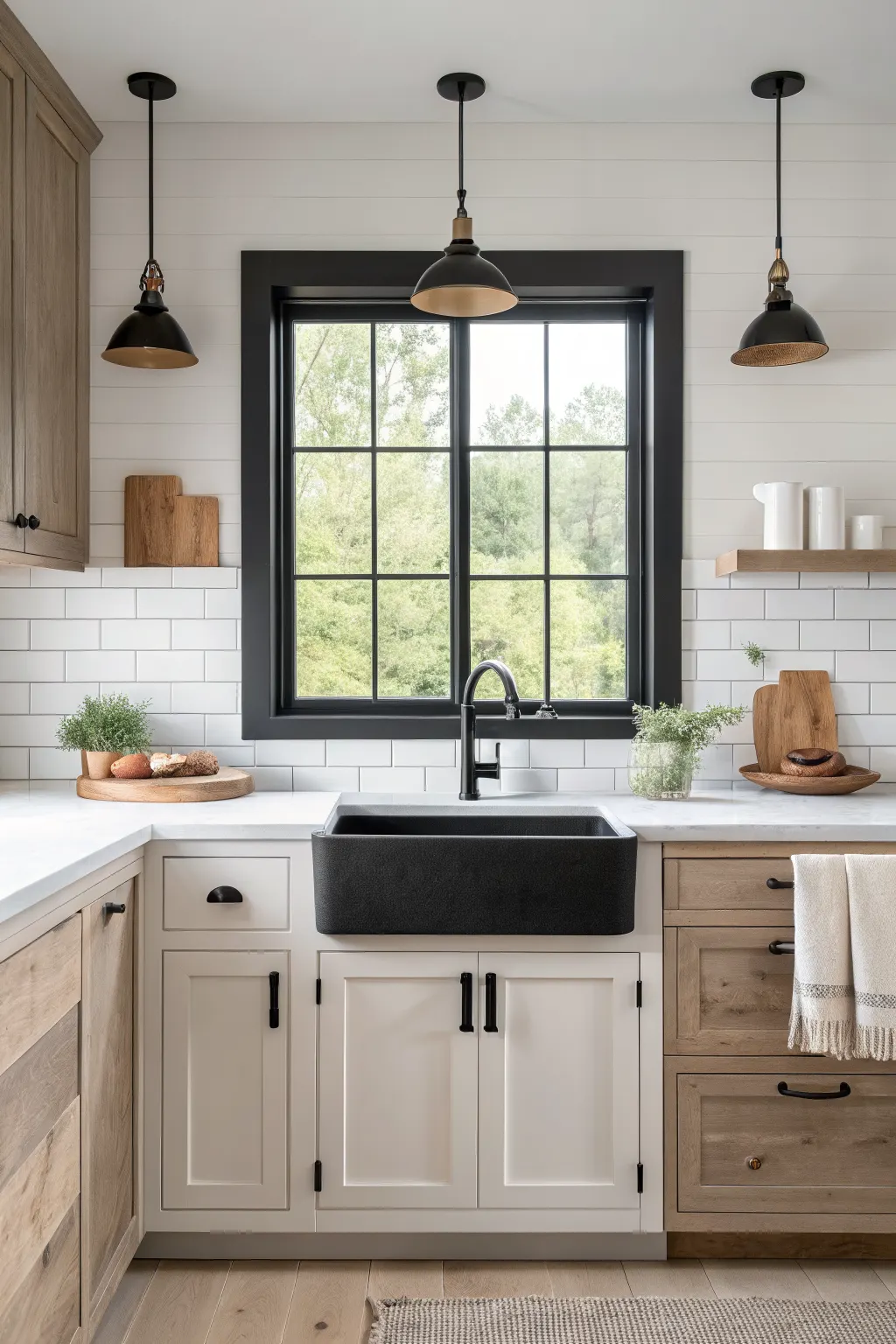
If you want stronger contrast, a matte black farmhouse sink can make a modern farm kitchen feel instantly more current. The dark finish creates a bold anchor against white oak, pale quartz, or off-white cabinets, and it gives the apron-front silhouette a sharper edge.
This look works best when repeated in small doses around the room, such as black pendants, window frames, or cabinet pulls. That repetition helps the sink feel integrated instead of standing alone as a dramatic accent.
4. Hammered Copper Sink for Warm Rustic Texture
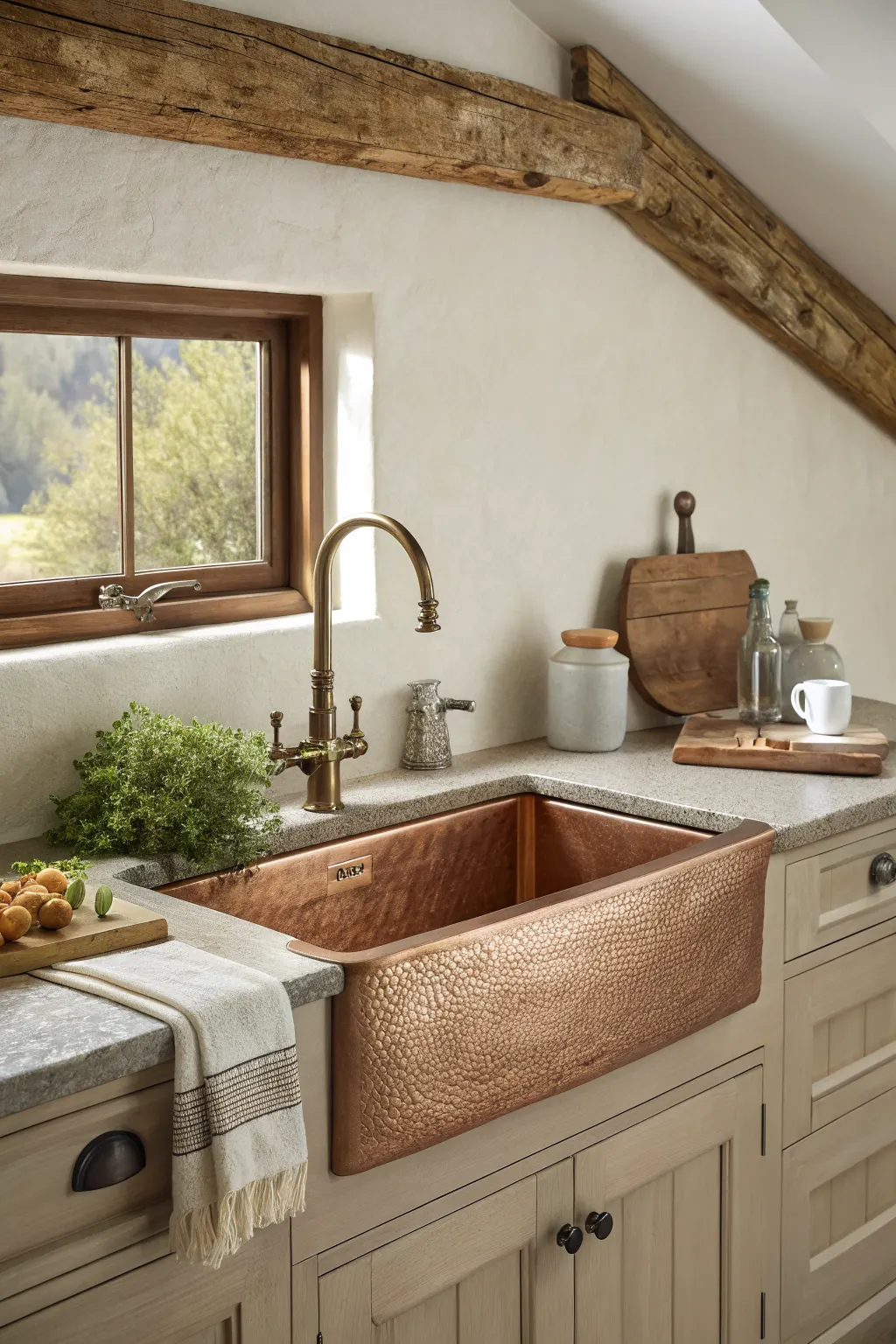
A hammered copper farmhouse sink adds handcrafted texture that suits a rustic farmhouse kitchen beautifully. Its surface catches light in a softer way than painted or polished materials, and the living finish gains character over time.
To keep the look balanced, pair copper with muted counters and natural finishes rather than too many competing statement pieces. A simple plaster wall, reclaimed wood beam, or aged brass faucet helps the sink feel warm and intentional rather than overly ornate.
5. Natural Stone Farmhouse Sink in an Earthy Kitchen
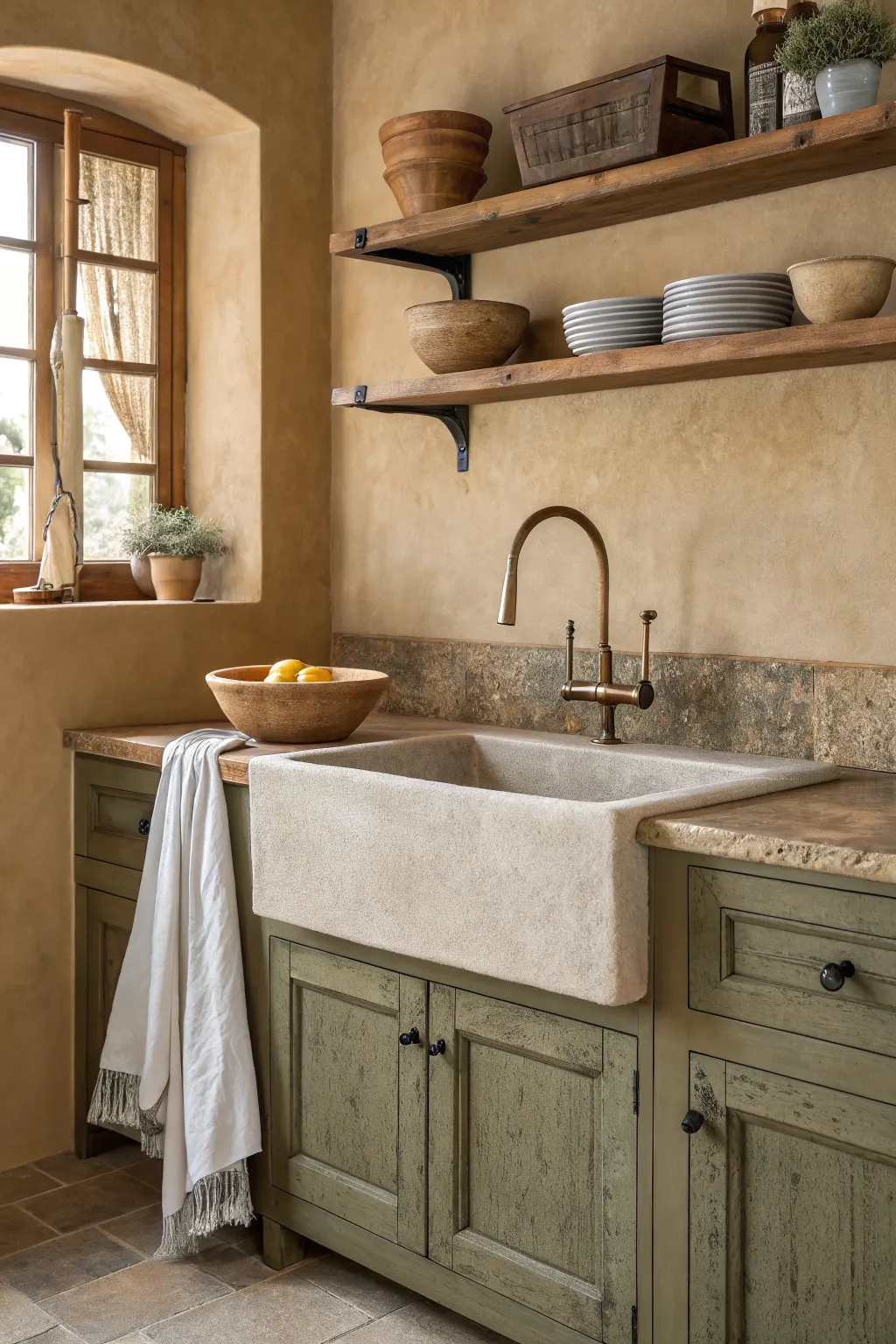
For an earthy kitchen, consider a farmhouse sink in a stone-inspired material such as soapstone or a travertine-look finish. These sinks bring weight and depth to the room, especially when used with clay tones, olive cabinetry, or textured tile.
The appeal here is not brightness but grounded beauty. A stone-look sink can make the kitchen feel calmer and more organic, especially if you continue that mood with linen textiles, wood shelving, and matte finishes.
6. Stainless Steel Apron Sink for a Modern Farmhouse Blend
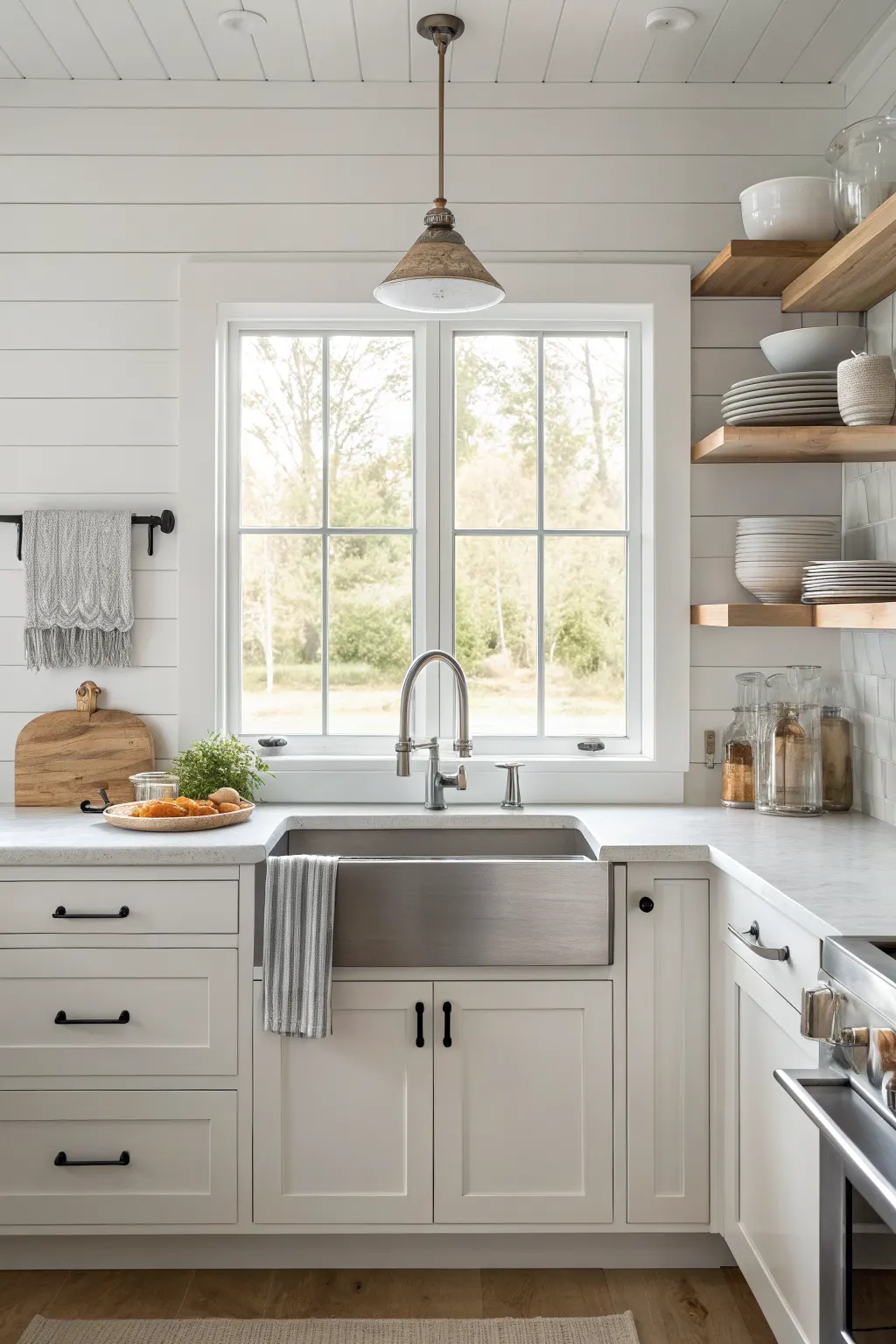
Stainless steel is an easy fit if you love farmhouse style but want practicality first. An apron-front stainless sink keeps the recognizable farmhouse shape while giving your workspace a sleeker, more modern farmhouse kitchen design feel.
It is especially useful in homes where the kitchen gets heavy daily use. Pair it with slab-front or simple shaker cabinetry, clean-lined lighting, and low-maintenance counters for a design that feels fresh without losing the farmhouse identity.
7. Double-Bowl Farmhouse Sink for Busy Family Kitchens
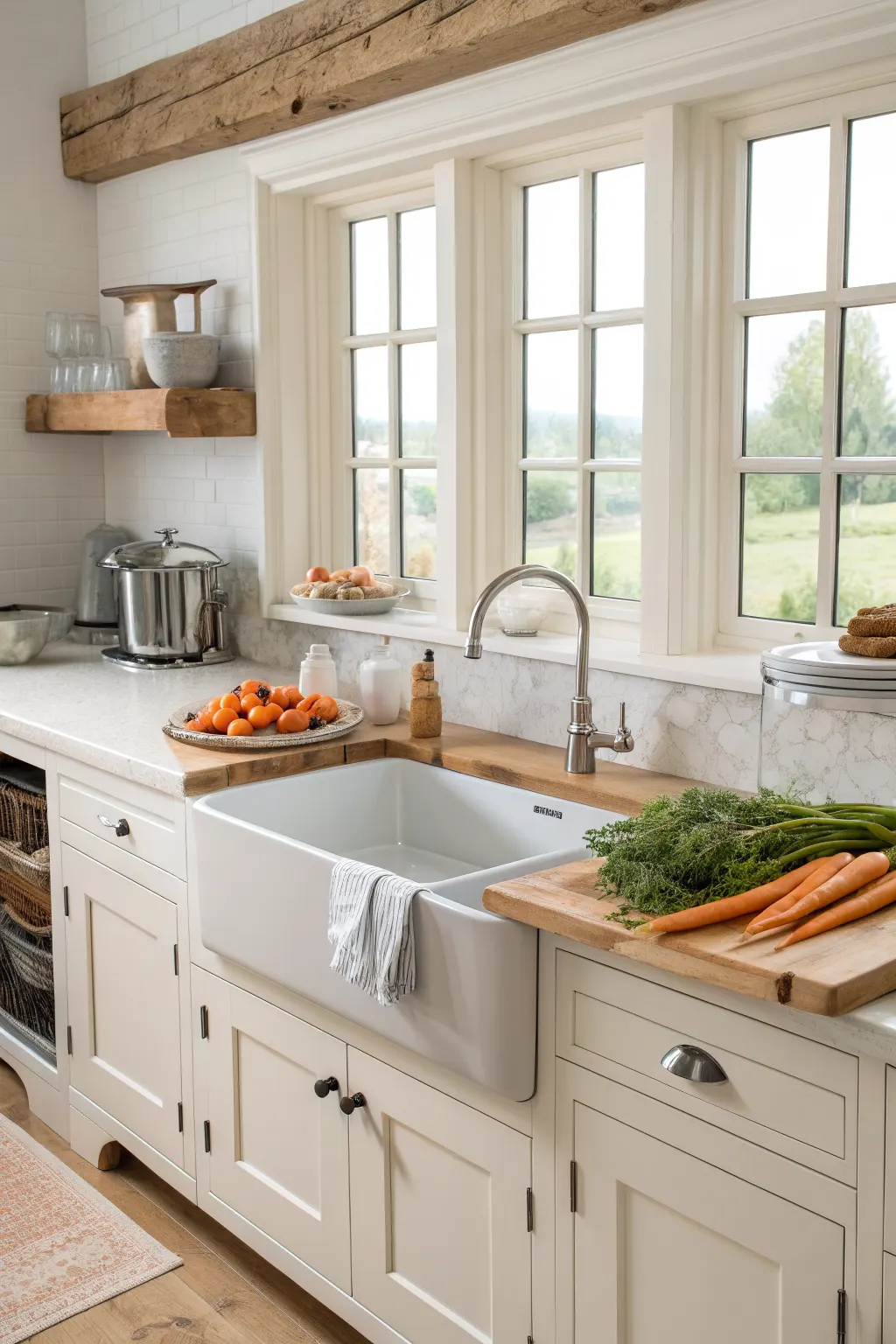
A double-bowl farmhouse sink is helpful in a household that needs to multitask. One side can hold rinsing or soaking dishes while the other remains open for food prep, handwashing, or filling pots.
This setup is ideal if your farmhouse kitchen serves as a true family hub. To make it feel visually calm, choose a divided sink with a low center partition or keep the surrounding materials simple so the sink area still feels open and uncluttered.
8. Single-Basin Oversized Sink for Effortless Cleanup
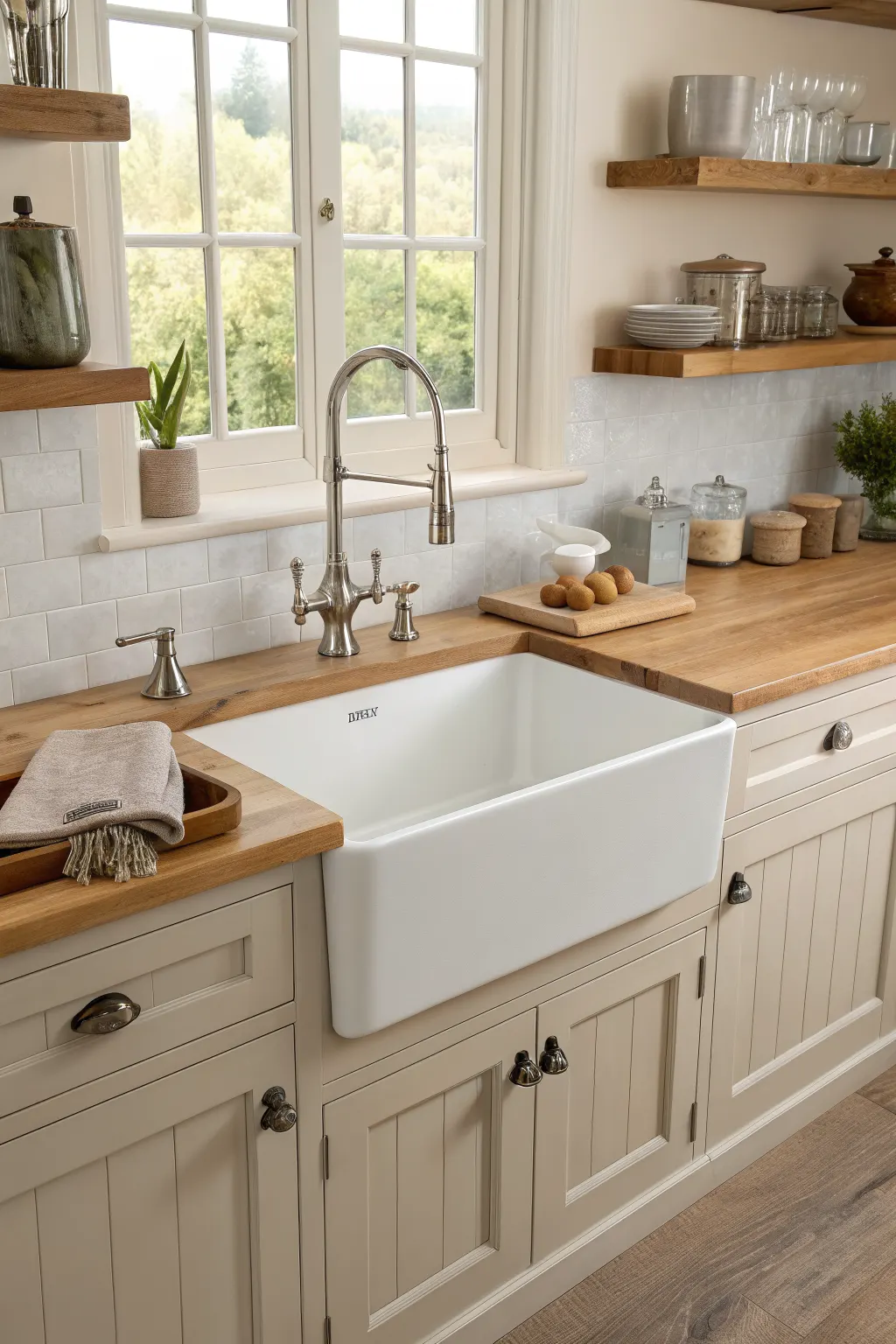
If you wash large cookware often, a single-basin oversized sink is one of the most practical farmhouse kitchen choices. The uninterrupted interior makes it easier to clean roasting pans, sheet trays, and awkward serving pieces without fighting a center divider.
This style also creates a cleaner visual line, which is why it works so well in both rustic and modern settings. Add a pull-down faucet and a fitted bottom grid if you want the sink to work hard while staying easy to maintain.
9. Fluted Front Sink for Subtle Vintage Detail
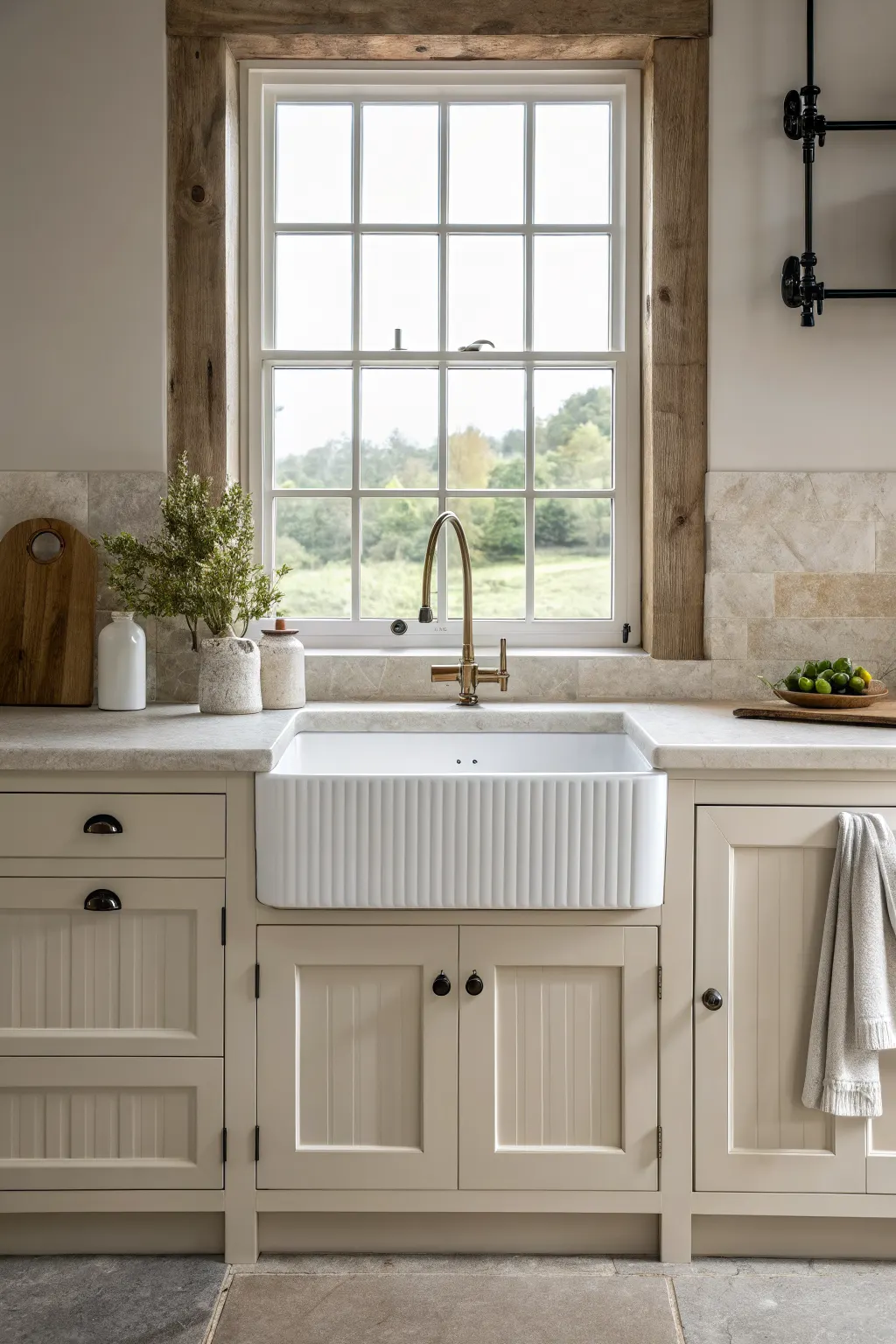
A fluted or ribbed apron-front sink adds detail without overwhelming the room. The texture gives the sink a slightly vintage feel, making it a great option for a farmhouse kitchen that needs more personality than a plain smooth front but still wants a timeless look.
Because the front already has visual interest, keep nearby finishes restrained. Plain cabinet doors, a simple counter edge, and understated hardware let the sink detailing stand out in a refined way.
10. Reclaimed Wood Accents Around the Sink Zone
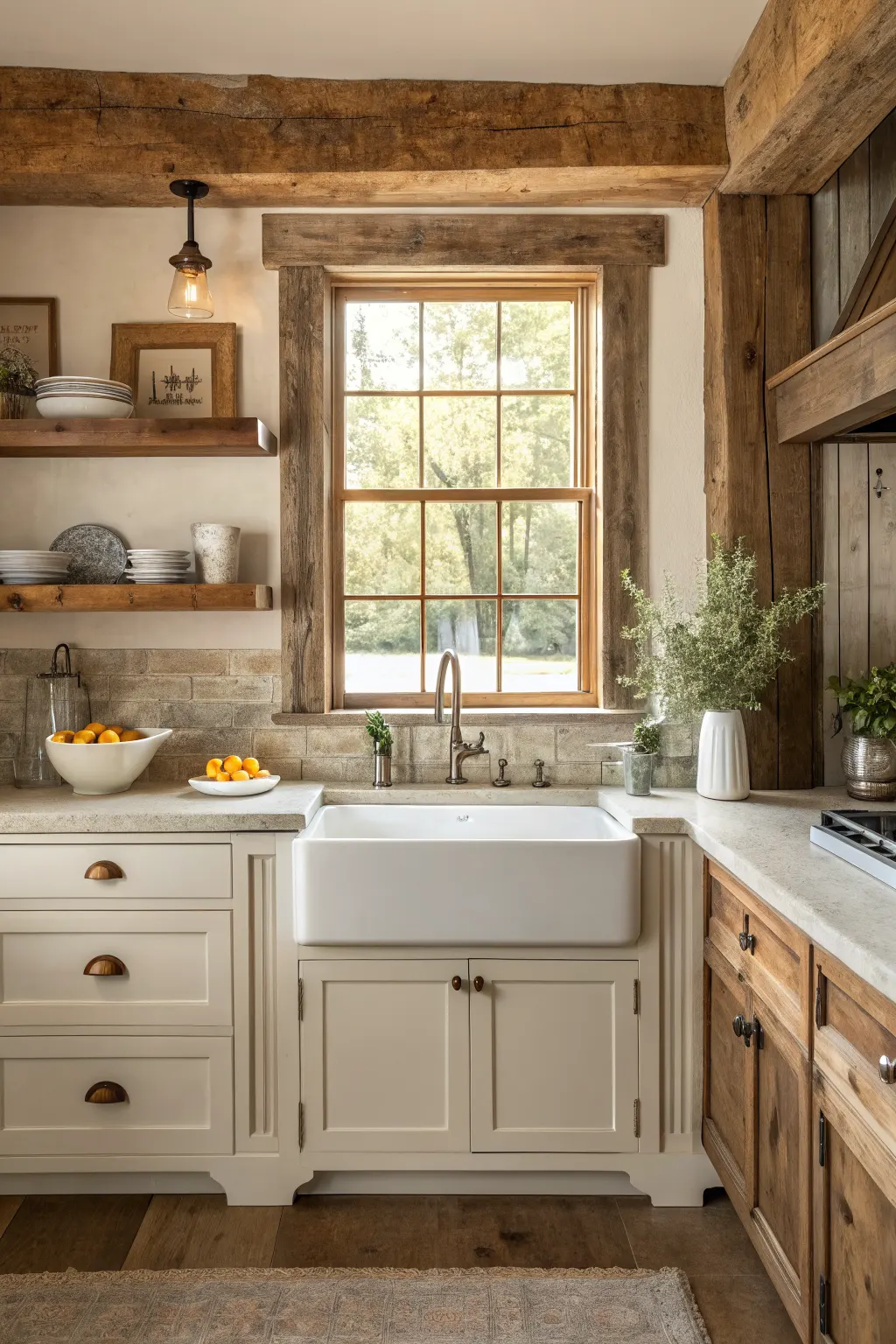
One of the easiest ways to make a farm style kitchen feel warmer is to build the sink area out with reclaimed wood accents. That could mean open shelves, a chunky floating ledge, window trim, or a small framed panel detail around the sink wall.
The contrast between a smooth apron-front sink and weathered wood adds depth and softness. If you do not want full rustic treatment, use reclaimed wood sparingly so the zone feels collected instead of heavy.
11. Sink-Under-Window Layout for Bright Everyday Function
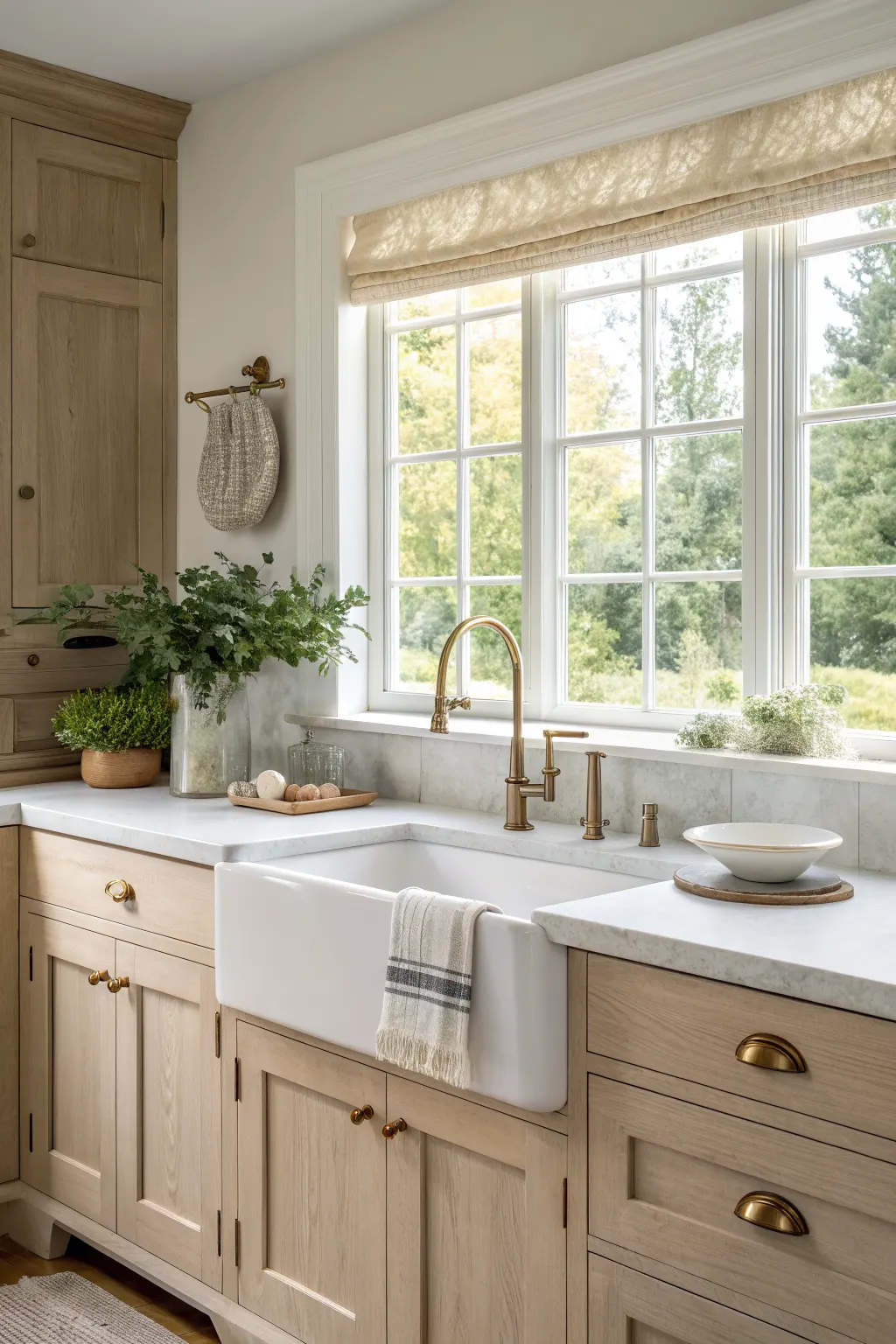
Centering the sink under a window is a classic farmhouse kitchen layout for good reason. It brings in natural light where you actually work, makes dishwashing feel less closed in, and gives the apron-front sink a natural place of importance.
This layout also works across different styles, from country farmhouse kitchen to modern farm kitchen. Add a woven shade, cafe curtain, or simple brass sconce nearby if you want to increase charm without blocking the light.
12. Brass Faucet Pairing With a Crisp Apron Sink
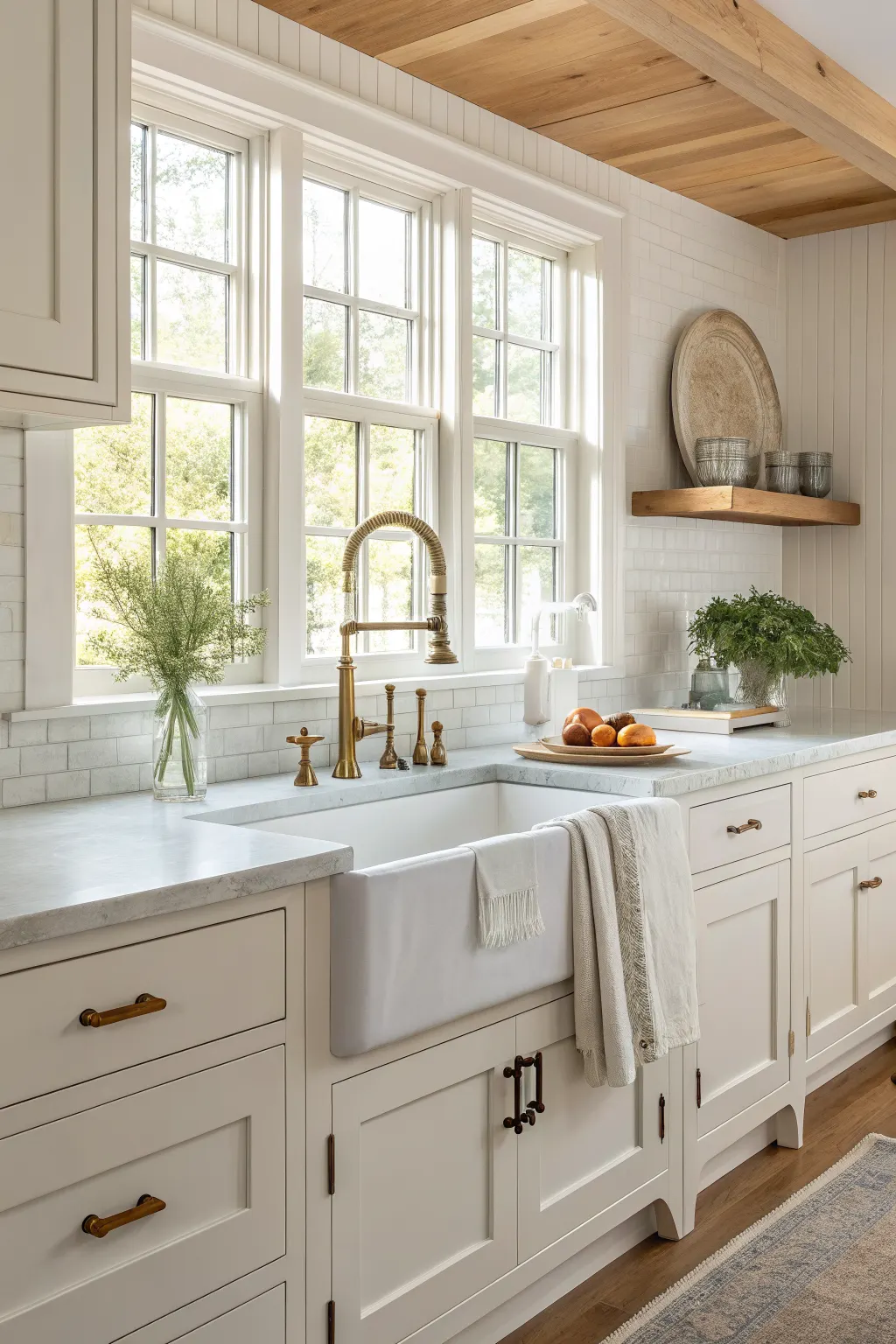
A brass faucet can completely change the mood of a white farmhouse sink. The warm finish softens the crispness of white cabinetry and gives the sink area a more layered, collected look that feels charming rather than stark.
If you like mixed materials, brass works especially well with natural wood stools, creamy walls, and lightly veined stone counters. For more fixture inspiration, a guide to kitchen faucets for modern homes can help you compare styles that still suit a farmhouse setting.
13. Bridge Faucet and Apron Sink for Vintage Character
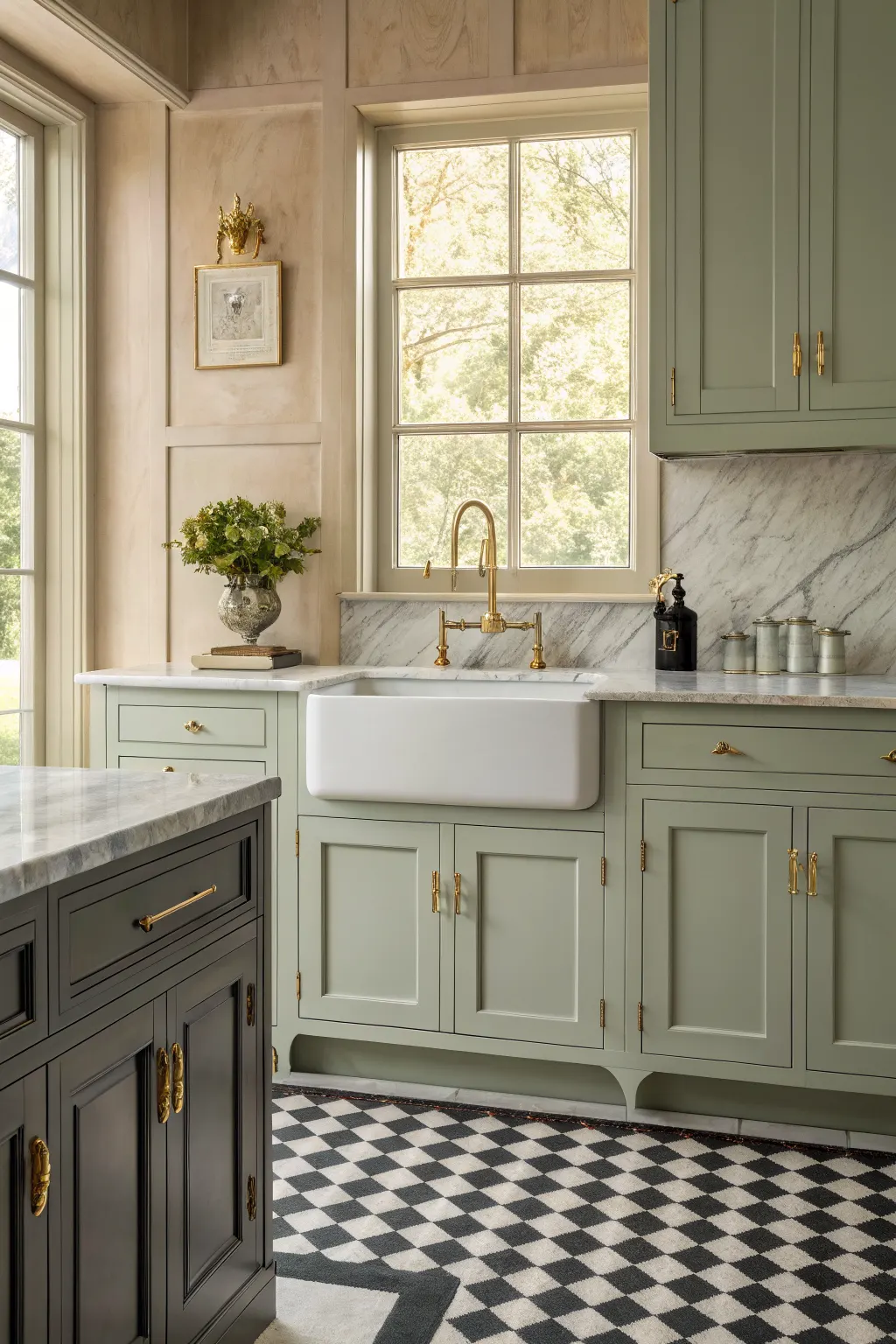
A bridge faucet is one of the best pairings if you want your farmhouse kitchen to feel heritage inspired. Its old-world shape adds authenticity and visual structure, especially with a classic apron-front sink and traditional cabinet details.
This combination feels especially strong in homes with checkerboard floors, unlacquered brass, or painted cabinetry in muted shades. It is a good choice when you want the sink wall to feel established and storied rather than newly built.
14. Skirted Sink Base for Cottage-Inspired Softness
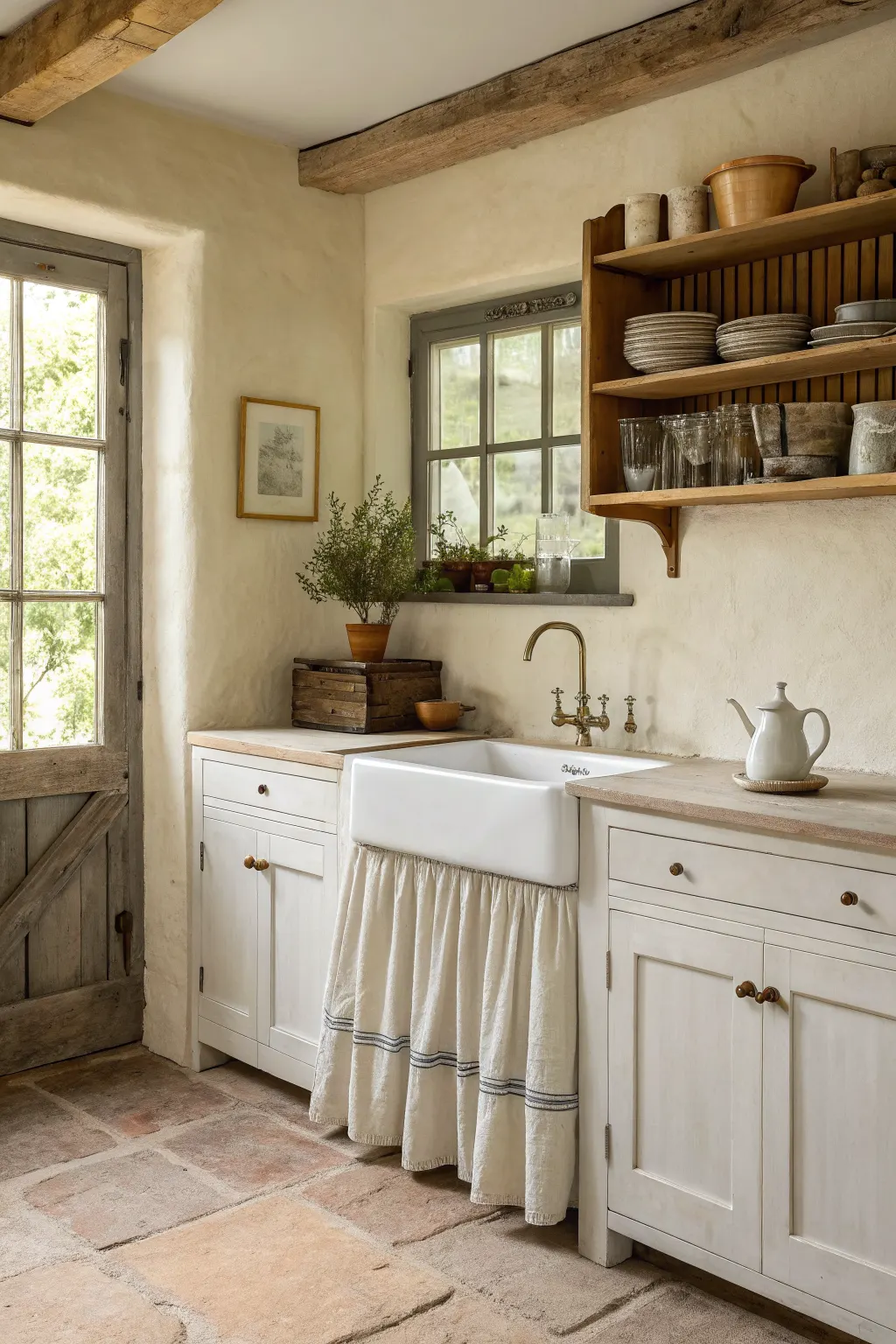
Replacing the sink base cabinet doors with a fabric skirt creates a softer, more relaxed take on the farmhouse kitchen look. It brings a cottage element into the room and works well if you want your kitchen to feel especially cozy and approachable.
Choose a simple stripe, small gingham, or neutral linen so the skirt complements the sink instead of overpowering it. This can also be a smart visual trick in older kitchens where a little softness helps disguise irregular cabinetry or awkward base details.
15. Butcher Block Countertops Framing the Sink
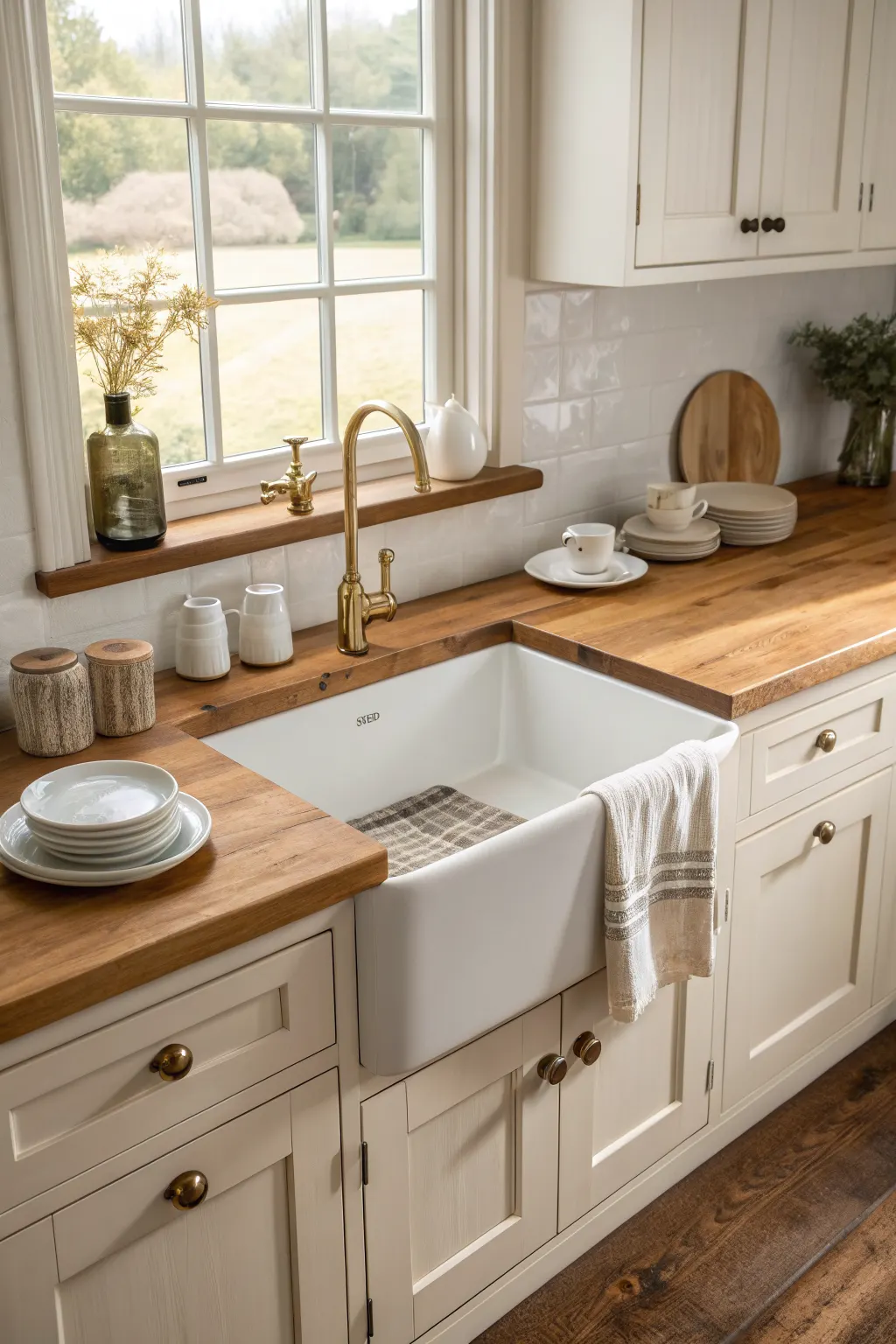
Butcher block around a farmhouse sink brings in natural warmth right where the eye lands. The contrast between wood counters and a white apron front is welcoming and unfussy, making it a favorite combination in a cozy kitchen.
To keep the space balanced, use wood where it gets the most visual impact and be realistic about maintenance near water. Even a partial butcher block run beside the sink can give you that welcoming farmhouse feel without requiring every countertop to be wood.
16. Quartz Countertops With a Farmhouse Sink for Easy Care
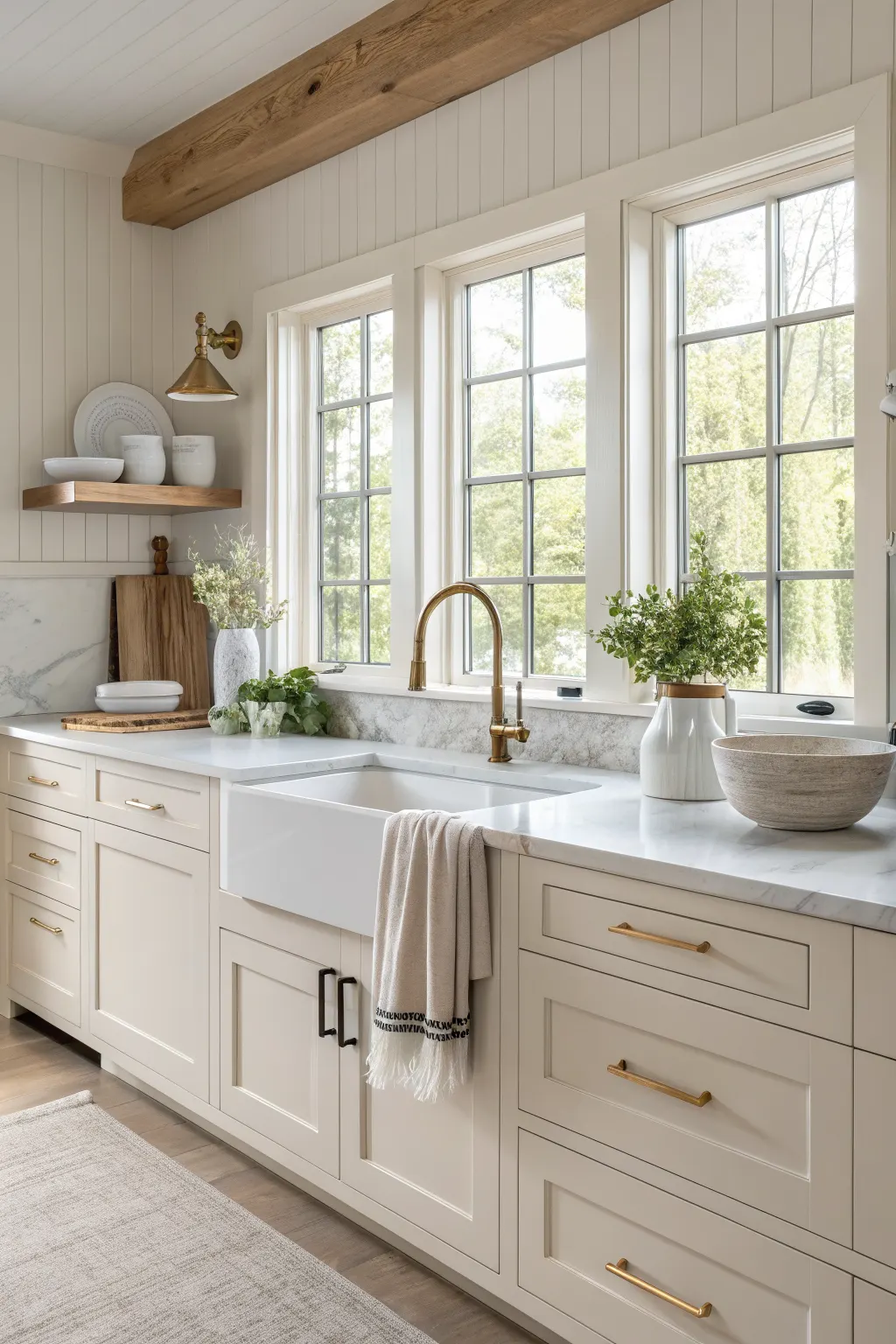
If you want a low-fuss update, quartz countertops paired with a farmhouse sink offer an easy-care version of the style. You still get the signature sink silhouette, but the surrounding surfaces feel streamlined and durable enough for a busy modern farmhouse kitchen design.
Soft white, warm greige, or lightly veined quartz keeps the look inviting rather than clinical. If you are weighing surface options, exploring more on quartz kitchen countertops can help you narrow down the right finish for your layout.
17. Open Shelving Above the Sink for Styled Storage
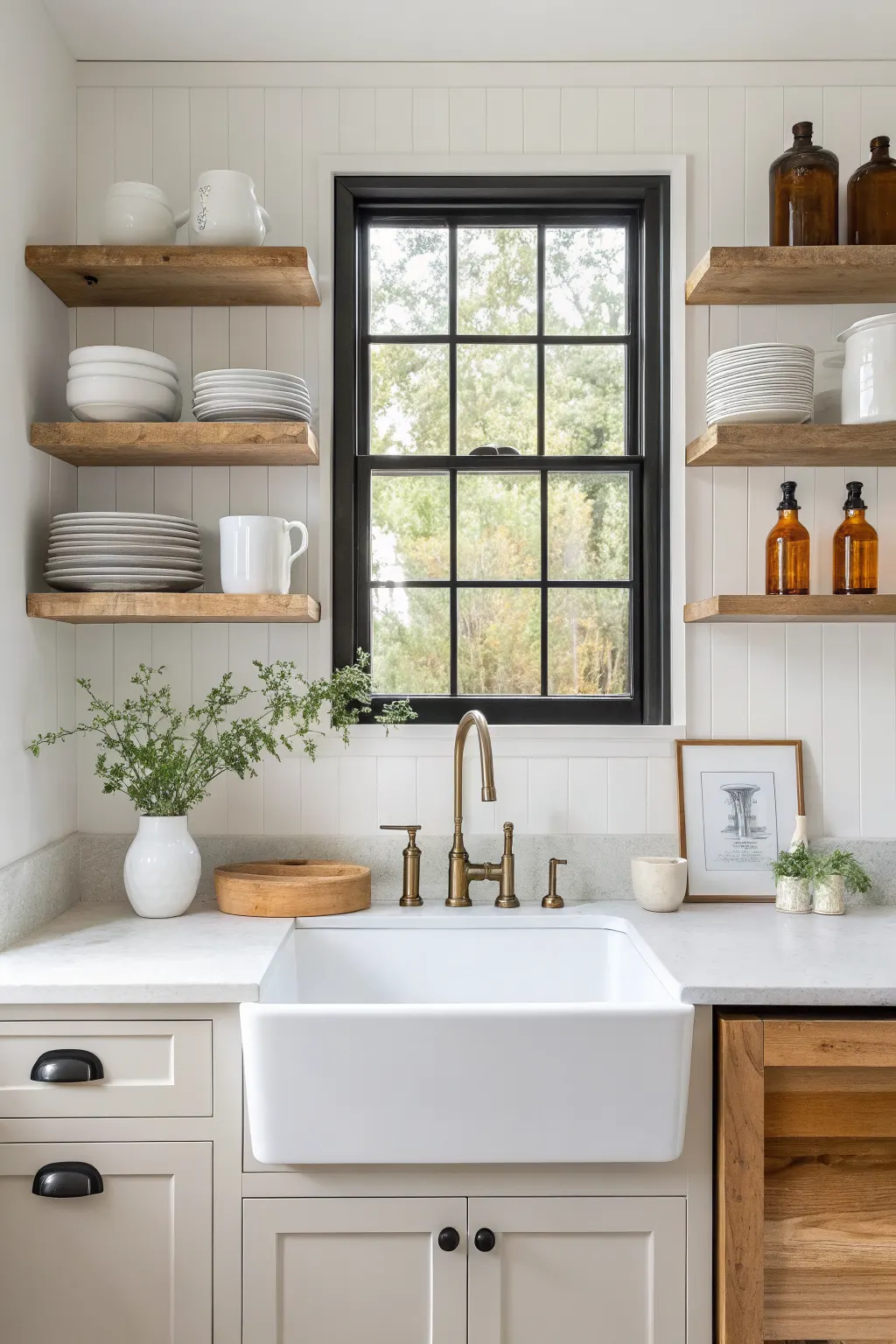
Open shelving above the sink can make the wall feel lighter, especially in an open kitchen design or a smaller room. It also gives you a place to display everyday dishes, amber bottles, cutting boards, or a few pieces of pottery that support the farmhouse mood.
The key is restraint. Keep the shelf styling practical and edited so the sink wall does not look crowded. A couple of stacks of dishes, one trailing plant, and a small framed print are often enough.
18. Farmhouse Sink in a Very Small Kitchen Nook
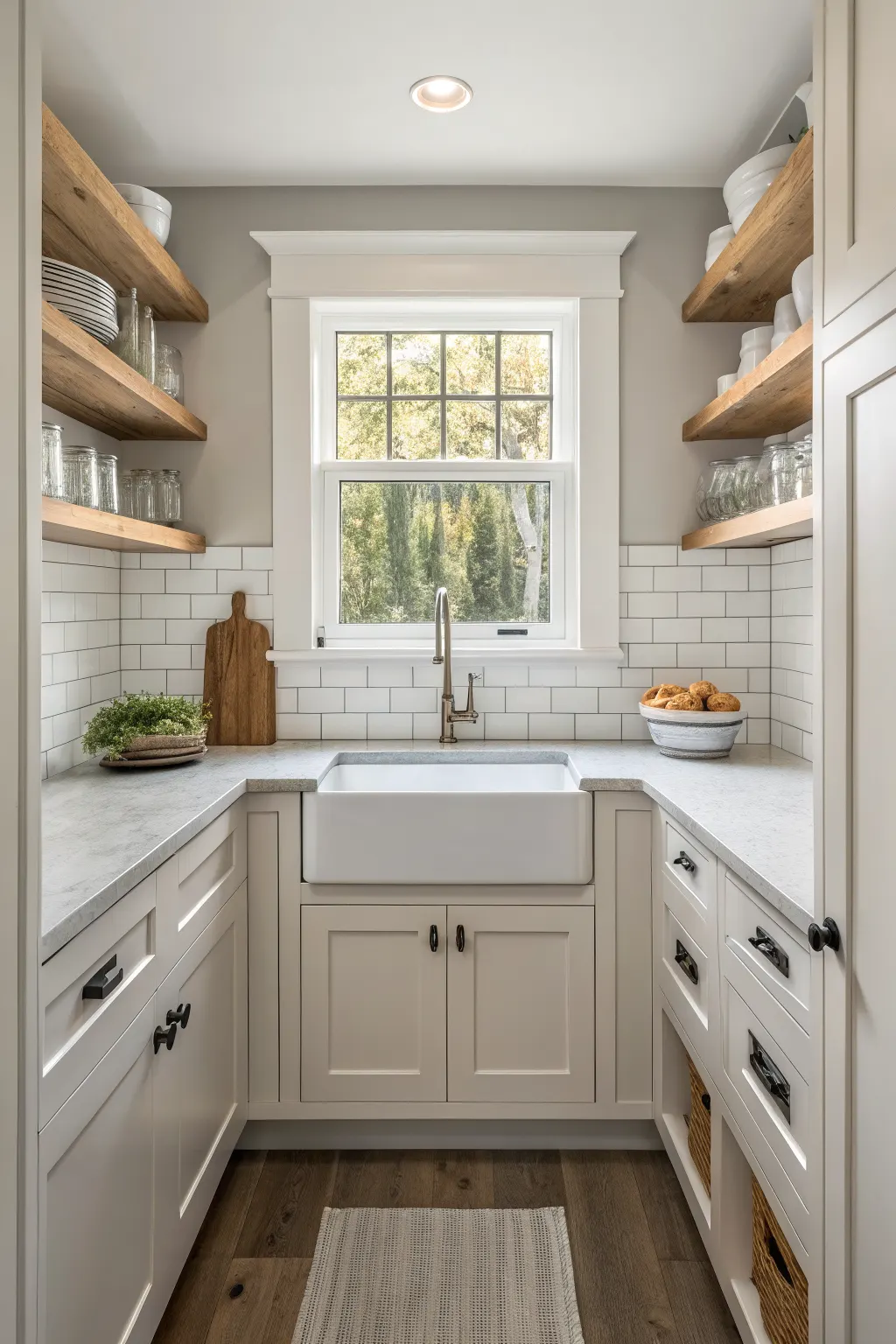
A farmhouse sink can absolutely work in a compact layout. For very small kitchen ideas, look for narrower apron-front models and combine them with vertical storage, slim faucet profiles, and clever drawer organization nearby.
In a small nook, the sink should feel purposeful, not oversized for the room. A lighter palette, reflective backsplash, and open shelf or two can help preserve visual breathing room while still giving you that unmistakable farmhouse kitchen charm.
19. Corner Farmhouse Sink to Maximize Awkward Layouts
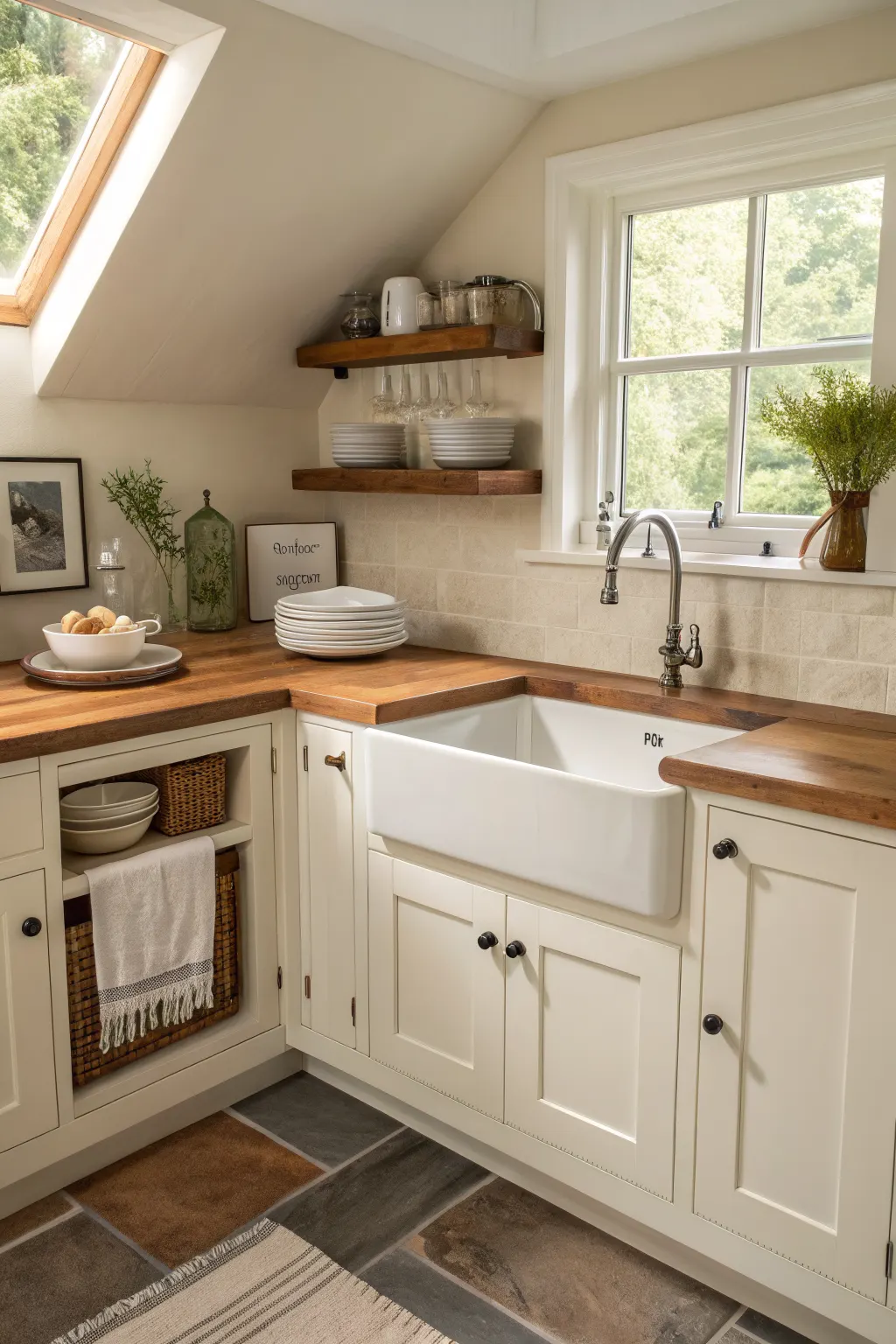
A corner farmhouse sink is a less common solution, but it can be surprisingly effective in kitchens with unusual footprints. It allows you to turn an underused angle into a hard-working prep and cleanup zone while still showcasing the apron-front style.
This idea works best when the surrounding counters are carefully planned so you keep enough landing space on both sides. It is especially useful in remodels where doors, windows, or structural features limit a more standard sink placement.
20. Island Prep Sink With a Mini Farmhouse Front
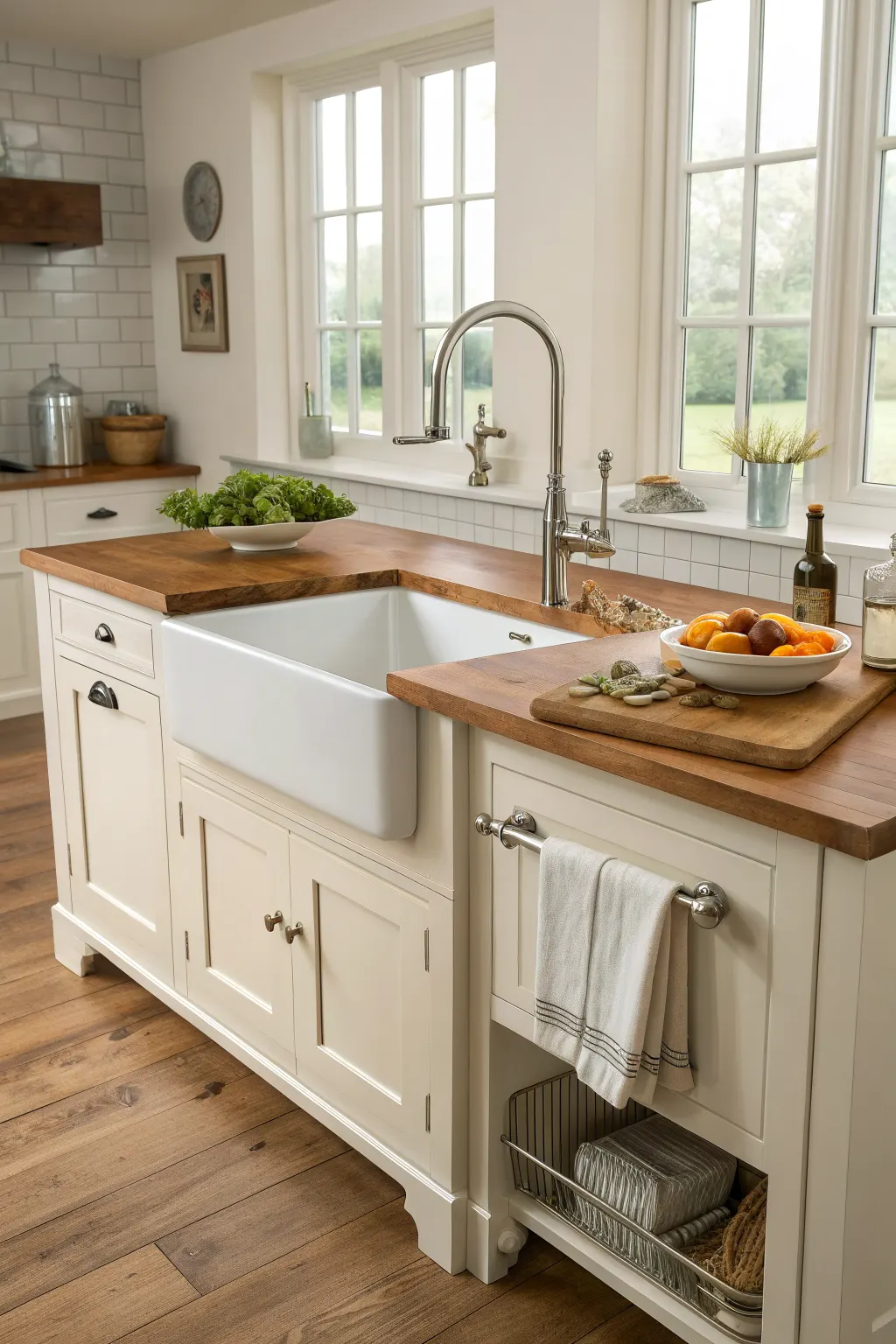
In a larger farmhouse kitchen, a secondary prep sink on the island can add a lot of convenience. Choosing a smaller apron-front version keeps that extra sink from looking too utilitarian and ties it visually to the main kitchen sink.
This is a smart setup for households that cook often or entertain regularly. The mini farmhouse front turns the island into more than a workspace; it becomes another design moment that reinforces the room’s character.
21. Soft Sage Cabinetry With a White Farmhouse Sink
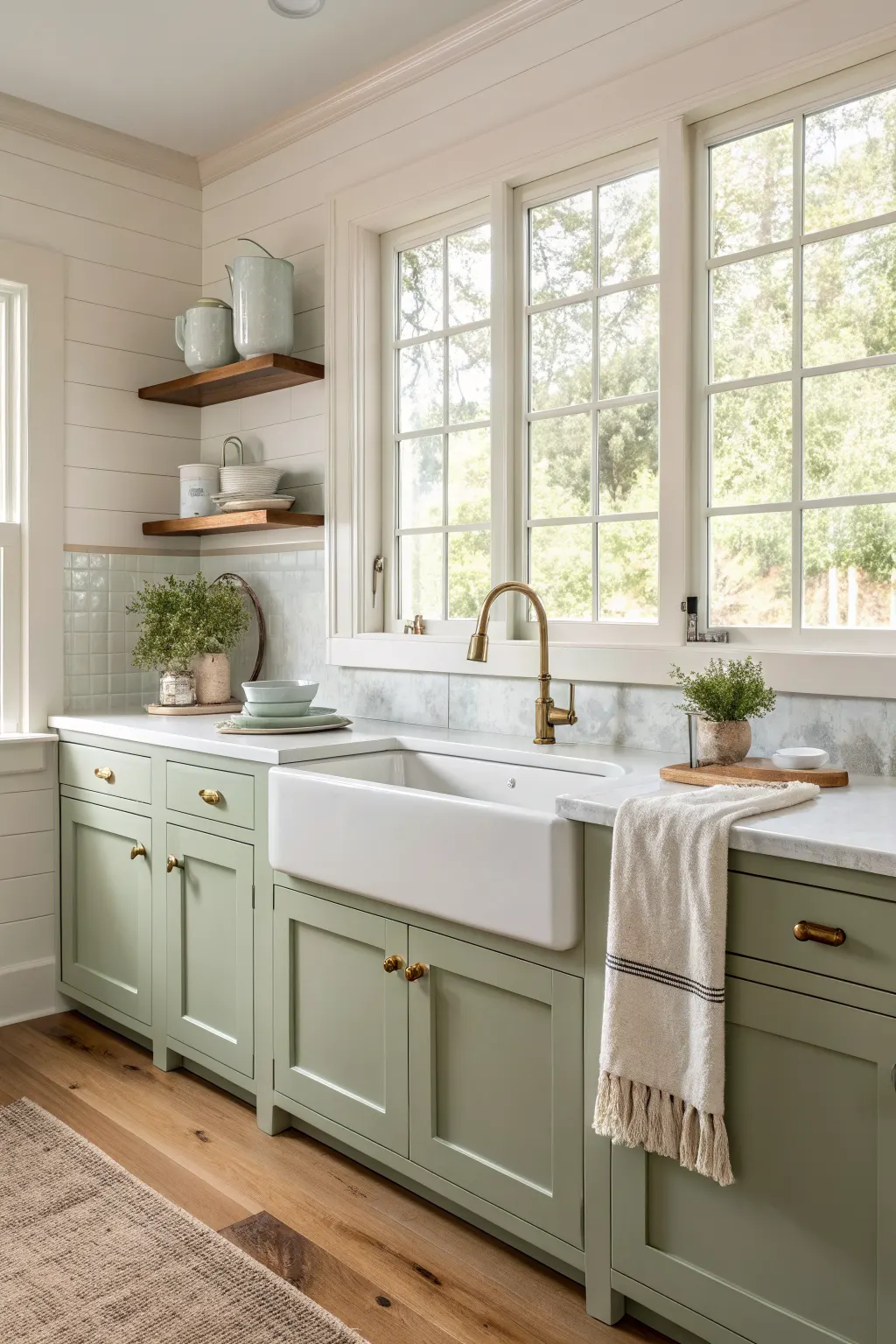
Soft sage cabinets and a white farmhouse sink create a soothing palette that feels fresh and lived in at the same time. The green adds color without shouting, and the crisp sink keeps the kitchen from feeling too muted.
This combination suits both vintage and updated homes. If you are choosing a paint direction, browsing more kitchen cabinet color ideas can help you compare sage with other warm, farmhouse-friendly shades.
22. Cream and Wood Palette for a Soft Farm Style Kitchen
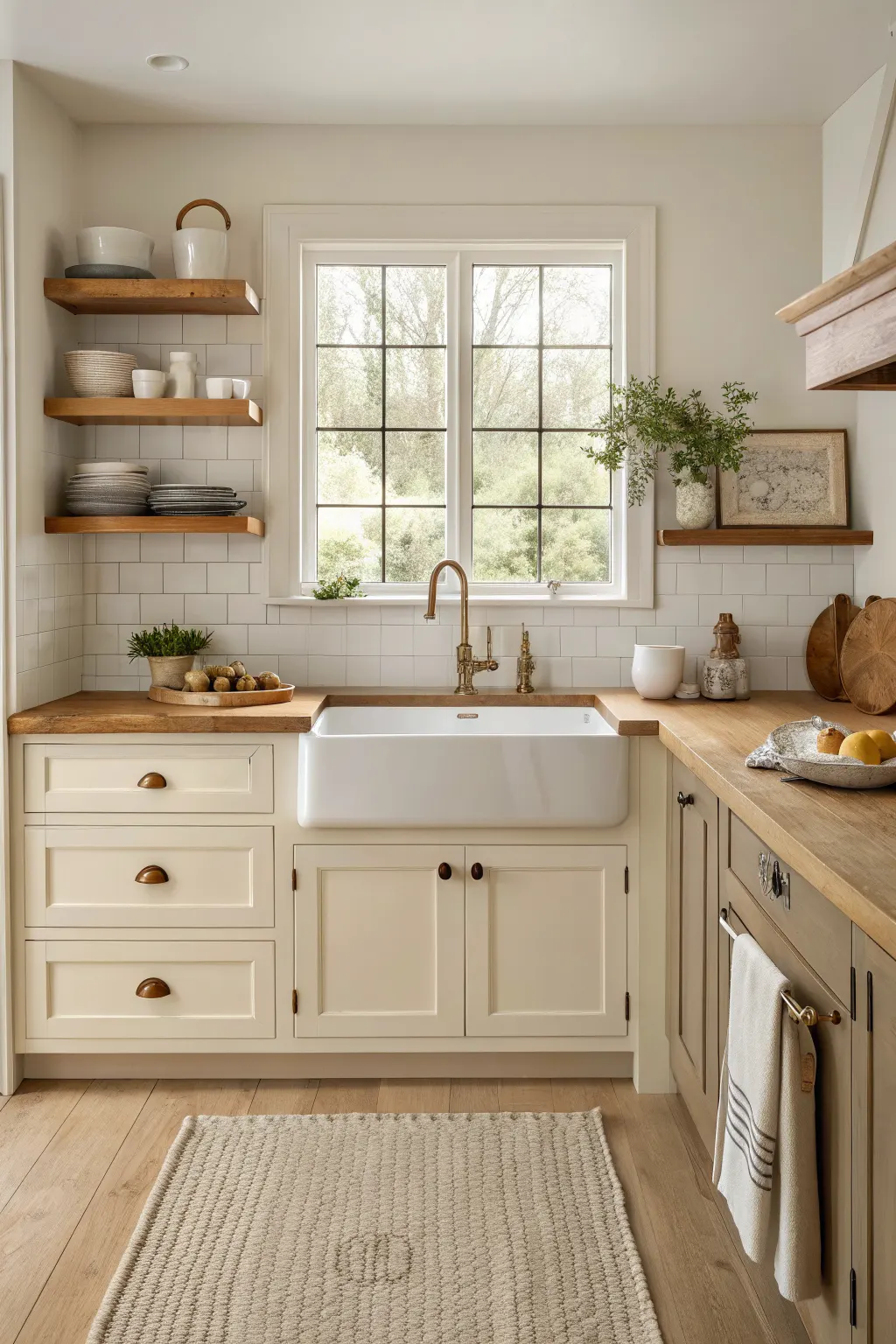
A cream-and-wood palette gives a farm style kitchen a gentle, understated look. Instead of stark contrast, the room relies on layered neutrals, natural texture, and a classic sink to create warmth.
Try cream cabinets, oak or walnut accents, a white or off-white farmhouse sink, and a simple runner underfoot. This is a strong choice if you want your kitchen to feel timeless and quiet rather than trendy or high contrast.
23. Farmhouse Sink With a Brick or Zellige Backsplash
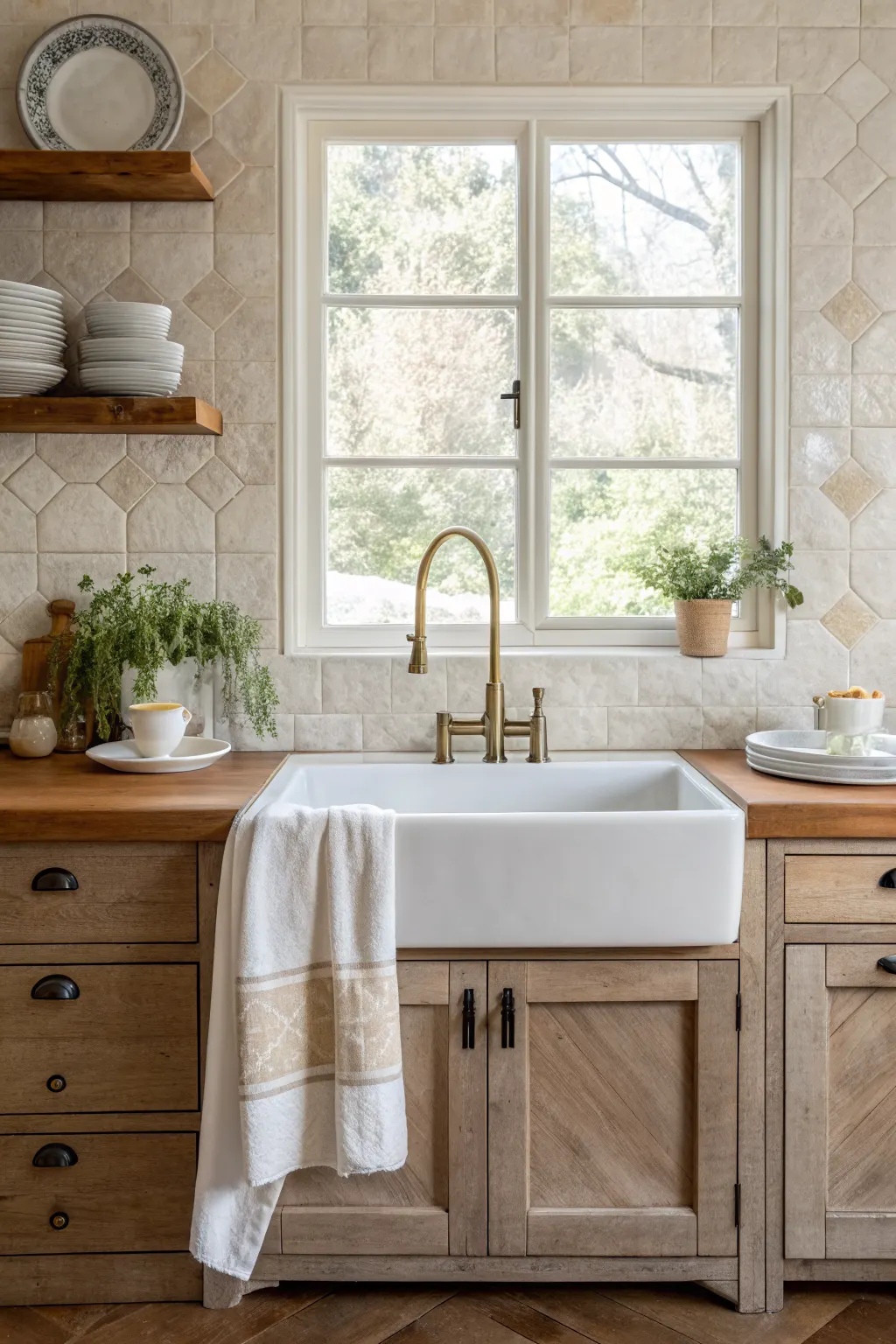
A textured backsplash can frame the sink beautifully. Brick adds age and rustic character, while zellige brings a handmade surface that reflects light and adds subtle movement to the wall.
Either choice can make the sink zone feel richer and more layered. If you want a budget-friendly starting point while planning a future remodel, it may also help to explore ideas for peel and stick kitchen backsplashes to test the look before committing.
24. Boho-Farmhouse Sink Corner With Layered Decor
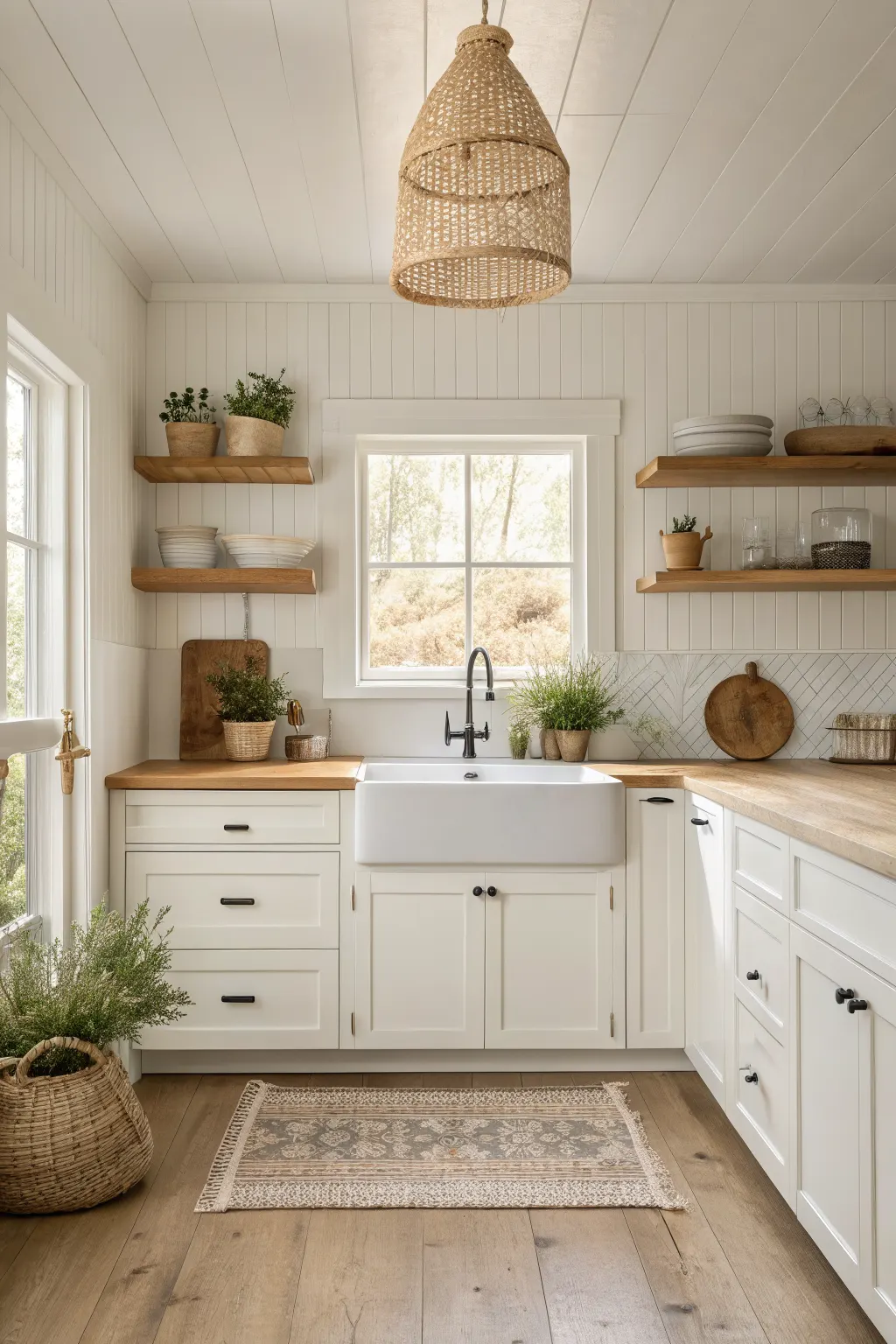
If you like a more relaxed eclectic look, try blending boho kitchen touches with a farmhouse sink. A woven pendant, patterned runner, potted herbs, and mixed ceramics can soften the sink zone and make it feel more personal.
The farmhouse element keeps the space grounded, while the boho layers make it feel casual and expressive. To avoid visual overload, keep the main finishes simple and let the decor do the warming up.
25. Open-Concept Farmhouse Kitchen Sink That Anchors the Room
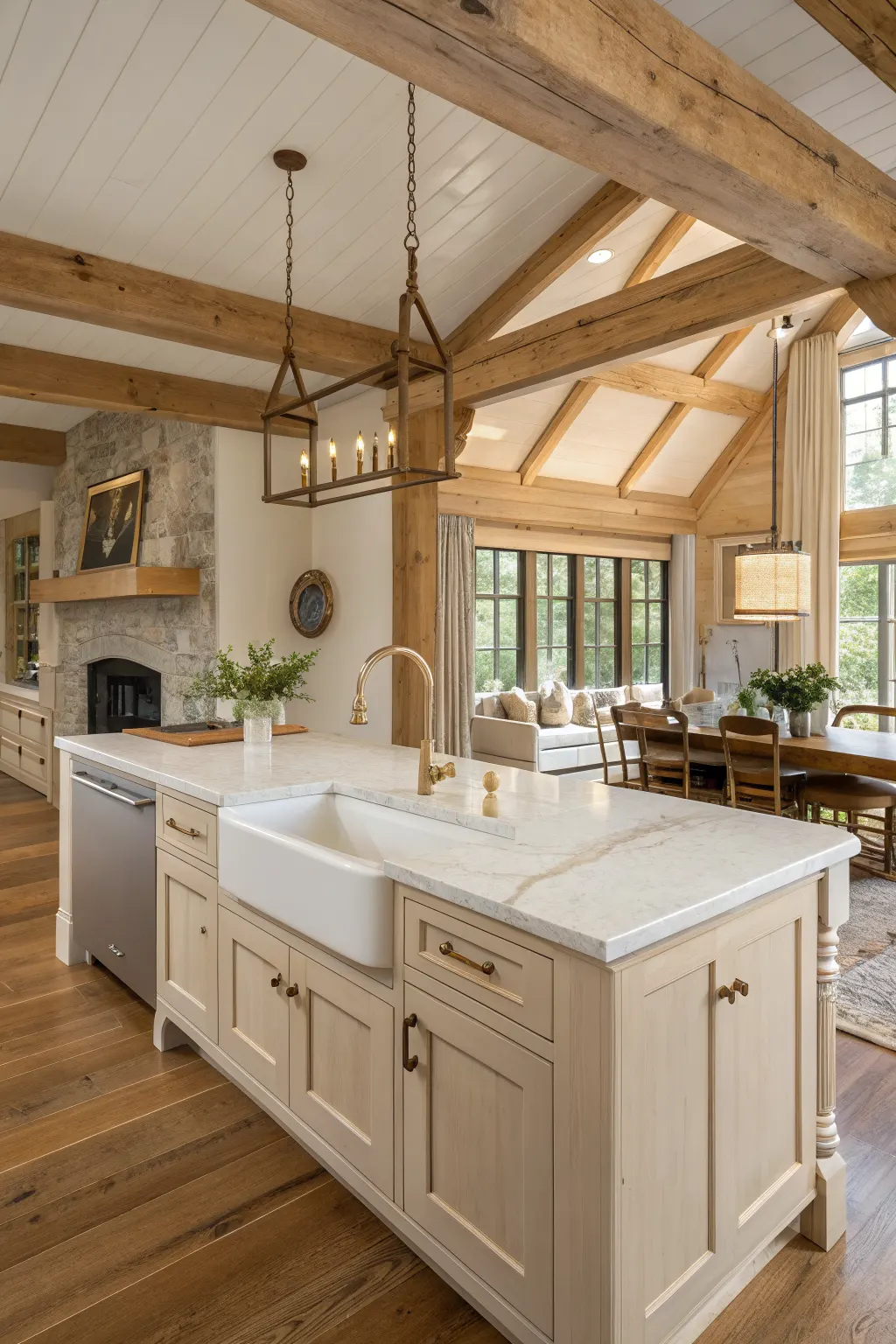
In an open-concept layout, the sink area often needs to do more than function well. It should visually anchor the kitchen and connect with the finishes in the surrounding dining or living space. A substantial farmhouse sink can do that naturally, especially when paired with a strong island, statement faucet, or repeated wood tones.
Think of the sink wall or sink island as the center of gravity for the room. In a broad open kitchen design, consistency matters, so repeat your cabinet color, metal finish, or countertop material nearby to help the farmhouse kitchen feel cohesive from every angle.
How to choose the right farmhouse kitchen sink style
The best farmhouse kitchen sink depends on how you use your space first, and how you want it to look second. Start with material. Fireclay feels classic and substantial, stainless steel is practical and modern, copper adds warmth, and stone-look options suit earthy kitchen palettes.
Next, consider basin configuration. A single basin is usually better for oversized cookware and uninterrupted washing space. A double bowl can make more sense for households that need to separate prep and cleanup tasks.
Size matters too. Farmhouse sinks often need a properly sized base cabinet and may require modifications because of their weight and apron-front design. Before choosing one, make sure your cabinet layout can support the width, depth, and front exposure of the sink style you want.
Think about maintenance honestly. White fireclay looks timeless but may show marks more easily. Copper develops patina. Stainless can show water spots. Quartz counters may reduce surrounding upkeep, while butcher block asks for more attention near splashing.
Finally, match the sink to the mood of your kitchen. A rustic farmhouse kitchen might suit hammered copper, reclaimed wood, or a fluted front. A country farmhouse kitchen often looks best with white fireclay, bridge faucets, and soft painted cabinets. A modern farm kitchen usually benefits from cleaner lines, darker contrast, or stainless steel details.
Pairing tips for faucets, counters, and cabinet colors
When styling a farmhouse sink, the faucet is one of the most important supporting pieces. Brass warms up white sinks and creamy cabinetry. Matte black adds contrast in a modern farmhouse kitchen. Chrome or nickel keeps the look crisp and versatile. If you want a more traditional profile, bridge faucets are a strong fit. For everyday convenience, pull-down styles are hard to beat, and you can compare more options in these guides to pull-down kitchen faucets and touchless kitchen faucets.
For countertops, butcher block adds immediate warmth, while quartz offers easier upkeep. Stone surfaces can work beautifully too, especially in earthy kitchen schemes. Try to balance visual weight: if the sink has a lot of texture or color, quieter counters usually help.
Cabinet color can completely shift the sink’s personality. White cabinets make the space feel classic and bright. Soft sage, mushroom, greige, navy, and cream can all support a farmhouse kitchen without making it feel overly rustic. If your style leans cleaner and calmer, you might also enjoy ideas from minimalist kitchen designs and adapt them with a farmhouse sink for a simpler hybrid look.
Backsplashes and lighting should support, not compete with, the sink. Brick, zellige, beadboard, or simple tile all work well depending on your style. For lighting, pendants over an island or a sconce near the window can define the sink area, and these kitchen island lighting ideas may help if your sink sits close to an island zone. Under-cabinet lighting is also useful for task visibility near cleanup areas.
FAQ
Do farmhouse sinks need special cabinets?
Often, yes. Because of the apron front and sink weight, the base cabinet usually needs to be sized and cut specifically for the sink model. Always confirm cabinet compatibility before buying.
Are farmhouse kitchen sinks good for small kitchens?
Yes, if you choose the right size. Compact apron-front models can work well in smaller layouts, especially when paired with smart storage and a lighter color palette.
What is the best material for a farmhouse kitchen sink?
There is no single best option for every home. Fireclay is classic, stainless steel is practical, copper is warm and rustic, and stone-look materials are great for earthy designs. The right choice depends on your style, budget, and maintenance preference.
Do farmhouse sinks splash more?
They can if the faucet is set too high or the sink is very shallow. In many cases, a deeper basin and well-matched faucet height help reduce splashing rather than increase it.
Is a single-bowl or double-bowl farmhouse sink better?
A single bowl is better for washing large cookware and gives you uninterrupted space. A double bowl is better for multitasking, especially in busy family kitchens.
Are farmhouse sinks durable?
Yes, most are very durable when properly installed and cared for. Durability depends on the material. Stainless steel resists breakage well, while fireclay offers a hard surface with classic appeal.
Do farmhouse sinks work in modern kitchens?
Absolutely. A farmhouse sink can work beautifully in a modern farm kitchen when paired with streamlined cabinetry, simple counters, and clean hardware finishes like black or stainless steel.
How do you clean a farmhouse sink?
Use gentle cleaners suited to the sink material and avoid harsh abrasives unless the manufacturer recommends them. Regular wiping, especially around the apron front and bottom surface, helps keep buildup and stains under control.
Conclusion
The right farmhouse kitchen sink idea depends on how you live, how much maintenance you want, and whether your taste leans more country farmhouse kitchen, rustic farmhouse kitchen, or modern farm kitchen. Some homes need the warmth of copper and wood, while others need the simplicity of white fireclay and quartz.
Whichever direction you choose, a farmhouse sink can be both a hardworking fixture and a defining design feature. Focus on the layout, material, and pairings that make sense for your space, and your farmhouse kitchen will feel charming, useful, and timeless for years to come.
