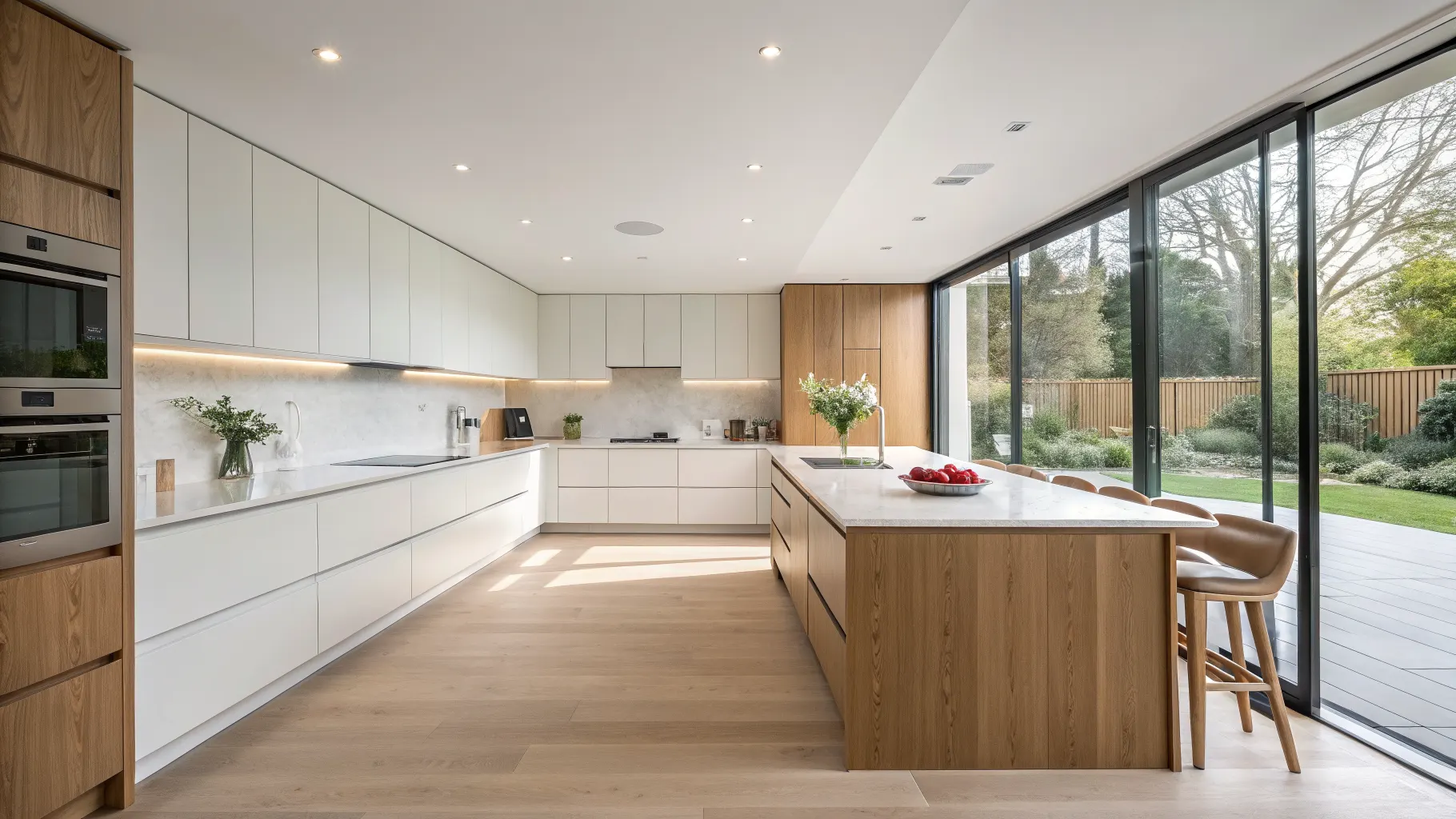
A well-designed minimalist kitchen style is not about making a kitchen feel cold or empty. It is about creating a space that looks calm, works hard every day, and keeps visual clutter under control. Clean lines, thoughtful storage, soft color palettes, and durable finishes all help minimalist kitchens feel modern without losing warmth.
Whether you love a bright Scandinavian kitchen look, a sleek monochrome layout, or a compact small kitchen with smart storage, minimalist design can adapt to your home and routine. The ideas below focus on livable solutions you can use in large remodels or simple updates, from cabinetry and countertops to lighting and styling.
1. Handleless Flat-Panel Cabinets for a Seamless Look
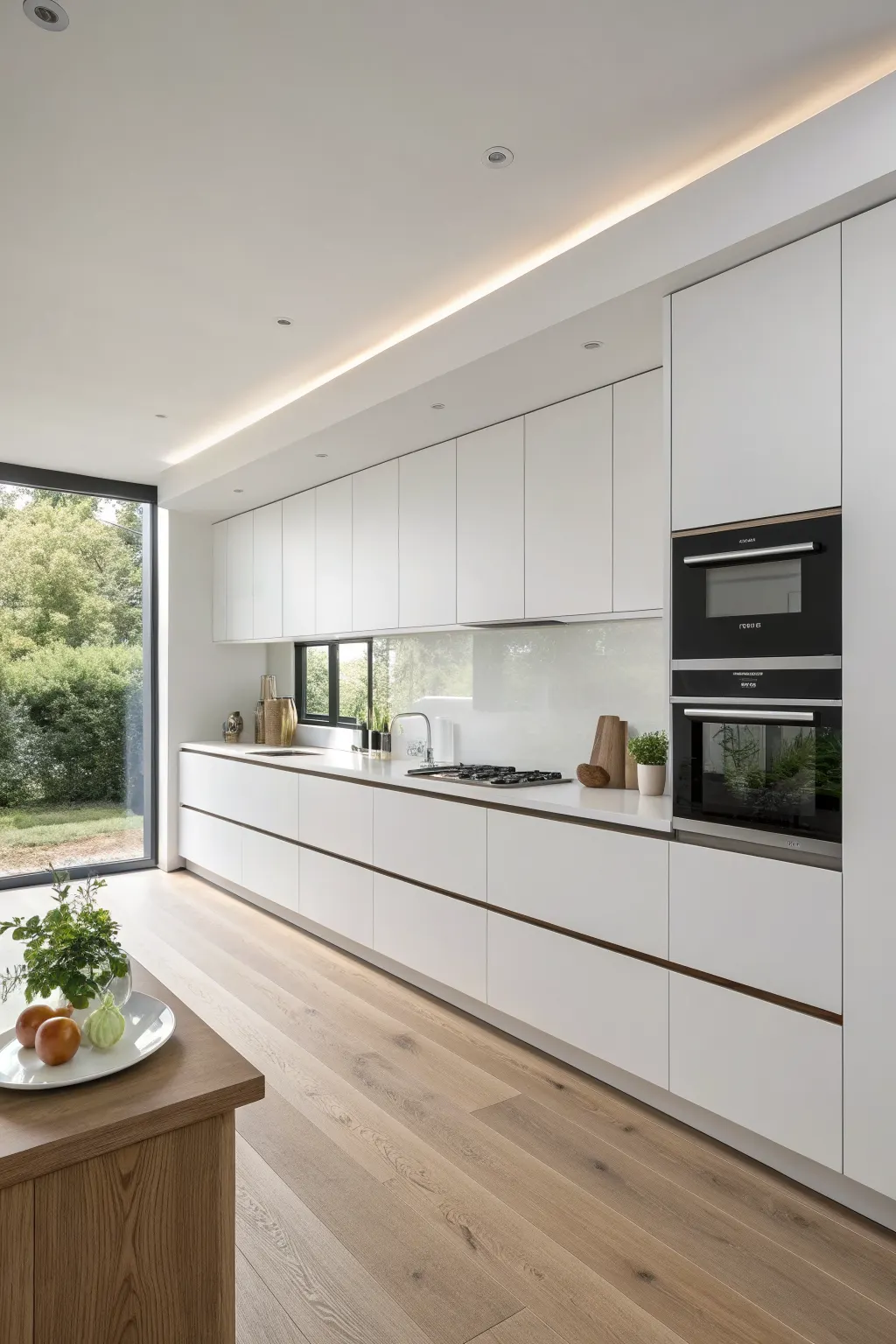
Flat-panel cabinets are one of the easiest ways to achieve a modern minimalist kitchen look. Their smooth surfaces remove visual noise and create long, uninterrupted lines that make the room feel more open.
For the cleanest result, choose integrated pulls, finger grooves, or push-to-open hardware instead of standard handles. This works especially well in small kitchens where too many details can make the space feel busy. Pair slab-front cabinets with simple quartz counters and a plain backsplash to keep the whole minimalist kitchen and streamlined.
2. Warm White and Wood Tones for Soft Scandinavian Minimalism
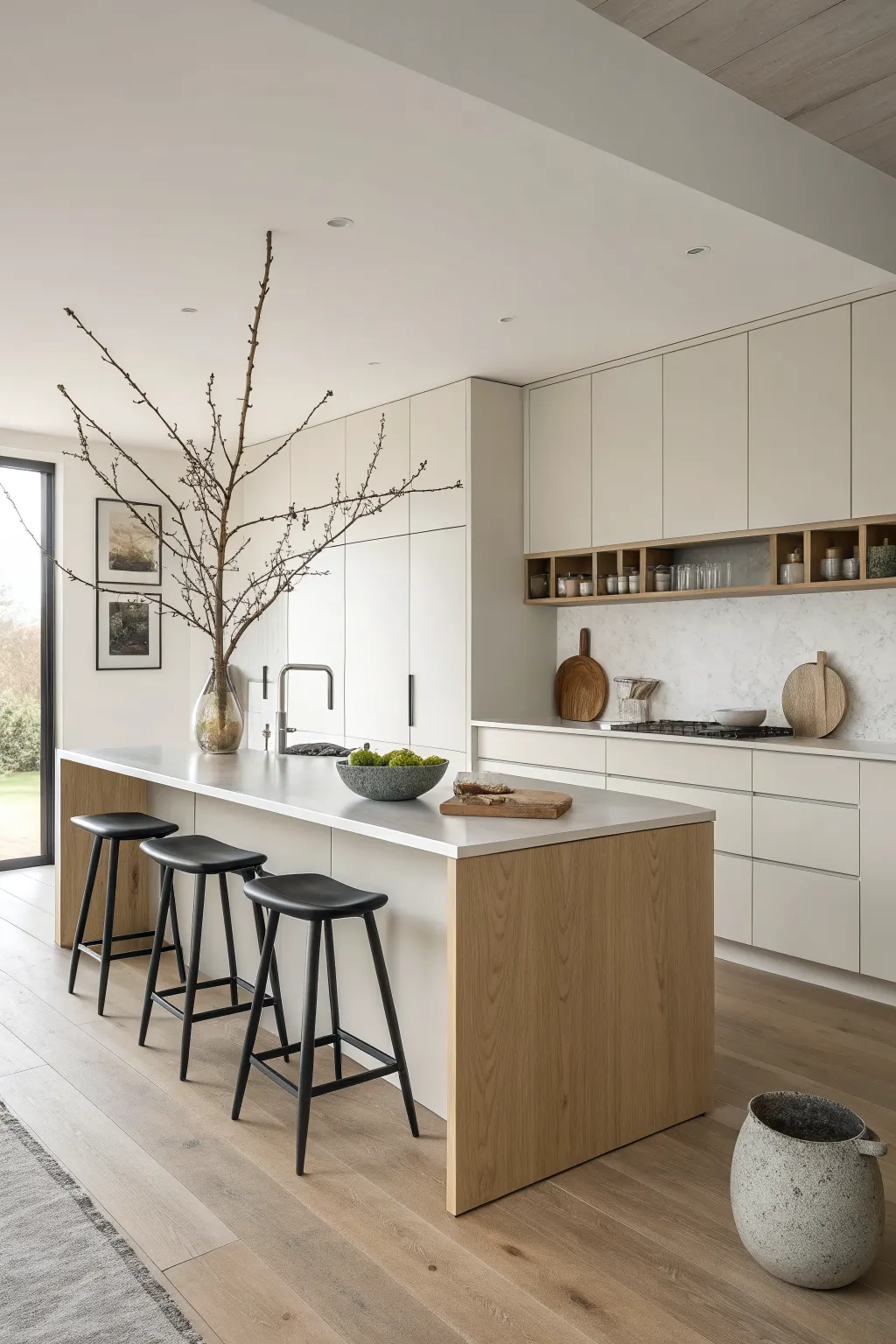
If you want minimalism to feel welcoming rather than stark, a warm white and light wood palette is a strong choice. This is the heart of many Scandinavian kitchen designs, where bright surfaces meet natural texture.
Think white upper cabinets, pale oak lower cabinets, or wood open shelving against creamy walls. Add soft black or brushed metal accents sparingly to ground the room. The result is airy, simple, and easy to live with, especially in homes that want a clean look without losing comfort.
3. Floor-to-Ceiling Storage That Hides Everyday Clutter
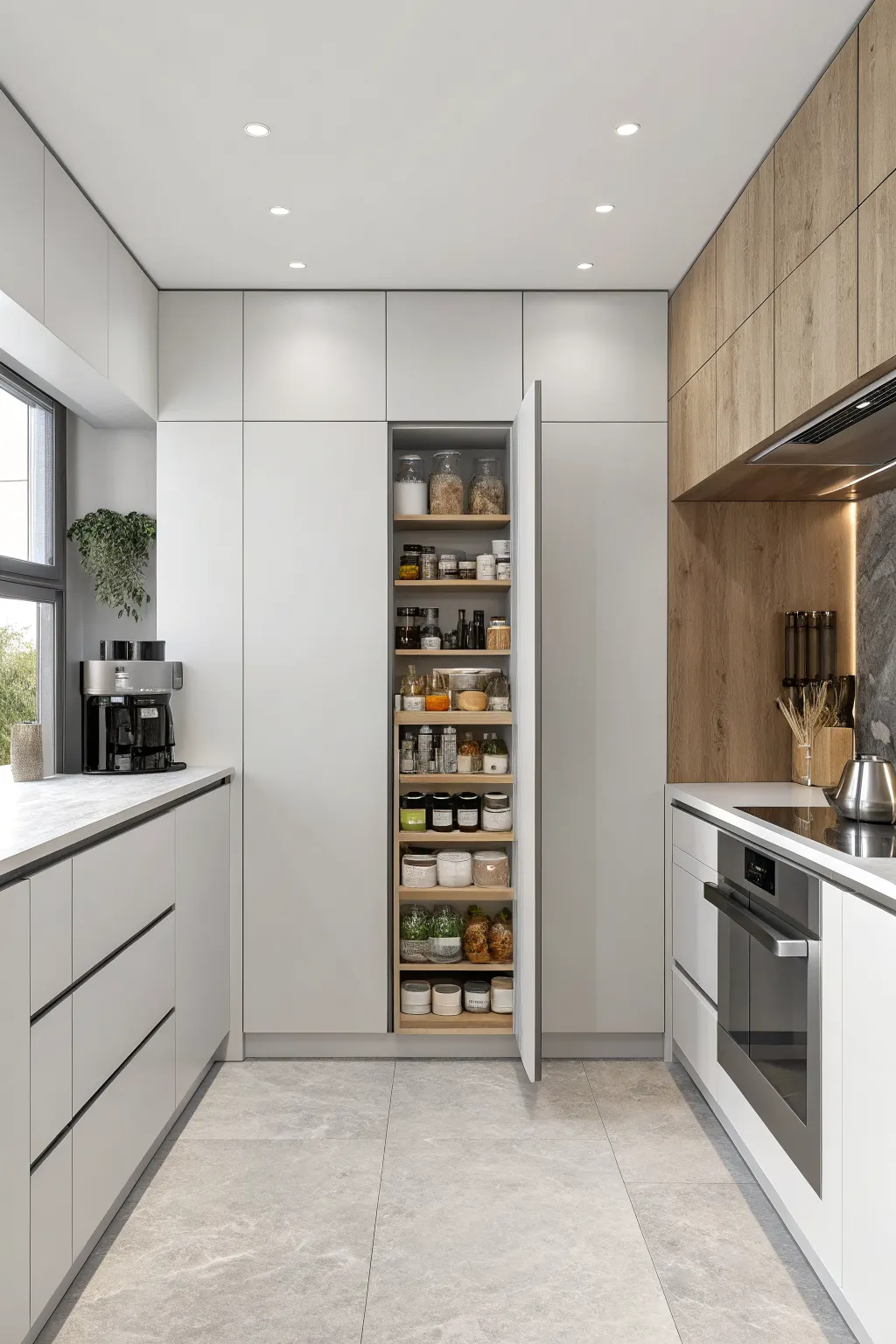
Minimalist kitchens look best when the counters stay clear, and full-height storage makes that possible. Floor-to-ceiling cabinetry gives you a place for pantry goods, small appliances, cleaning supplies, and serving pieces without adding extra furniture.
This approach also supports a simple kitchen design by keeping everything visually contained. Tall cabinets can blend into the wall color to reduce bulk, while interior organizers make them more practical. If your kitchen always feels messy, more concealed storage often has a bigger impact than more decor.
4. A One-Wall Layout for a Streamlined Small Kitchen
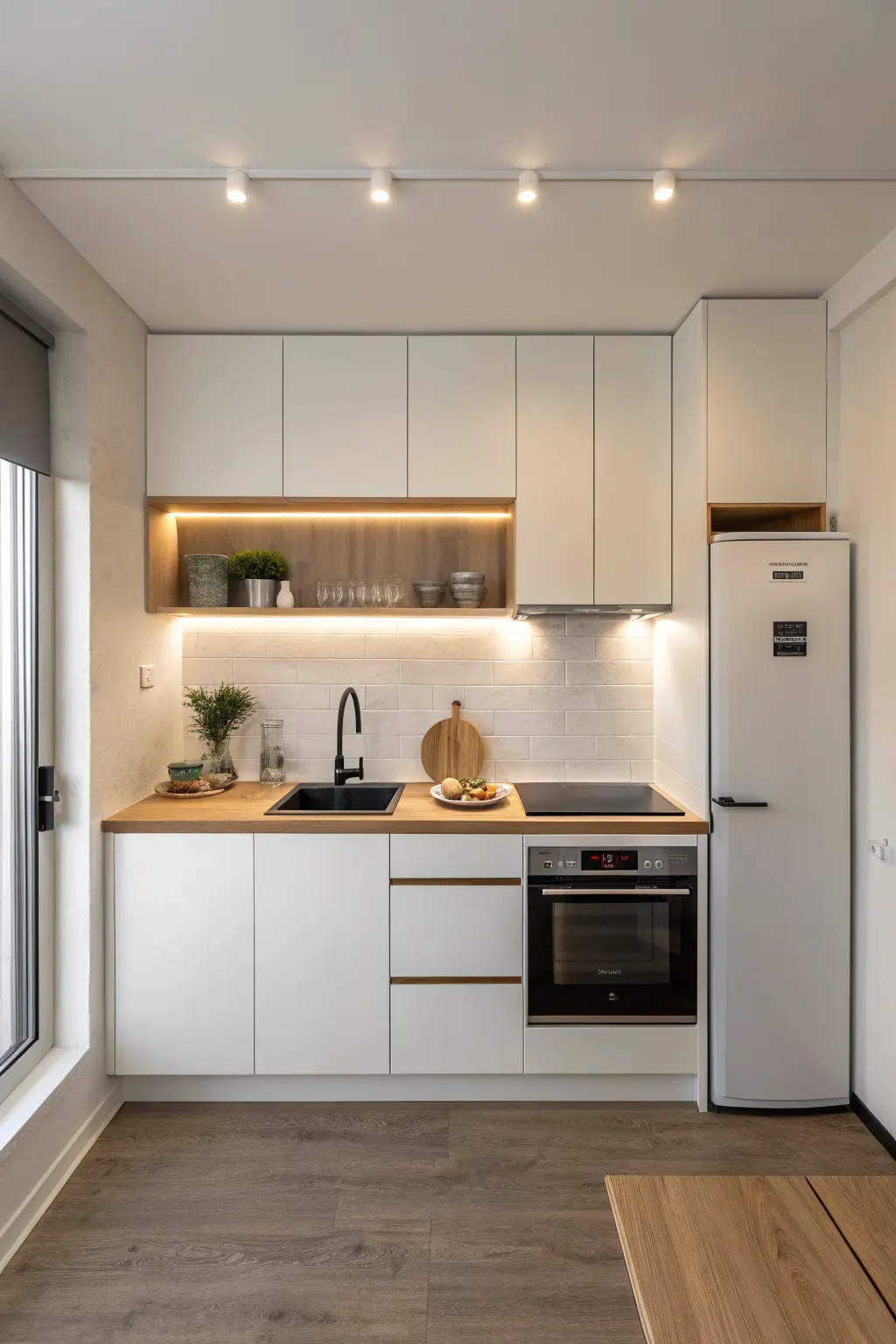
A one-wall kitchen is a smart small kitchen solution for apartments, studios, and narrow homes. By placing cabinets, sink, cooktop, and appliances along a single wall, the layout stays compact and visually quiet.
To make it work well, keep finishes consistent and use upper cabinets or open shelving only where needed. Built-in appliances and under-cabinet lighting help the kitchen feel polished rather than cramped. In a minimalist setup, the simplicity of a one-wall arrangement can become a design advantage.
5. Waterfall Countertops for a Sculptural Modern Finish
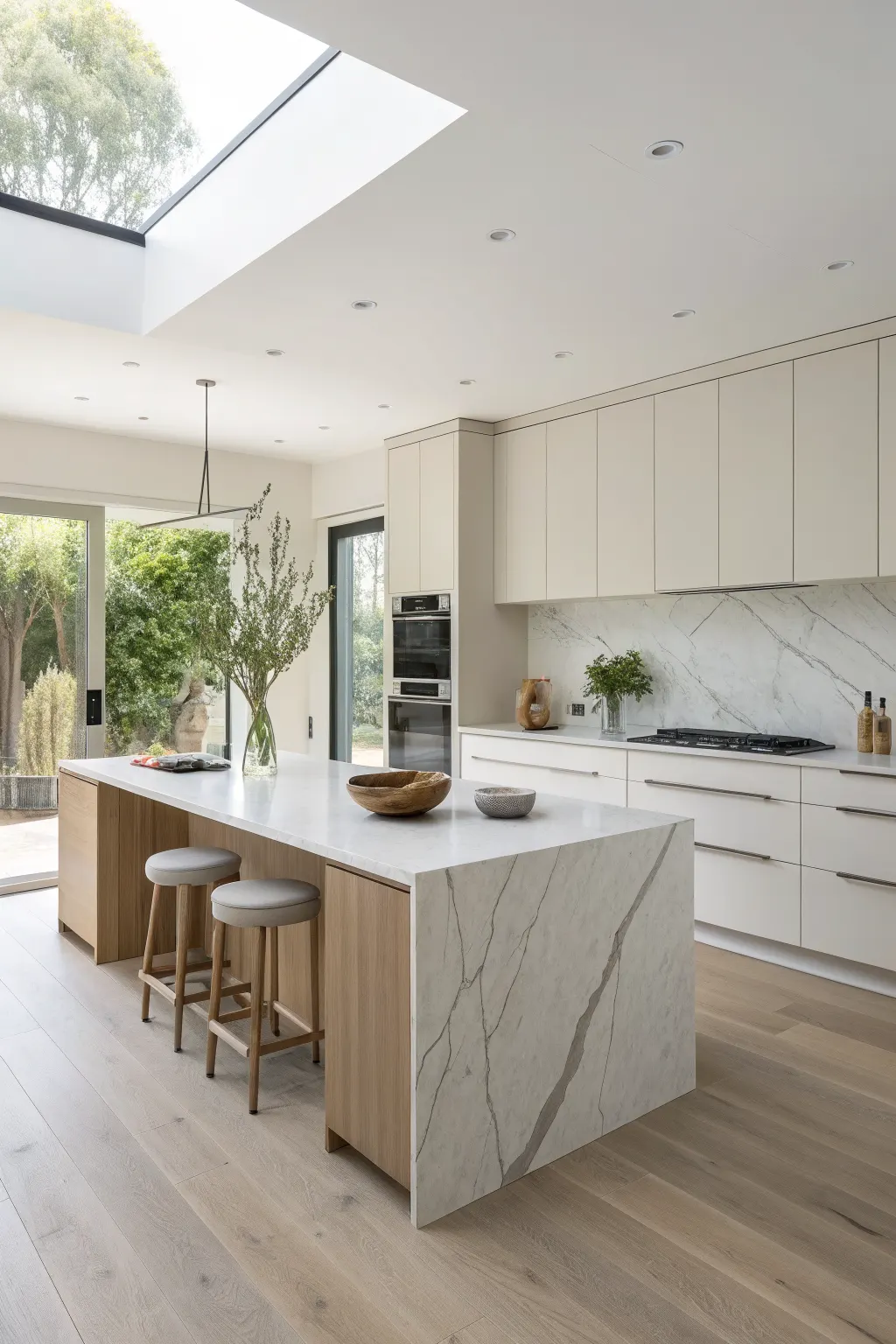
Waterfall countertops bring a refined architectural quality to a modern kitchen design. Instead of ending at the top edge, the countertop material continues down the side of the island or peninsula for a clean, solid look.
This detail fits beautifully into a kitchen design modern scheme because it adds drama without extra ornament. Quartz and stone surfaces are especially effective here, particularly in soft white, gray, or beige tones. In a minimalist kitchen, a waterfall edge can act as the main statement without overpowering the room.
6. Open Shelving Used Sparingly for an Airy Display
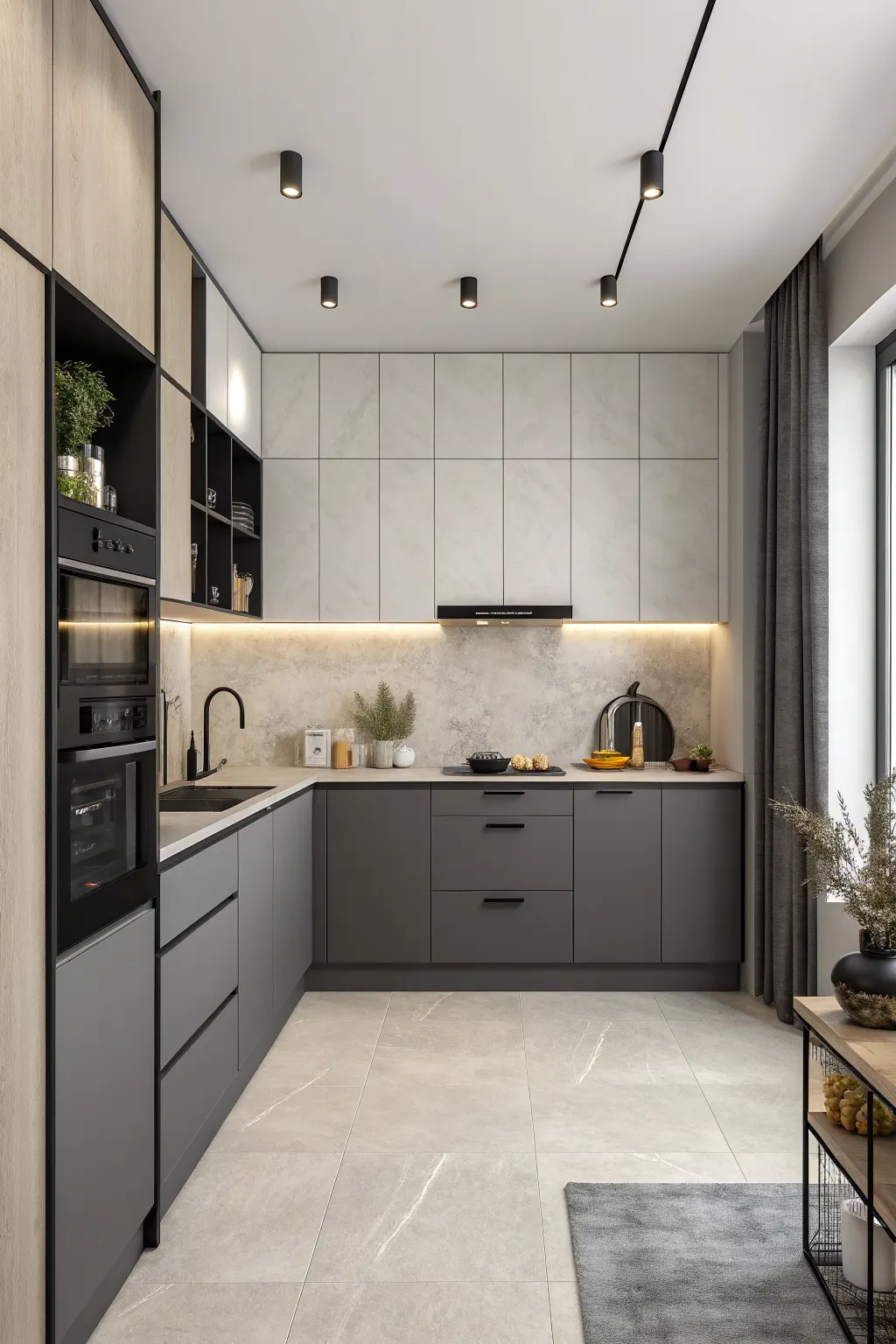
Open shelving can support a kitchen design aesthetic when used with restraint. One or two shelves are usually enough to break up upper cabinetry and display a few everyday pieces.
Keep the styling functional and simple: stacked bowls, neutral mugs, glass jars, or a small plant. Avoid turning shelves into full decorative galleries, since that works against a minimalist feel. When done well, open shelving adds personality and breathing room while keeping the space light.
7. Matte Black Accents in an Otherwise Neutral Kitchen
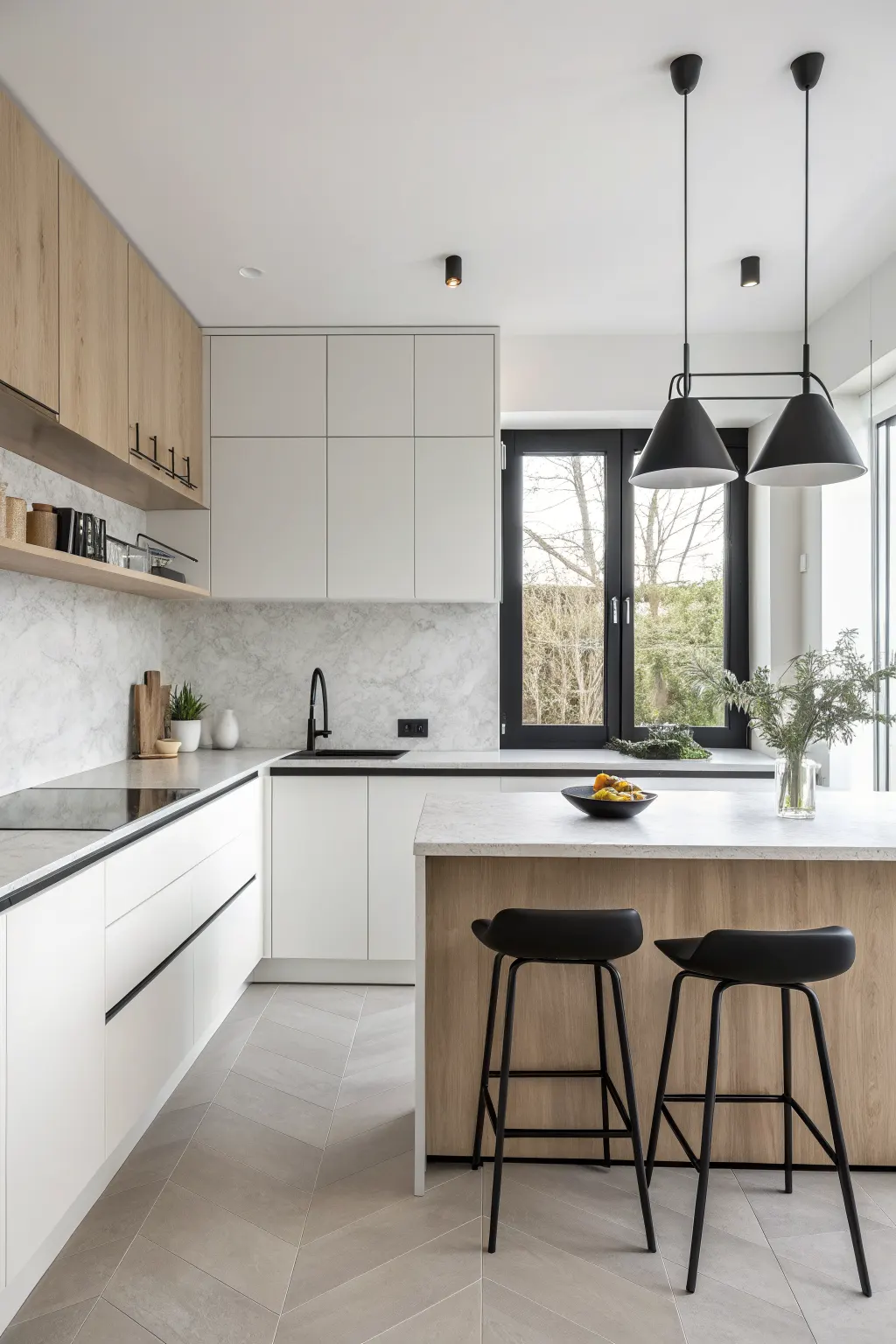
Minimalist kitchens often rely on subtle contrast, and matte black accents are an easy way to add it. A black faucet, slim cabinet hardware, pendant lights, or bar stools can sharpen the room without making it feel heavy.
This works especially well in white, pale wood, or light gray kitchens where the dark elements create definition. If you are updating fixtures, a modern faucet can make a noticeable difference, and this guide to kitchen faucets for modern homes can help narrow the options. The key is consistency: repeat black in a few places, then stop.
8. An All-White Minimalist Kitchen With Layered Texture
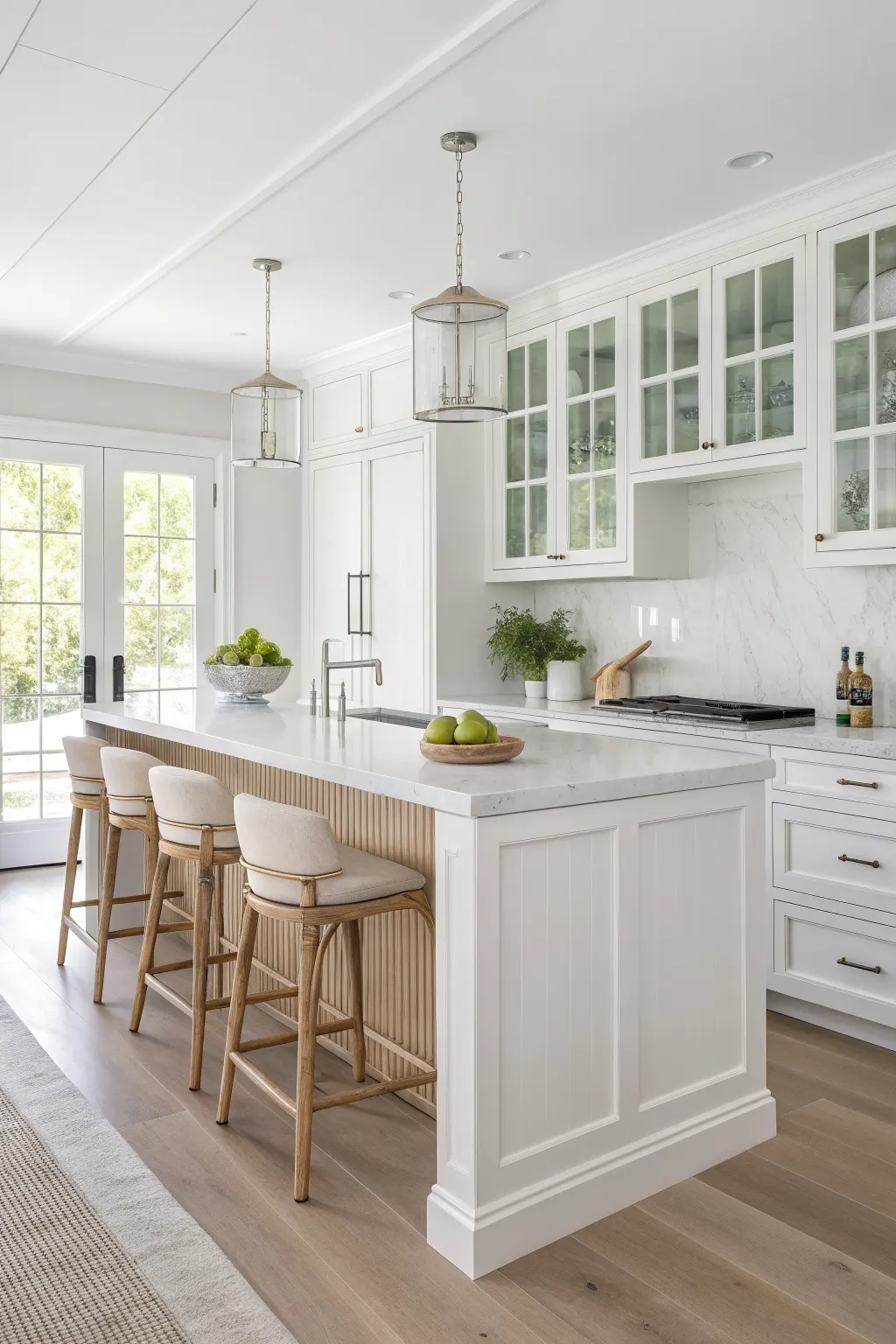
An all-white kitchen interior minimalist style can feel fresh and timeless, but it needs texture to avoid looking flat. The trick is to vary finishes while keeping the color palette restrained.
Combine matte cabinets with a polished countertop, a softly veined backsplash, and subtle wood or linen accents. You can also introduce texture through fluted glass, brushed metal, or a natural fiber runner. This keeps the room interesting while preserving the calm effect that makes white kitchens so enduring.
9. Hidden Appliances for a Clean Built-In Appearance
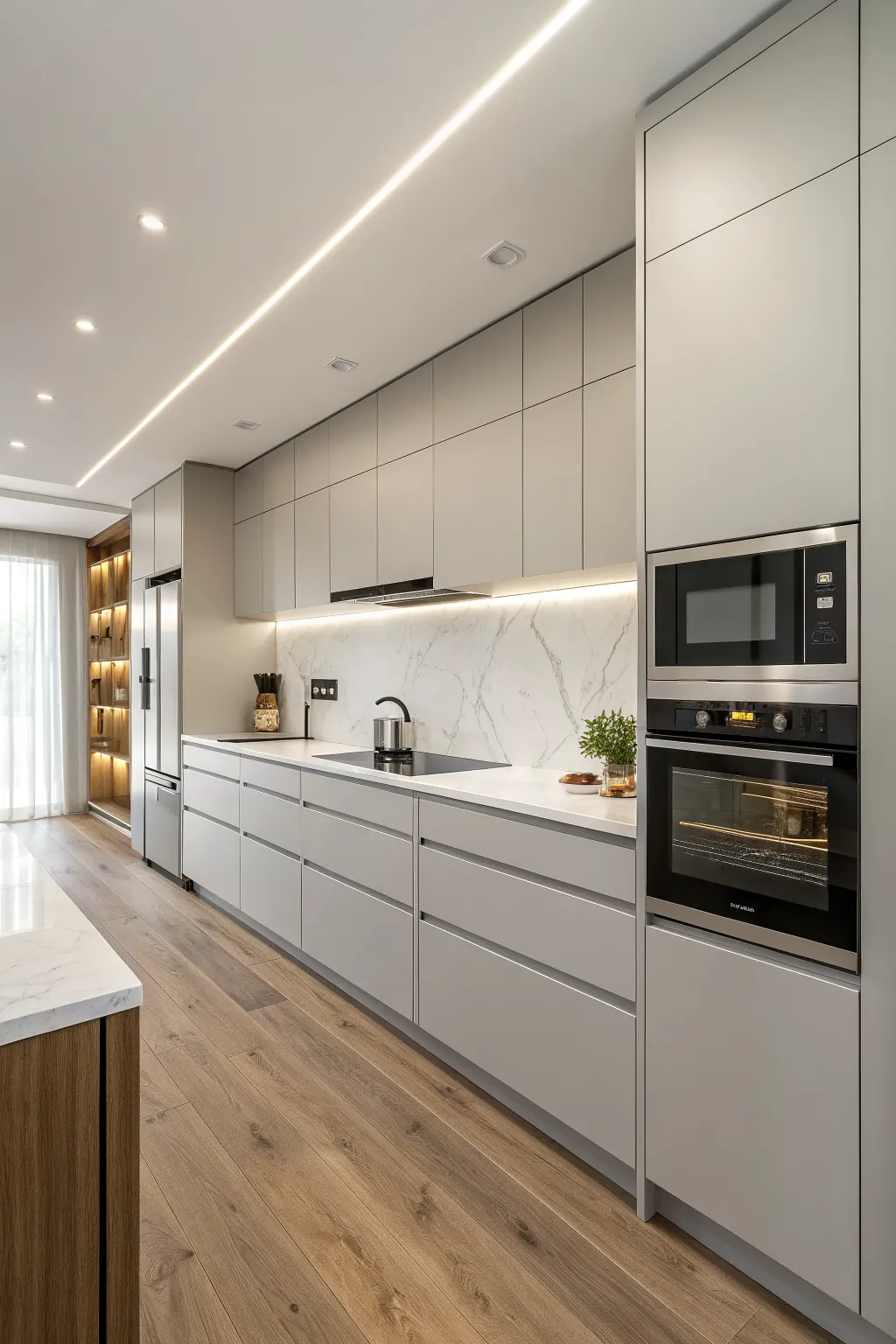
Panel-ready and integrated appliances are a major advantage in a minimalist kitchen layout. A refrigerator concealed behind matching cabinet fronts instantly makes the room look tidier and more cohesive.
The same idea works for dishwashers, microwaves, and even range hoods in some designs. Hidden appliances reduce visual breaks, which helps the kitchen feel more like custom furniture than a collection of machines. If you want the sleekest possible finish, this is one of the most effective upgrades.
10. A Compact Galley Kitchen With Symmetrical Lines
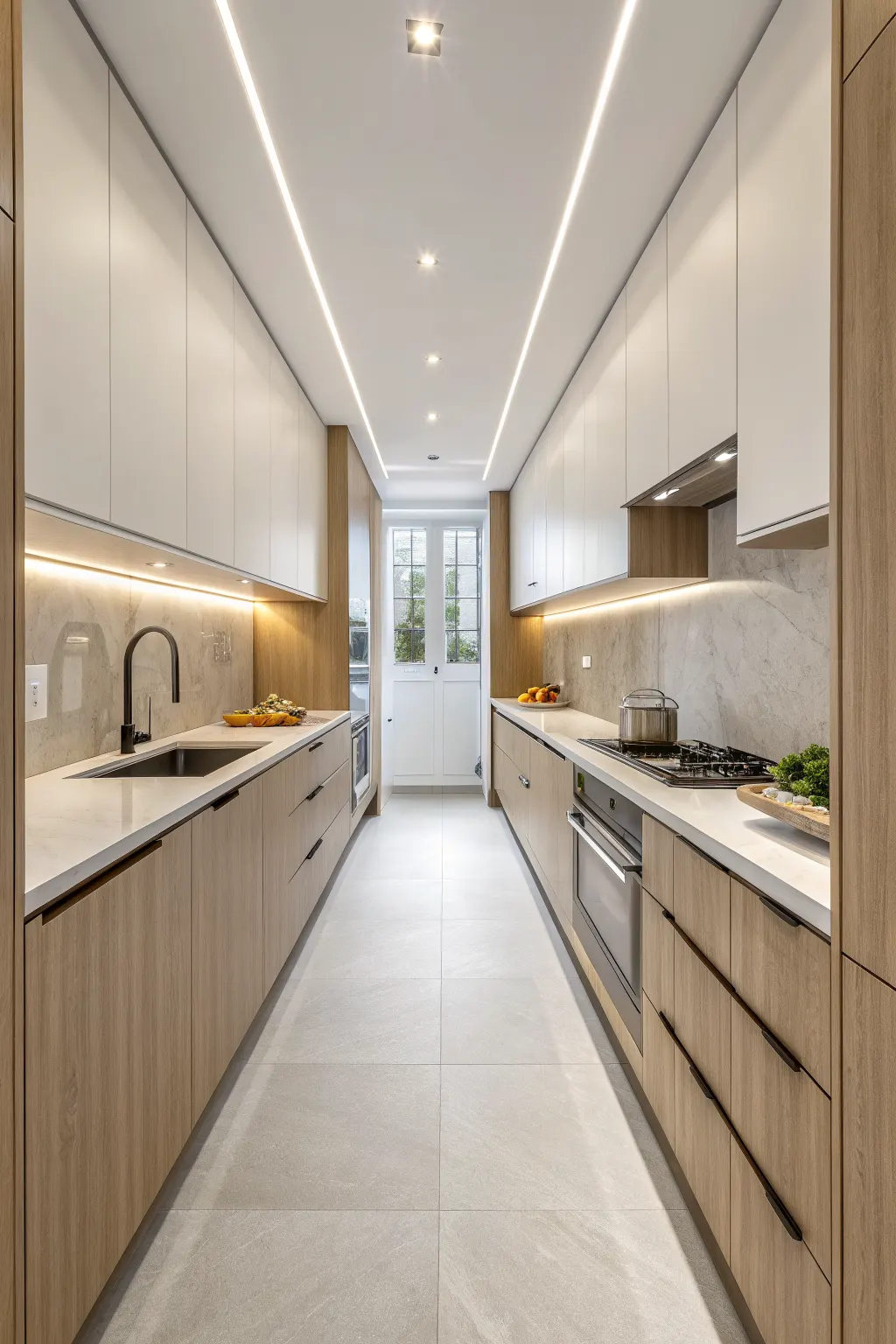
Galley kitchens can look elegant when their layout is balanced and uncluttered. In a compact space, symmetry helps create order, which is especially useful for small kitchen design.
Use matching cabinet runs, aligned upper units, and consistent lighting to strengthen the effect. Keep countertop items limited and choose reflective but not overly glossy materials to bounce light around. A galley kitchen with disciplined lines often feels more intentional and sophisticated than a larger but less organized space.
11. Minimalist Open Kitchen Design That Connects to the Living Area
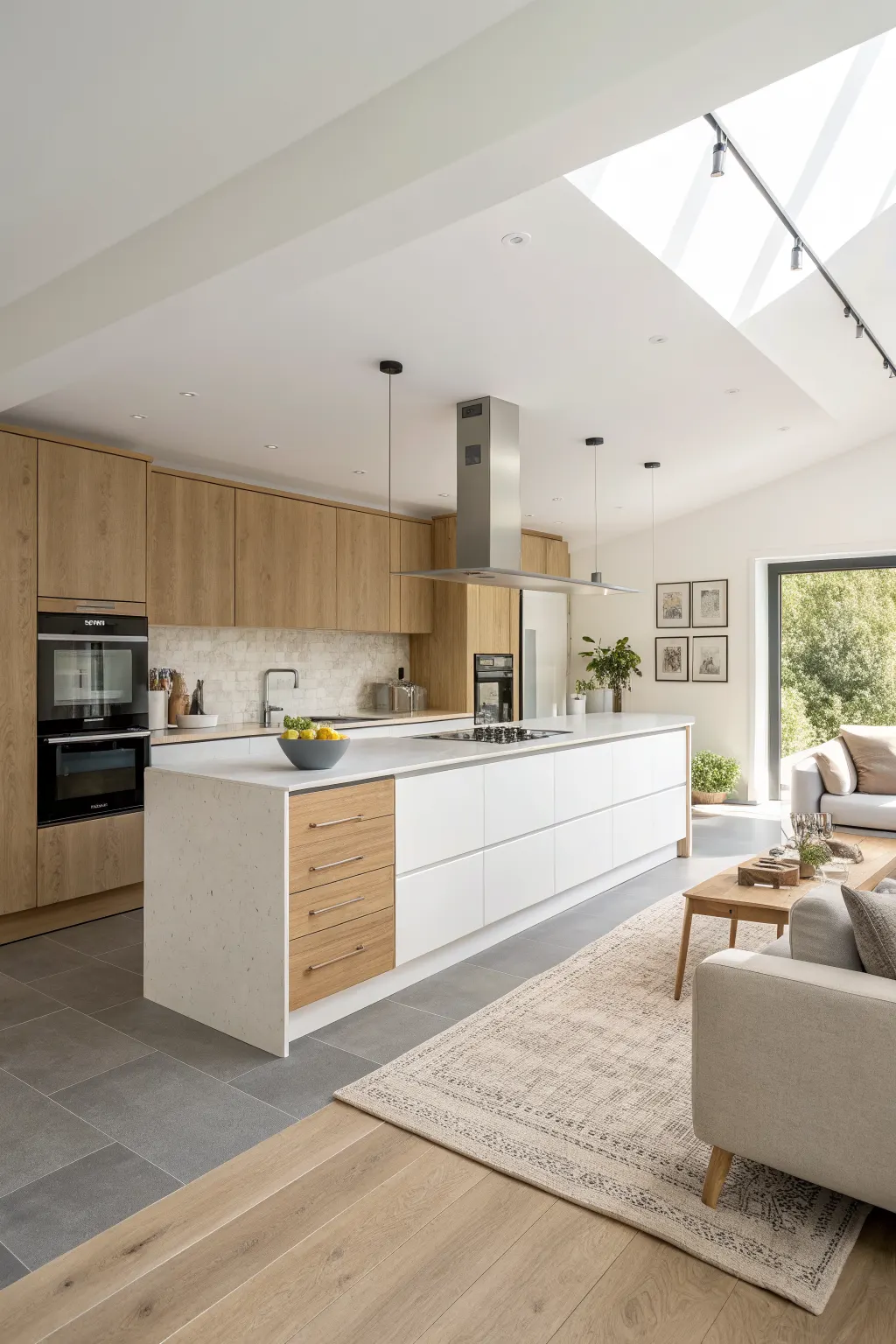
An open kitchen design needs to look good from multiple angles, which makes minimalism a natural fit. When the kitchen flows into the living or dining area, consistent finishes help the whole zone feel connected.
Choose cabinetry colors that work with nearby furniture, keep storage concealed, and avoid overcrowding the island or counters. A discreet range hood and integrated appliances are especially useful in this kind of layout. If you are also planning an entertaining zone outside, these outdoor kitchen ideas offer smart inspiration for creating a similarly cohesive look.
12. Pale Gray Cabinetry for a Softer Modern Neutral
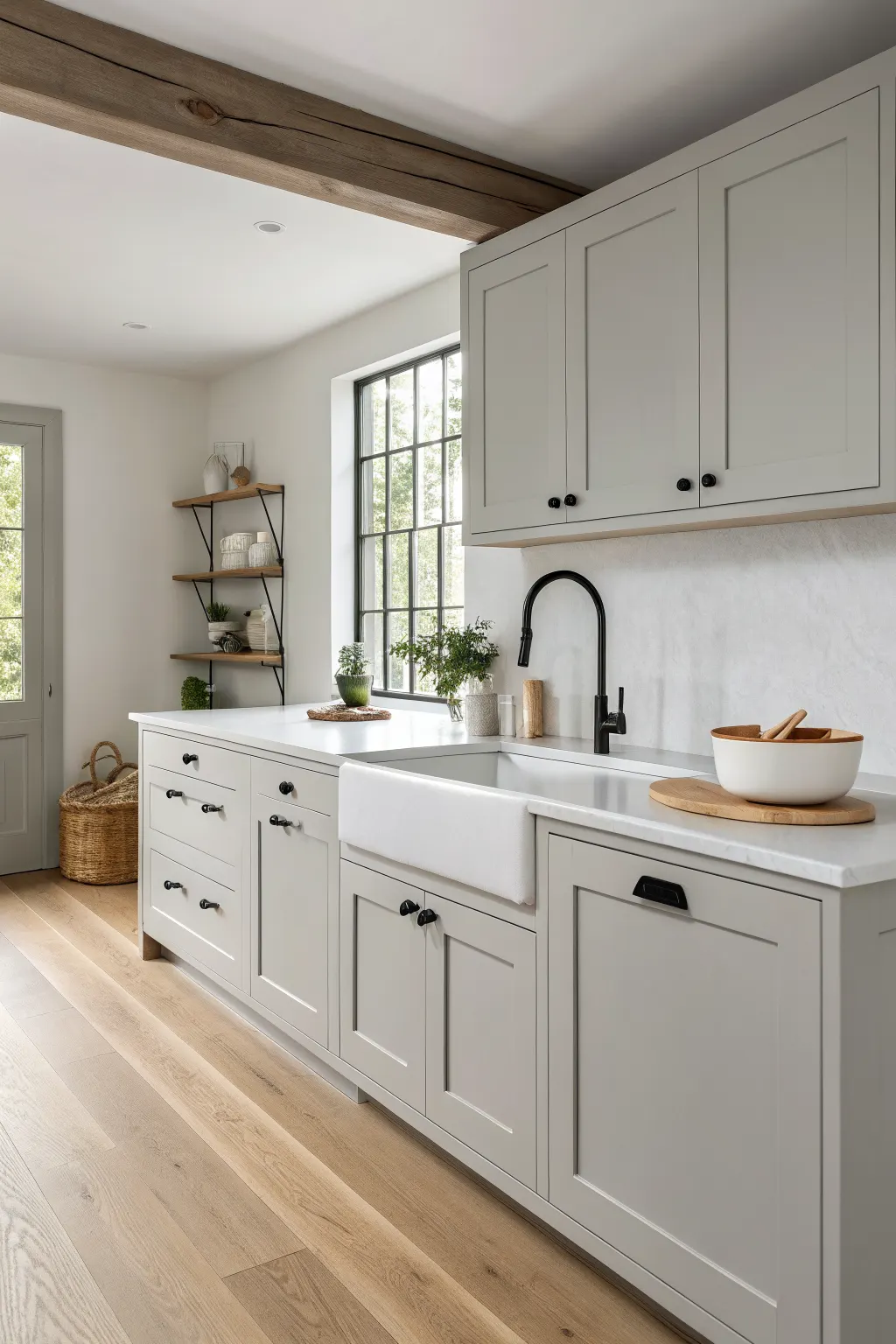
White is not the only option for a minimalist kitchen. Pale gray cabinetry offers a softer modern neutral that still feels clean and understated.
Light gray pairs beautifully with white counters, brushed nickel hardware, black fixtures, or warm wood flooring. It can also be more forgiving than bright white when it comes to fingerprints and everyday wear. For homeowners who want a calm palette with a little more depth, gray is a reliable choice.
13. A Monochrome Kitchen With Tone-on-Tone Layering
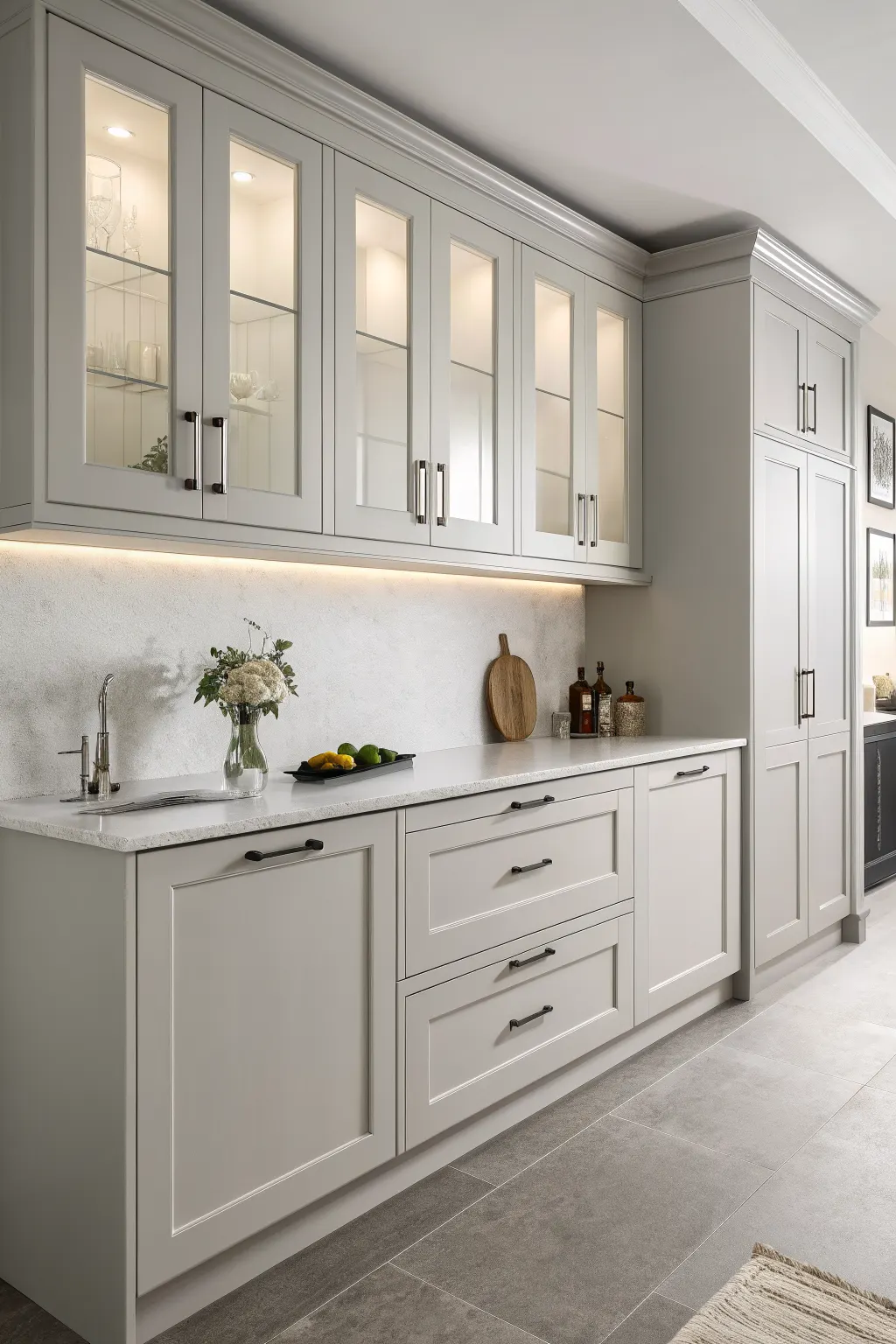
Monochrome kitchens are not limited to black and white. A more nuanced approach uses several shades of one color to create quiet depth while keeping the room cohesive.
For example, pair warm beige cabinets with slightly darker stone counters and a similar-toned backsplash, or layer several soft grays with different finishes. This technique keeps the kitchen calm and uncluttered while adding dimension. It is a strong option for anyone drawn to a kitchen set aesthetic that feels modern but not stark.
14. Slim Shaker Cabinets for a Transitional Minimalist Style
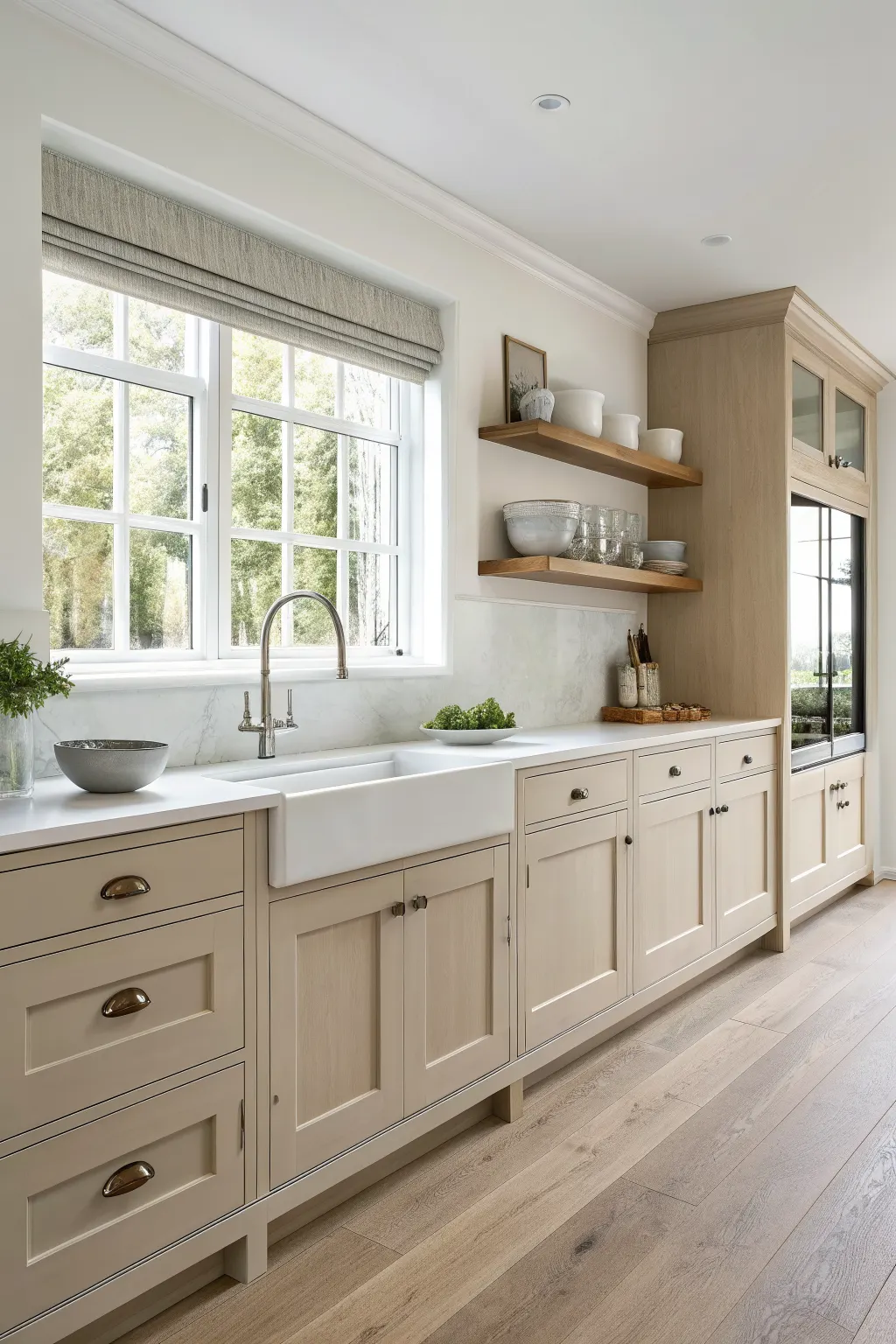
If flat-panel cabinets feel too severe, slim shaker doors offer a middle ground. Their narrow frame gives just enough detail to add character while still fitting a minimalist design.
This style works well in homes that bridge classic and modern elements. Keep the profile crisp, avoid ornate molding, and pair the cabinets with simple hardware or even no visible hardware at all. Slim shaker fronts are ideal for readers who want structure without sacrificing a clean overall look.
15. A Small Island With Hidden Storage and Seating
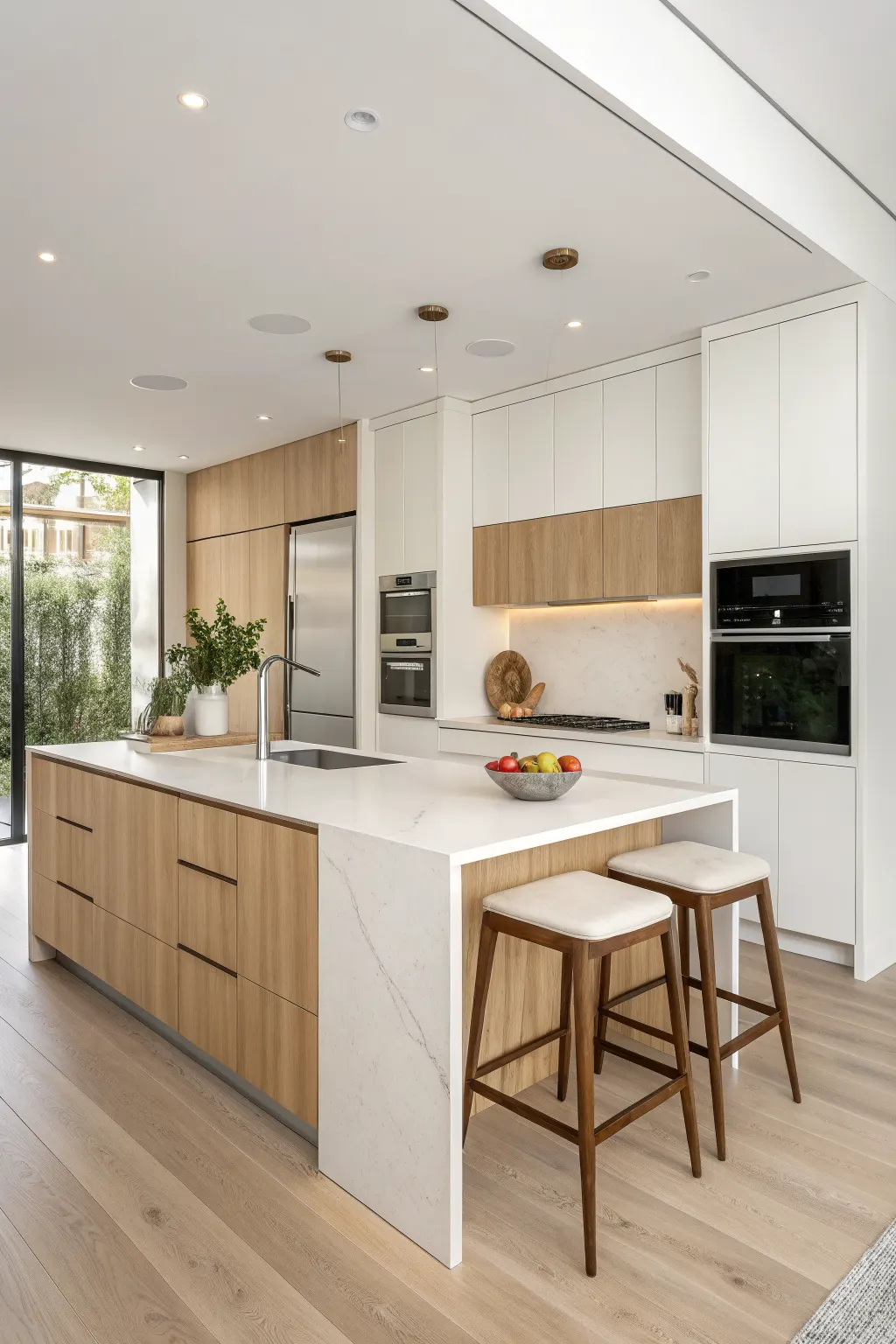
A compact island can add serious function to a minimalist kitchen, even in tighter layouts. The best versions include hidden storage on one side and a modest overhang for casual seating on the other.
This is one of the most useful kitchen set ideas for households that need extra prep space without creating bulk. Keep the form simple, use the same finish as the surrounding cabinets if you want it to blend in, or a subtle contrast if you want light definition. A small island should earn its footprint through storage, workflow, and versatility.
16. Natural Stone Surfaces as the Main Visual Feature
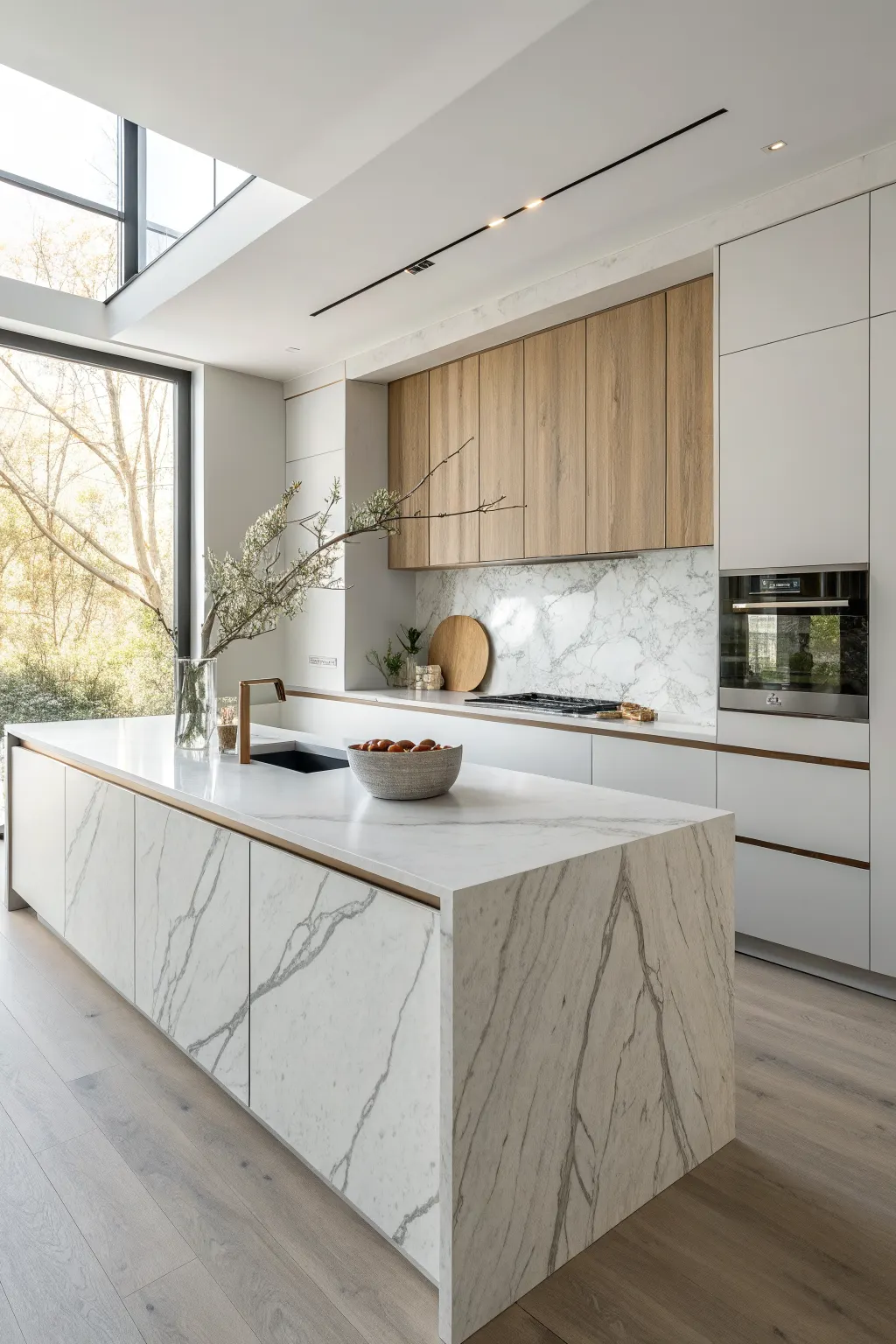
In a minimalist kitchen, one beautiful material can do most of the decorative work. Natural stone or stone-look quartz with soft veining gives the room texture and movement without adding clutter.
Use it on the countertop, island, or full-height backsplash and keep the rest of the palette quiet. This lets the surface become the focal point in a controlled way. If you are comparing options, this overview of quartz kitchen countertops can help you think through the look and practicality.
17. Under-Cabinet Lighting That Keeps the Design Clean
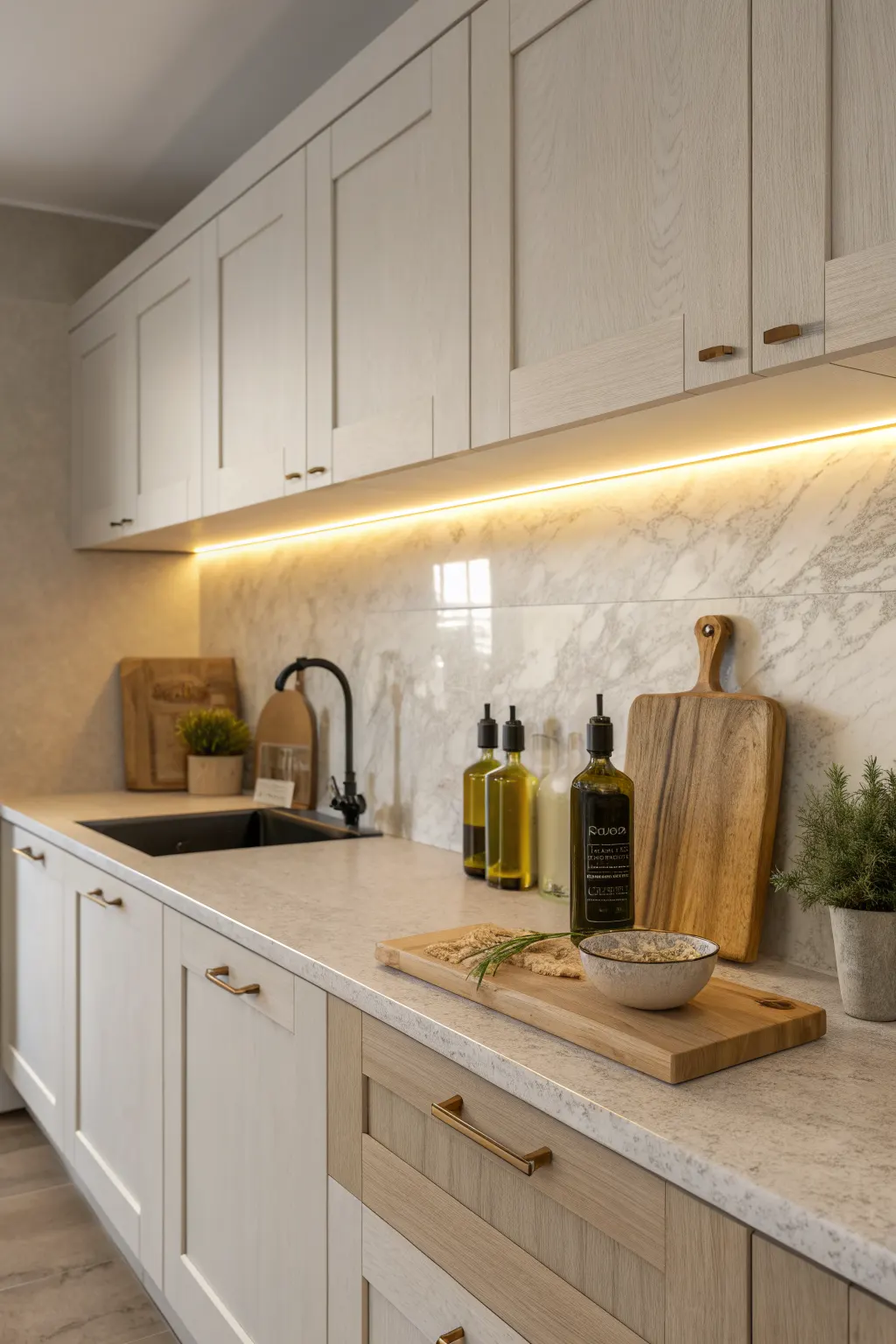
Good lighting is essential in minimalist kitchens because it improves function without taking up visual space. Under-cabinet lighting brightens work surfaces, highlights materials, and adds a soft evening glow.
Choose discreet strip lighting or low-profile fixtures that stay hidden from view. Warm white light tends to make minimalist kitchens feel more welcoming than cooler tones. If you want a cleaner task-lighting setup, these under-cabinet LED lighting kits are a useful place to start.
18. A Japandi-Inspired Kitchen With Calm Organic Details
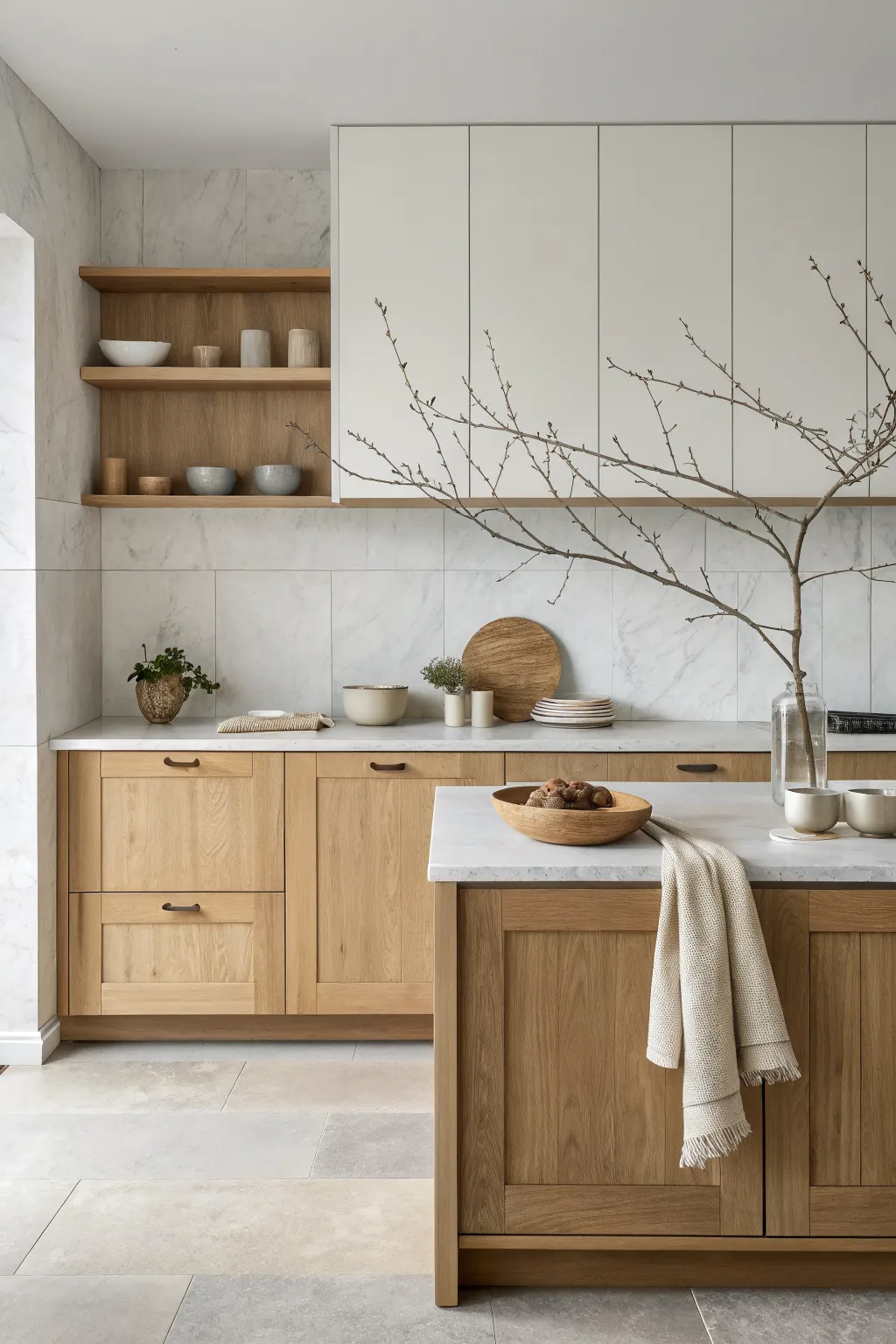
Japandi style blends Scandinavian brightness with Japanese restraint, making it a natural fit for minimalist kitchens. The look is soft, grounded, and highly intentional.
Use muted colors, natural wood, handmade-looking ceramics, simple lighting, and low-contrast materials. Cabinetry should stay clean-lined, while textures like wood grain, linen, and lightly veined stone add quiet warmth. This is a great direction if you want your kitchen interior minimalist design to feel peaceful and organic.
19. Minimal Decor Styling With Only Functional Accessories
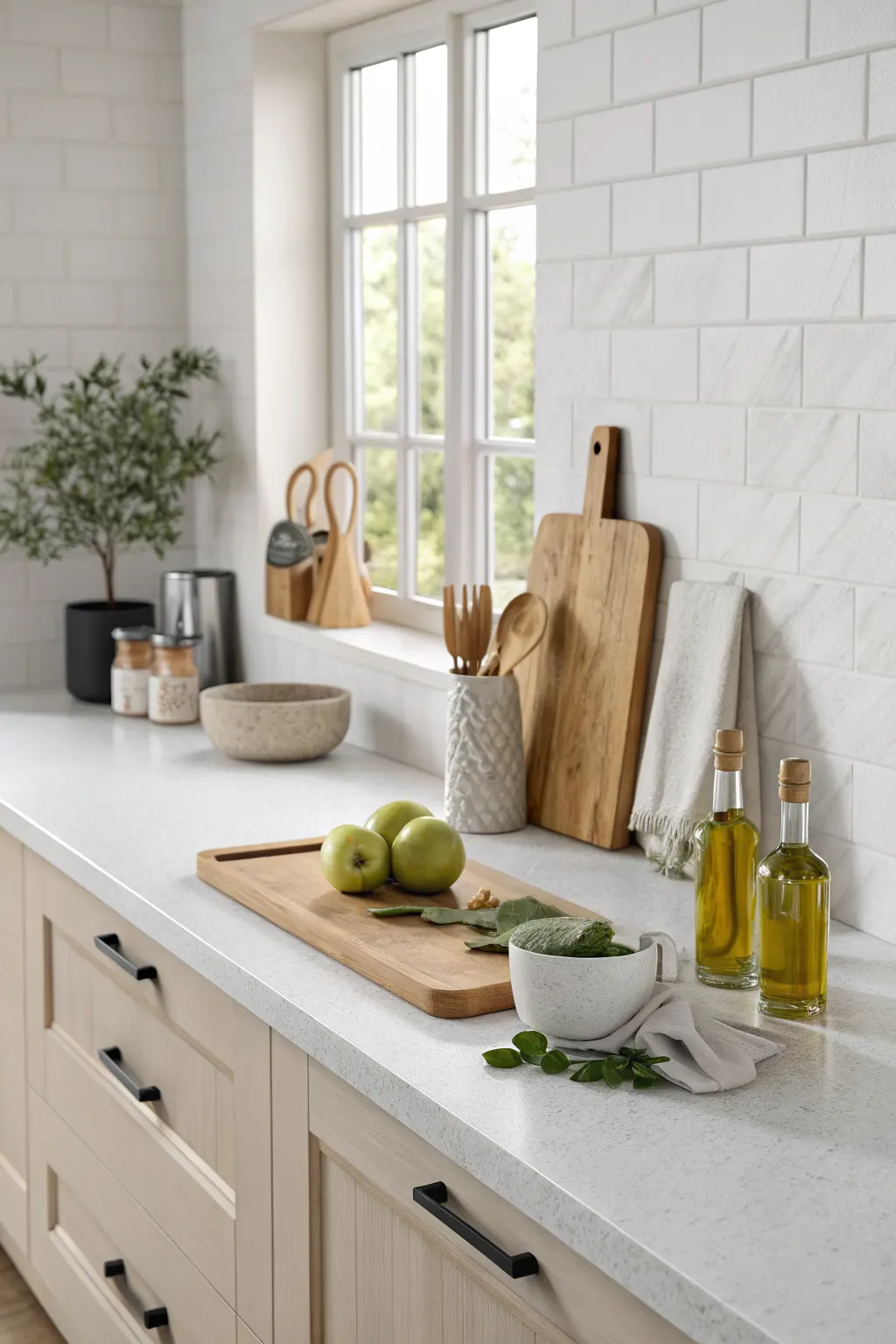
Minimalist kitchens still need styling, but the best accessories are useful as well as attractive. A wooden cutting board, a ceramic utensil holder, a tray for oils, or a bowl of fruit can make the space feel finished without creating clutter.
Keep colors coordinated and leave generous empty space around each item. Instead of filling every corner, focus on a few pieces that support your routine. The goal is a curated kitchen, not a bare one and not an overcrowded one.
20. Light Reflective Finishes That Make Small Kitchens Feel Bigger
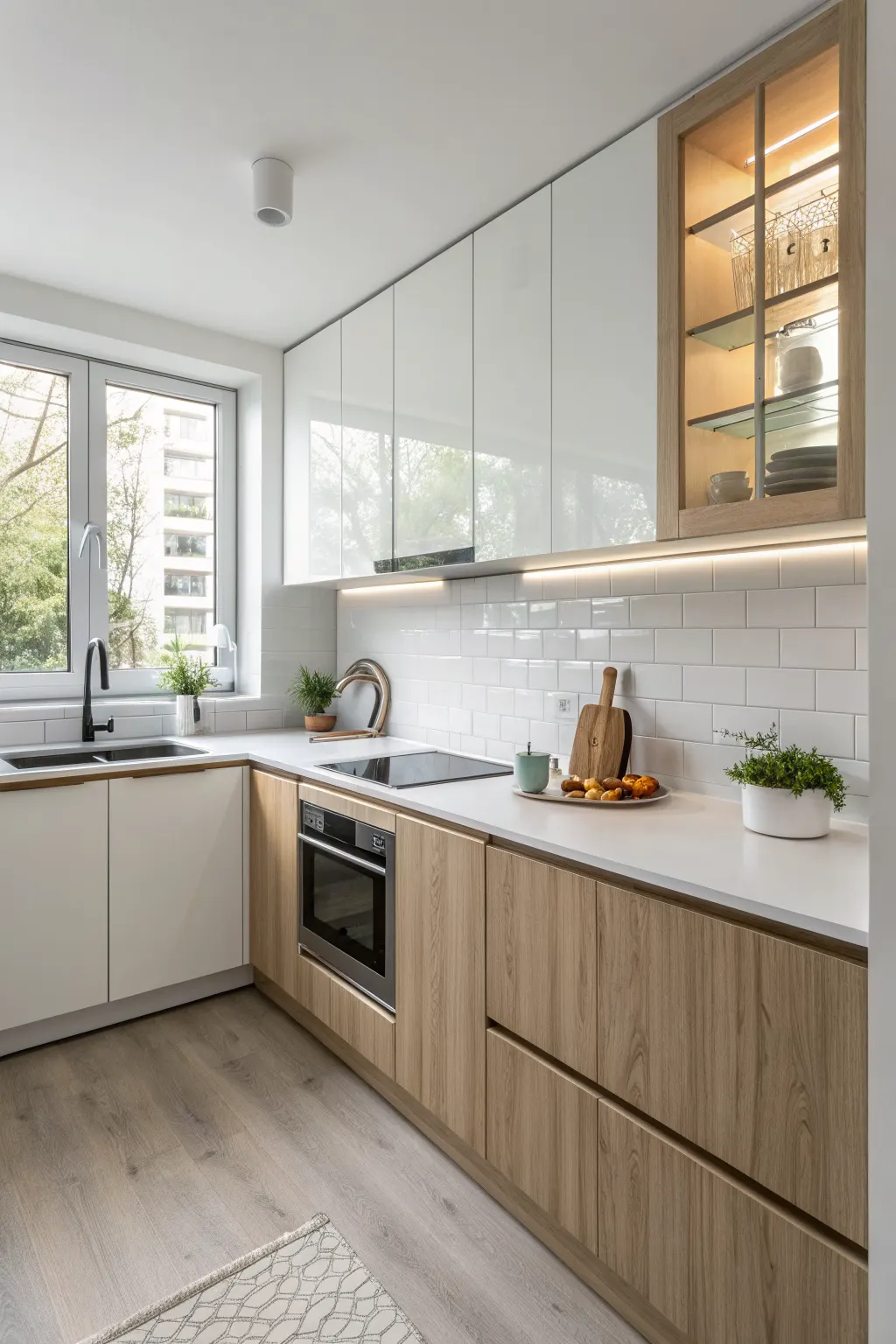
In small kitchen design, light reflection can do a lot of work. Satin cabinet finishes, glass-front accents, reflective backsplashes, and well-placed lighting all help compact kitchens appear more open.
You do not need mirror-like gloss everywhere. Even subtle sheen on cabinetry or stone can bounce light more effectively than flat dark finishes. For renters or budget updates, a simple backsplash change can help, and these peel and stick kitchen backsplash ideas may be worth exploring.
21. A Minimalist Kitchen With a Bold Single Statement Element
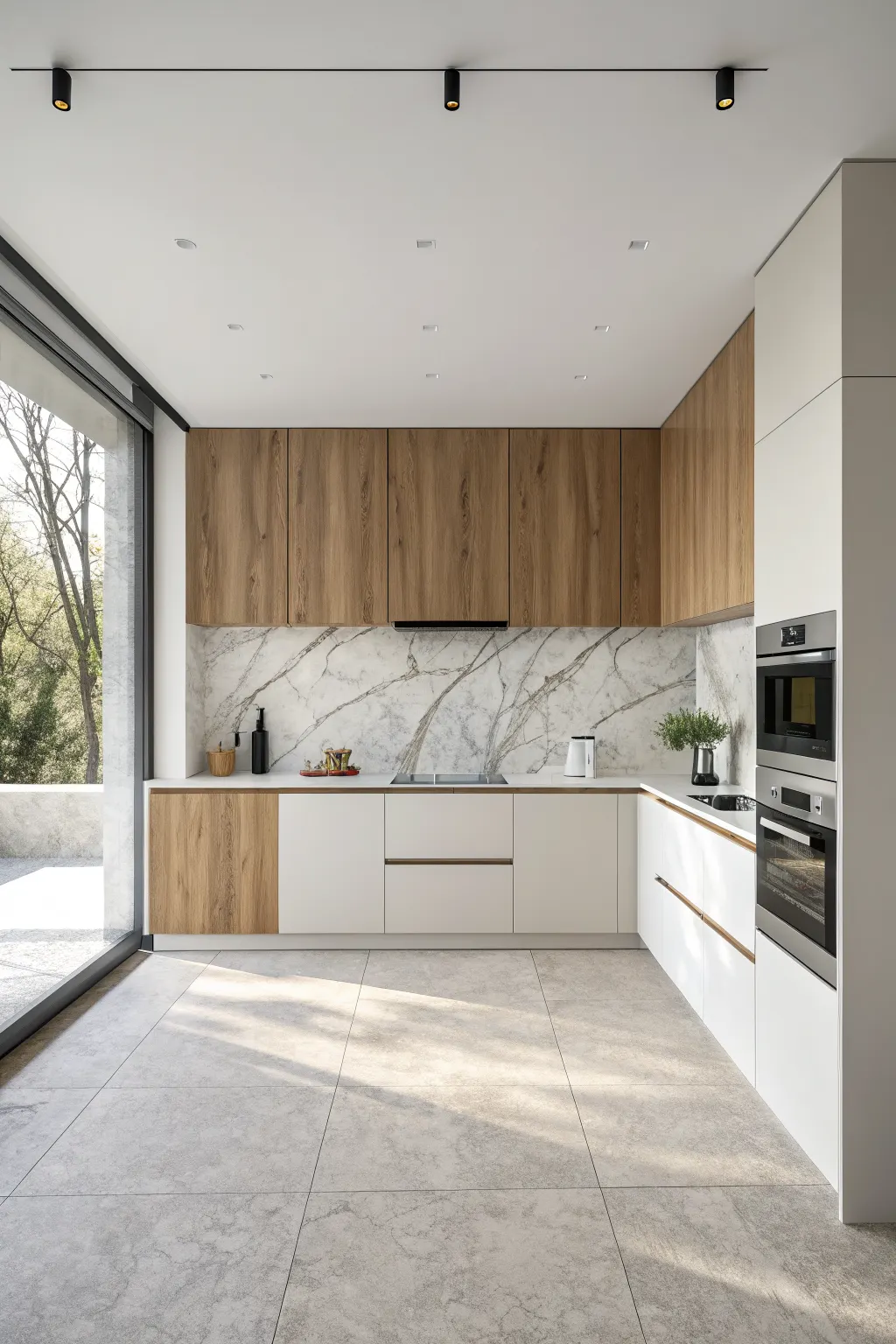
Minimalism does not mean every part of the kitchen has to disappear. In fact, one bold feature can make the whole room feel more intentional when everything else stays restrained.
A dramatic slab backsplash, a sculptural pendant light, a dark island in a pale kitchen, or a richly veined stone surface can all work well. The key is limiting the statement to one main move and keeping surrounding finishes calm. That balance allows the kitchen to feel clean, modern, and memorable at the same time.
How to choose the right minimalist kitchen style
The best minimalist kitchen style depends on how you live as much as how you want the room to look. If you like bright, cozy spaces, Scandinavian minimalism with white and wood may suit you best. If you prefer sharper contrast and a more urban look, a monochrome or matte black-accented kitchen may feel right.
For family homes, storage should lead the design. Floor-to-ceiling cabinets, hidden appliances, and durable finishes help a minimalist kitchen stay tidy in real life. In smaller homes, focus on compact layouts, reflective surfaces, and built-in solutions that reduce visual crowding.
It also helps to think about maintenance. High-gloss finishes, open shelving, and all-white surfaces can look beautiful, but they may require more upkeep depending on your routine. The most successful minimalist kitchen design is one that supports your habits instead of fighting them.
Key materials and finishes that work best
Minimalist kitchens usually rely on a short list of materials used consistently. Flat-panel or slim shaker cabinets in matte, satin, or wood veneer finishes are common because they look clean and age well. White, pale gray, beige, and natural wood tones are especially versatile.
For countertops, quartz is popular because it offers a refined look with low maintenance, while natural stone adds more unique movement. Backsplashes often work best when they are simple, either matching the countertop, using large-format tile, or staying in a single quiet color.
Lighting and hardware should stay understated. Slim pendants, recessed lights, concealed LED strips, and minimal cabinet pulls help preserve clean lines. If you need more organization behind the scenes, practical upgrades like kitchen drawer organizers, pantry storage organizers, and thoughtfully chosen cabinet hardware can make the space function as well as it looks.
Conclusion
A minimalist kitchen can be warm, useful, and full of character when each choice is intentional. From a small kitchen set with a one-wall layout to a spacious open kitchen design with hidden storage, the best ideas focus on simplicity that improves everyday life.
You do not have to use all 21 ideas at once. Start with one direction you love, whether that is handle less cabinets, soft Scandinavian colors, layered whites, or a single bold statement element. When materials, storage, and styling work together, a minimalist kitchen design can feel timeless for years to come.
