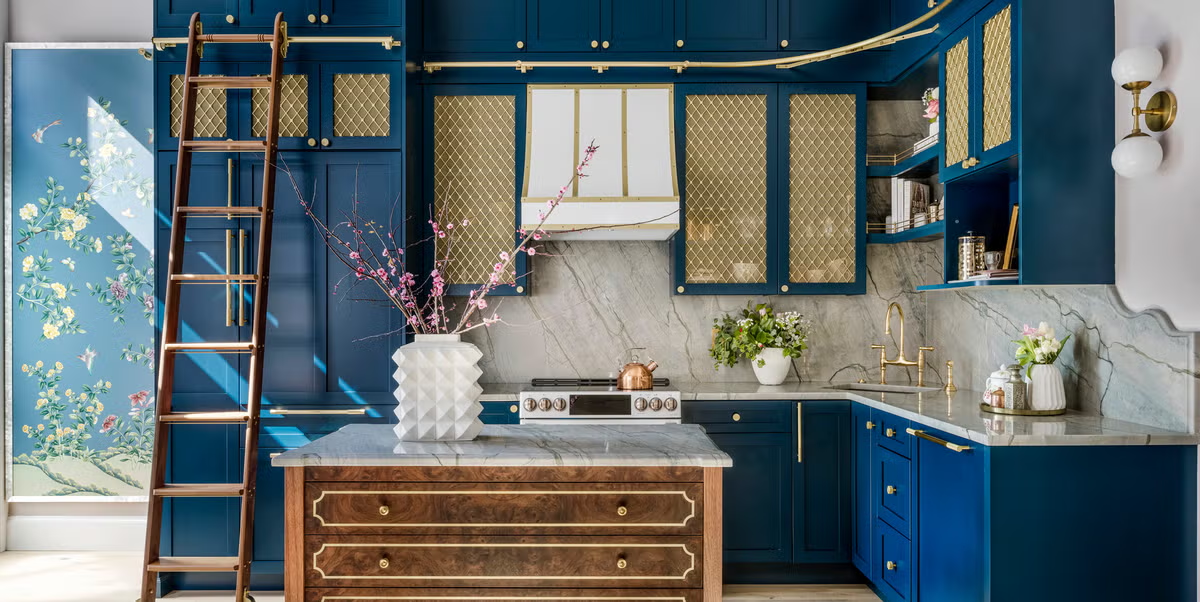
The color of your kitchen cabinets does more to shape the room than almost any other finish. Cabinets cover a large visual area, so a color change can make a kitchen feel brighter, warmer, larger, cozier, or more modern without changing the layout. That is why choosing the right cabinet color is often the biggest transformation in a kitchen refresh.
Whether you love open kitchen design, want modern kitchen ideas, or need practical inspiration for a small kitchen design, the right cabinet color can completely shift the mood. Some shades keep things light and airy, while others add contrast, depth, and custom character. Below are 25 kitchen cabinet color ideas that work across everything from simple kitchen design to bold statement spaces.
1. Crisp White Kitchen Cabinets for a Bright, Open Look
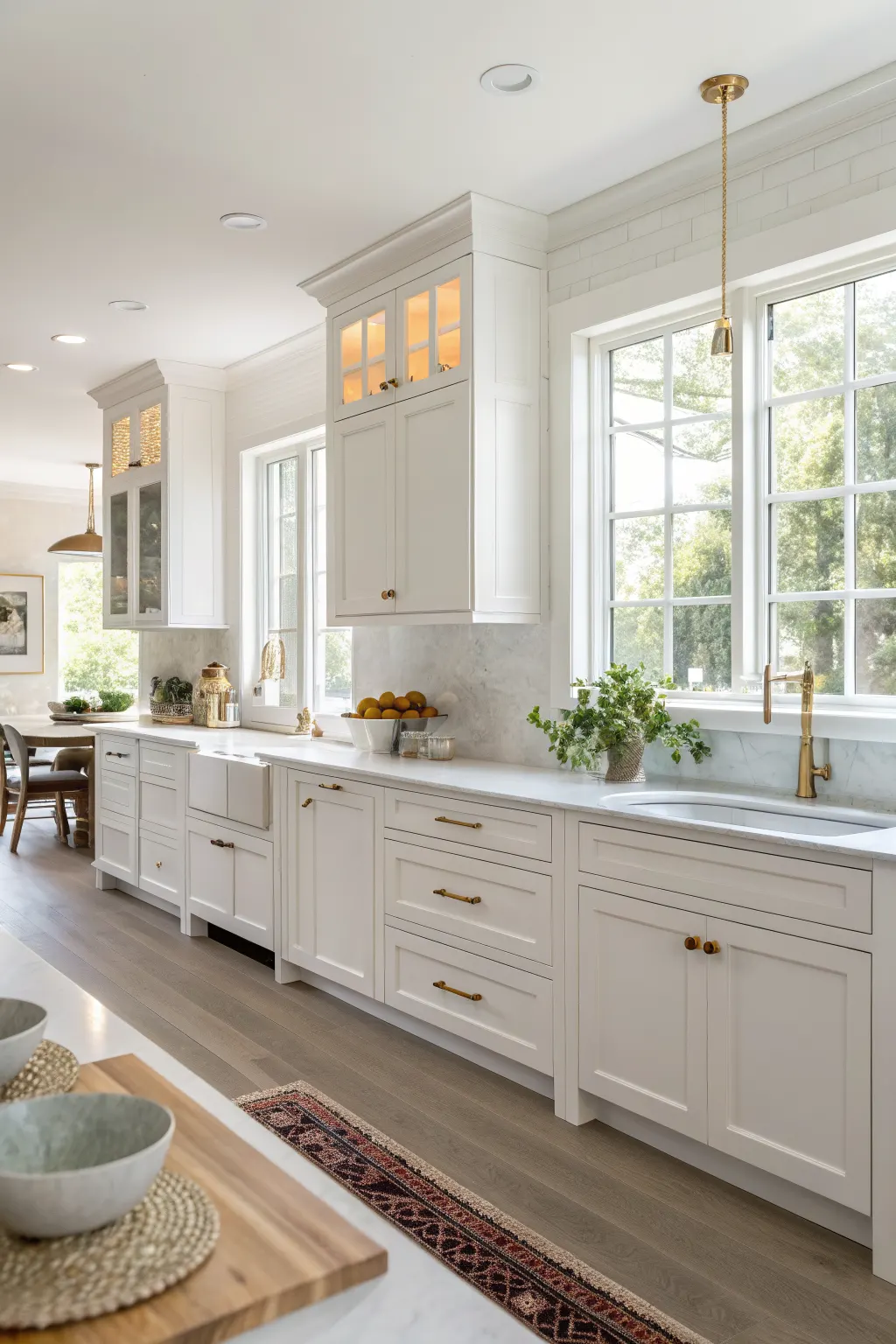
Crisp white kitchen cabinets are a classic choice because they instantly reflect light and make the room feel cleaner and more spacious. In an open kitchen design, bright white cabinets can help the kitchen blend seamlessly into adjoining living or dining areas instead of feeling visually heavy.
This color works especially well in kitchens with limited natural light, low ceilings, or compact layouts. Pair white cabinets with pale quartz, subtle backsplashes, and warm metallic hardware so the room feels inviting instead of sterile. If you want a safe, timeless update, this is one of the easiest ways to transform kitchen cabinets.
2. Warm Off-White Cabinets for a Soft Neutral Kitchen
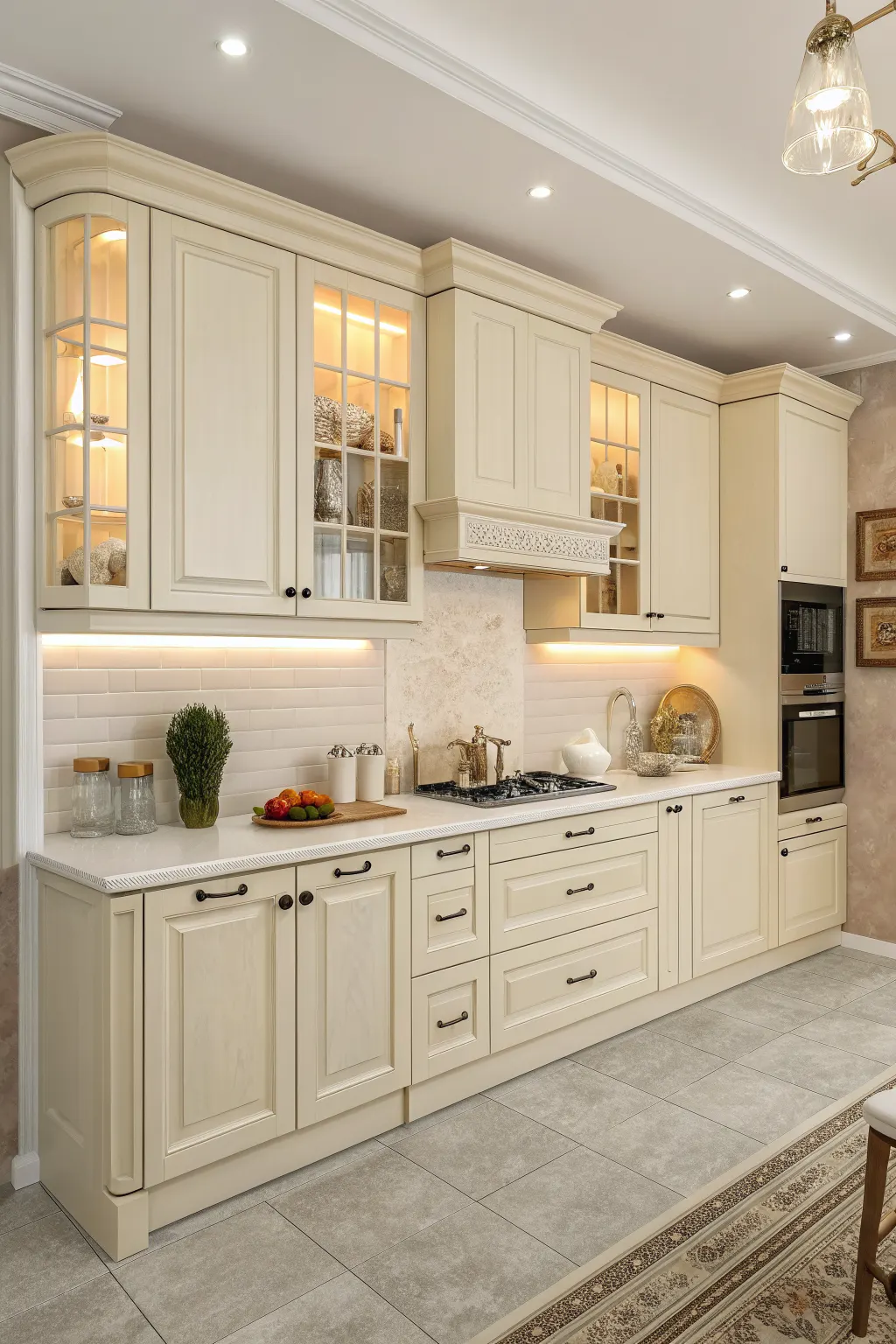
Warm off-white cabinets offer the brightness of white with a gentler, more lived-in feel. Creamy undertones soften the room and create the look of a warm neutral kitchen, which is ideal if stark white feels too sharp for your style.
These cabinets pair beautifully with wood flooring, brass pulls, and handmade tile. They also fit well in cozy kitchen spaces and modern farmhouse kitchens where softness matters as much as brightness. If you want a neutral that feels welcoming all day long, off-white is a strong option.
3. Greige Kitchen Cabinets for a Balanced Modern Classic
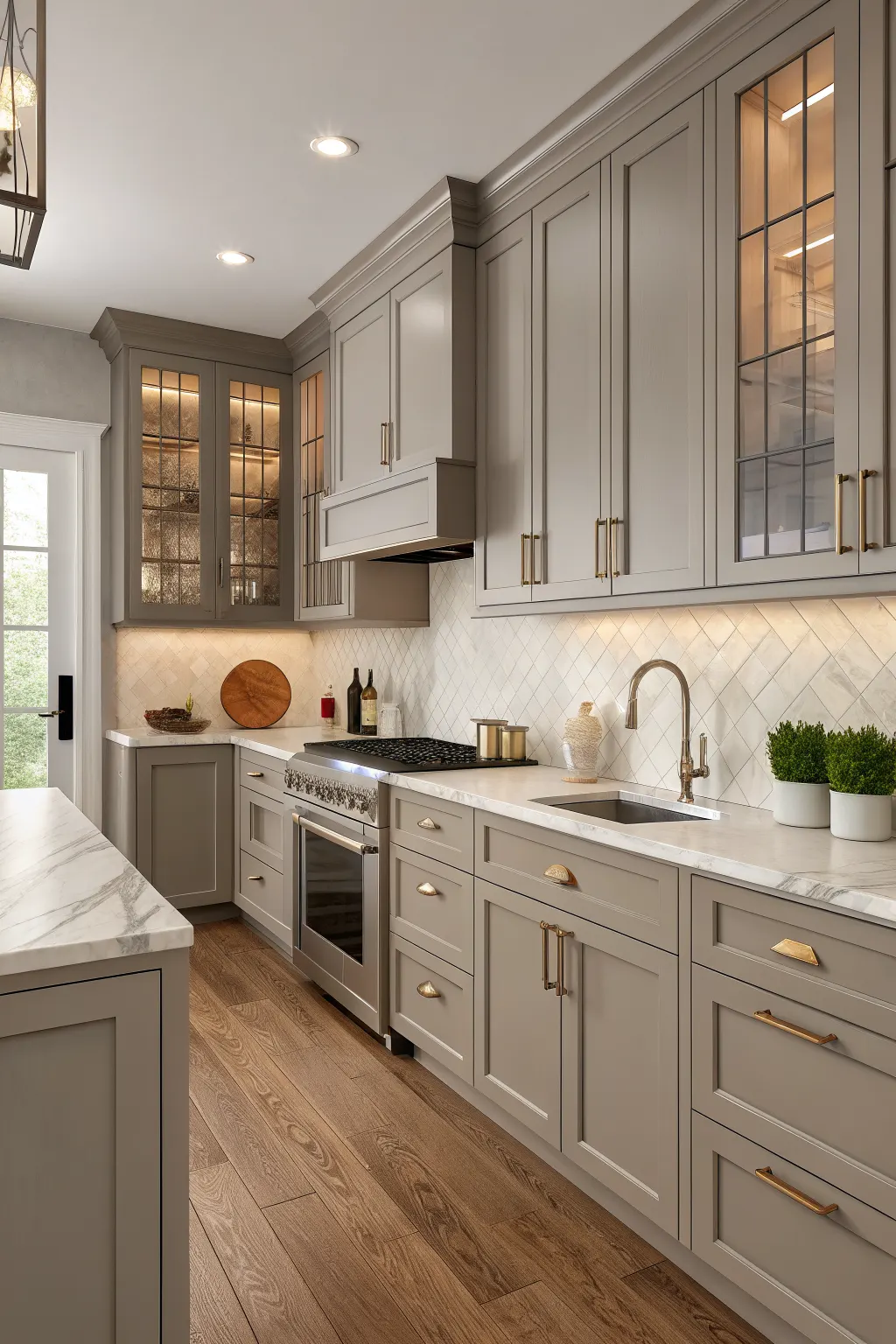
Greige sits between gray and beige, which makes it one of the most flexible cabinet colors available. It can lean warm or cool depending on the lighting, so it works across modern kitchen design, transitional homes, and simple kitchen design alike.
Greige kitchen cabinets are especially useful when you need a color that plays well with many countertop materials, from white quartz to veined stone and butcher block. It gives more depth than white but stays versatile enough to avoid dating the kitchen quickly.
4. Taupe Cabinets That Add Depth Without Going Dark
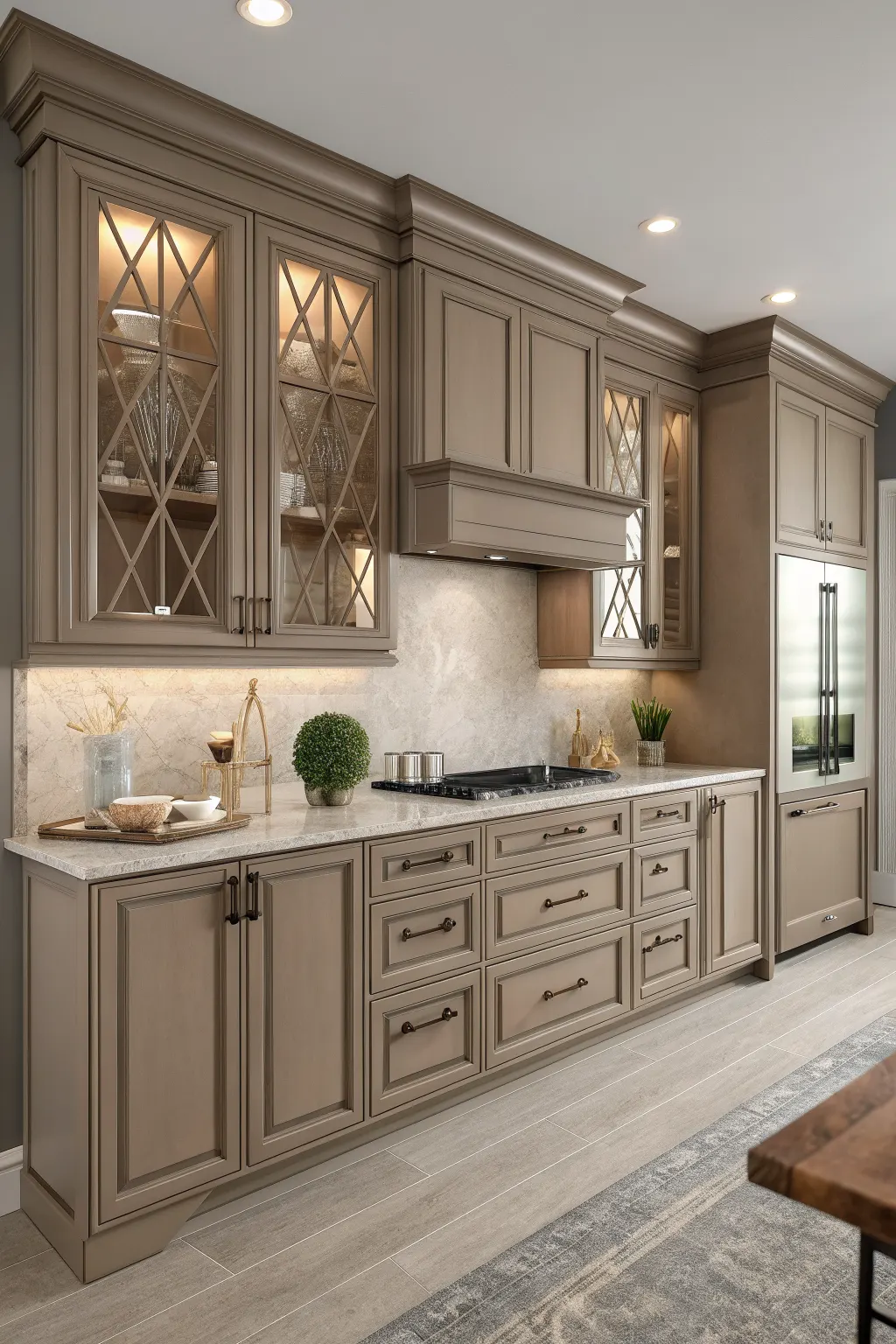
Taupe kitchen cabinets bring in earthiness without making the room feel too heavy. This shade has enough richness to add visual depth, yet it still reads calm and quiet, which makes it a smart choice for anyone who wants subtle character.
Taupe works well with warm woods, creamy walls, and soft black accents. In a kitchen that needs more dimension but cannot handle dark cabinetry, taupe fills that gap beautifully. It also suits homeowners who want their kitchen cabinets to look custom rather than basic.
5. Light Gray Cabinets for a Clean Contemporary Style
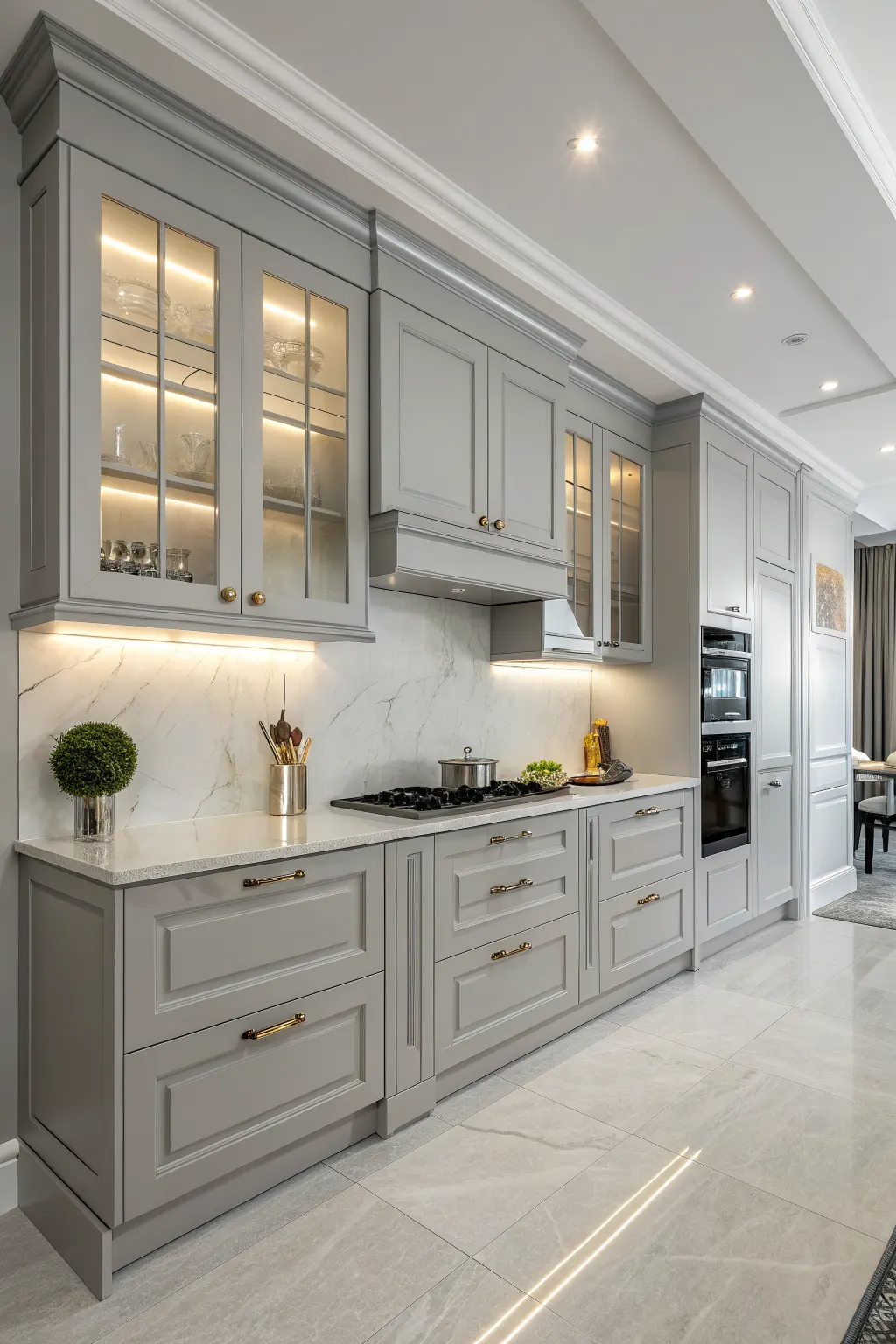
Light gray kitchen cabinets are a reliable fit for a clean contemporary look. They feel cooler and sleeker than beige-toned neutrals, which makes them especially popular in modern kitchen ideas with stainless steel appliances and minimal hardware.
This shade can keep the room feeling open while still adding more contrast than white. Light gray also works well with marble-look quartz, glass tile, and matte black fixtures. If you want a modern update that still feels easy to live with, pale gray is a smart middle ground.
6. Charcoal Gray Cabinets for Dramatic Contrast
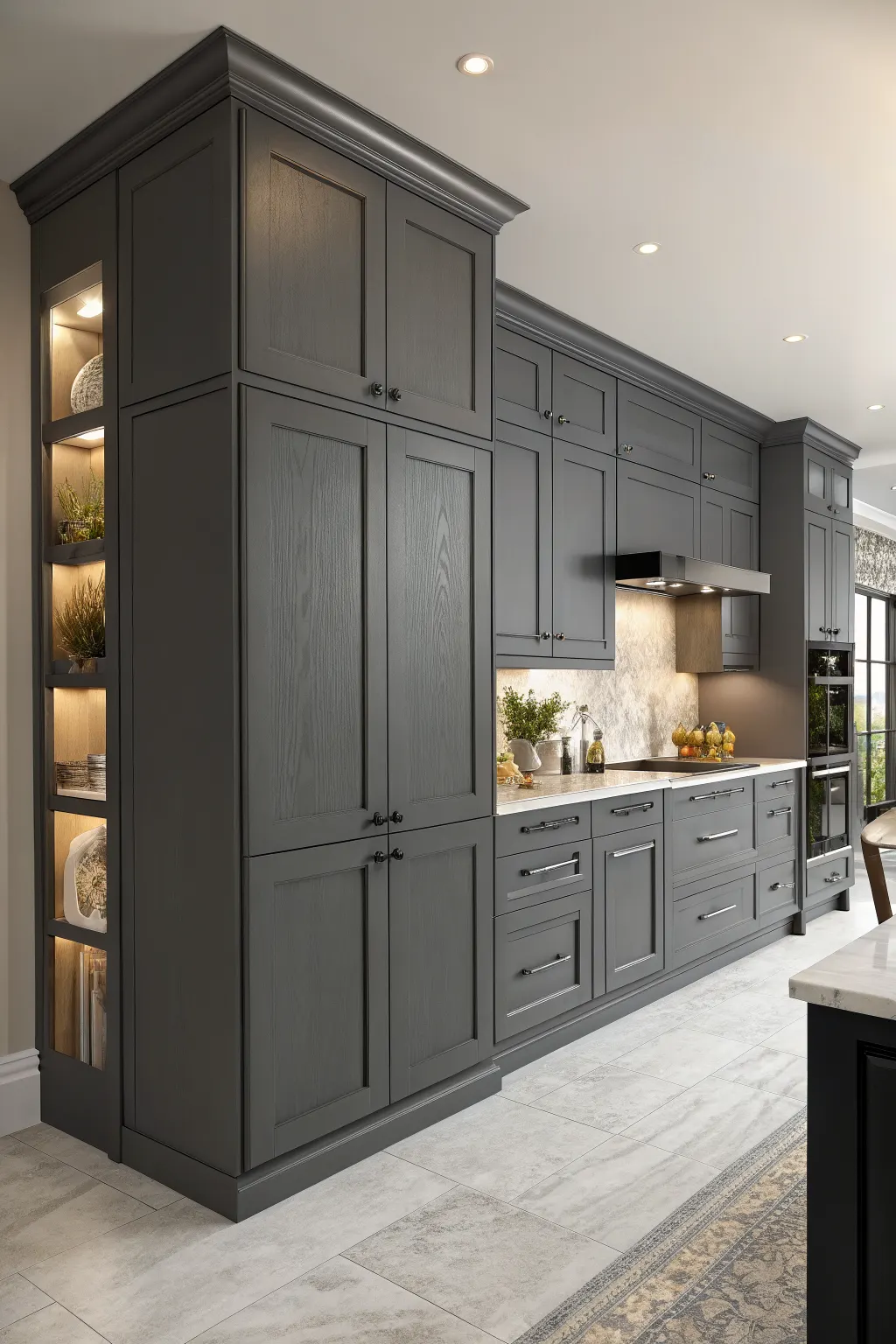
Charcoal gray kitchen cabinets create stronger contrast and a more architectural look. They add depth in open layouts and can help anchor kitchens that otherwise feel too bright or flat.
Charcoal works best when balanced with lighter counters, good lighting, and some warmer materials like oak stools or brass pendants. It suits modern kitchen design particularly well, but it can also look refined in transitional spaces. If black feels too intense, charcoal offers a softer path to drama.
7. Matte Black Cabinets for a Sleek Statement Kitchen
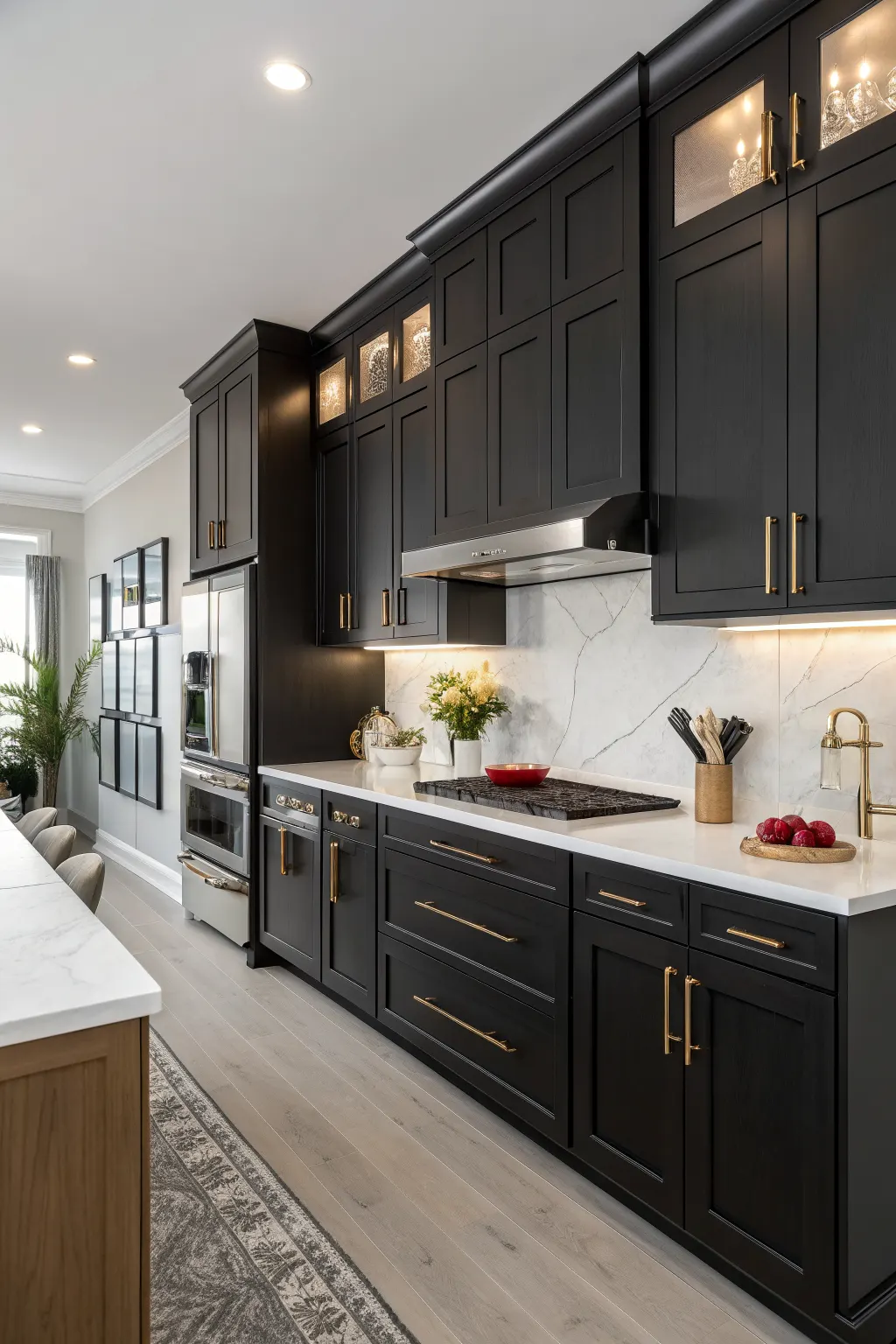
Matte black kitchen cabinets make a bold statement and can turn an ordinary kitchen into a designer-looking space. The key is balance. Black cabinets feel best when paired with light countertops, warm woods, and enough natural or layered lighting to keep the room from feeling closed in.
This color works especially well in larger kitchens and open-plan homes where contrast helps define the cooking zone. Matte black also hides some visual clutter better than glossy surfaces. For a polished finish, combine it with simple hardware and clean-lined fixtures.
8. Natural Wood Tone Cabinets for Organic Warmth
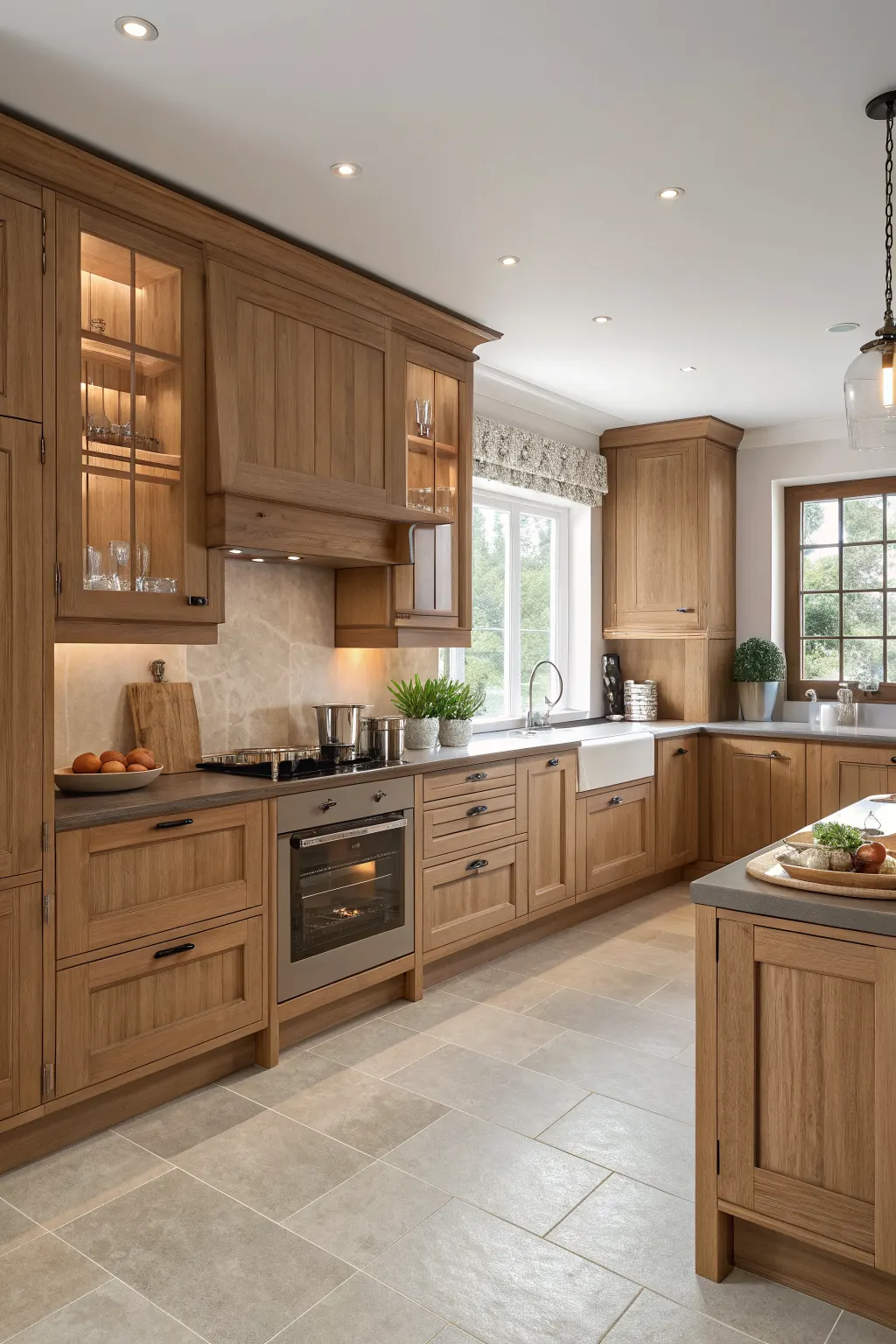
Natural wood tone kitchen cabinets bring instant texture and warmth. Oak, walnut, ash, and similar finishes can make even a newer kitchen feel grounded and timeless. They work beautifully in both modern spaces and more relaxed interiors.
Wood cabinets are especially effective if you want a cozy kitchen that still feels uncluttered. Their grain adds visual interest without needing bold color. Pair them with stone counters, soft white walls, and understated hardware for a balanced, organic look.
9. Honey Oak Cabinets for a Fresh Comeback
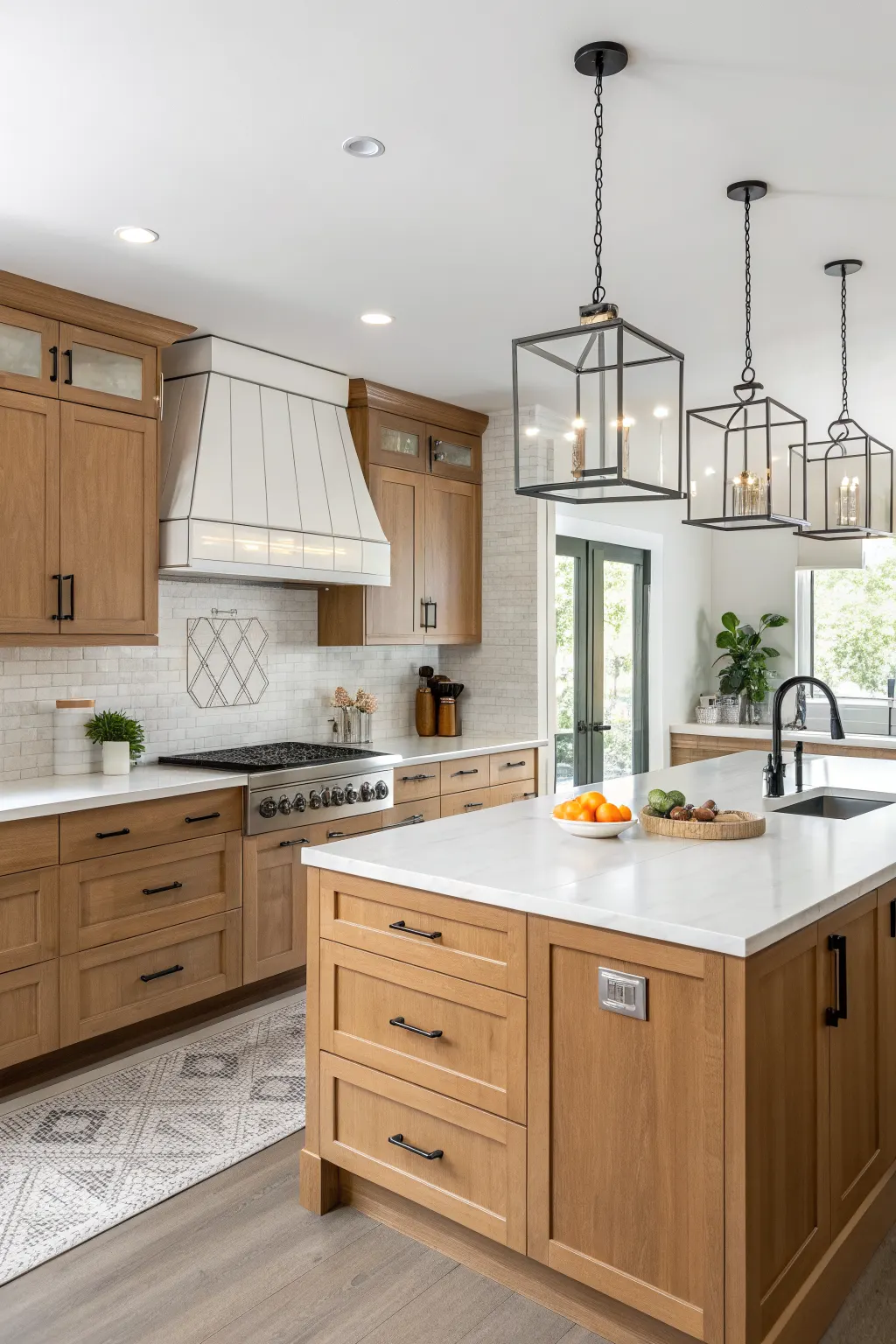
Honey oak kitchen cabinets are returning in a more updated way. Instead of pairing them with dated finishes, today’s version looks cleaner and fresher with modern lighting, simple backsplash choices, and less ornate hardware.
To make honey oak feel current, combine it with white or cream counters, streamlined cabinet pulls, and neutral walls. This color can be especially appealing in small kitchen design because it adds warmth without absorbing too much light. The result feels familiar, but far more intentional.
10. Deep Walnut Cabinets for Rich Luxury
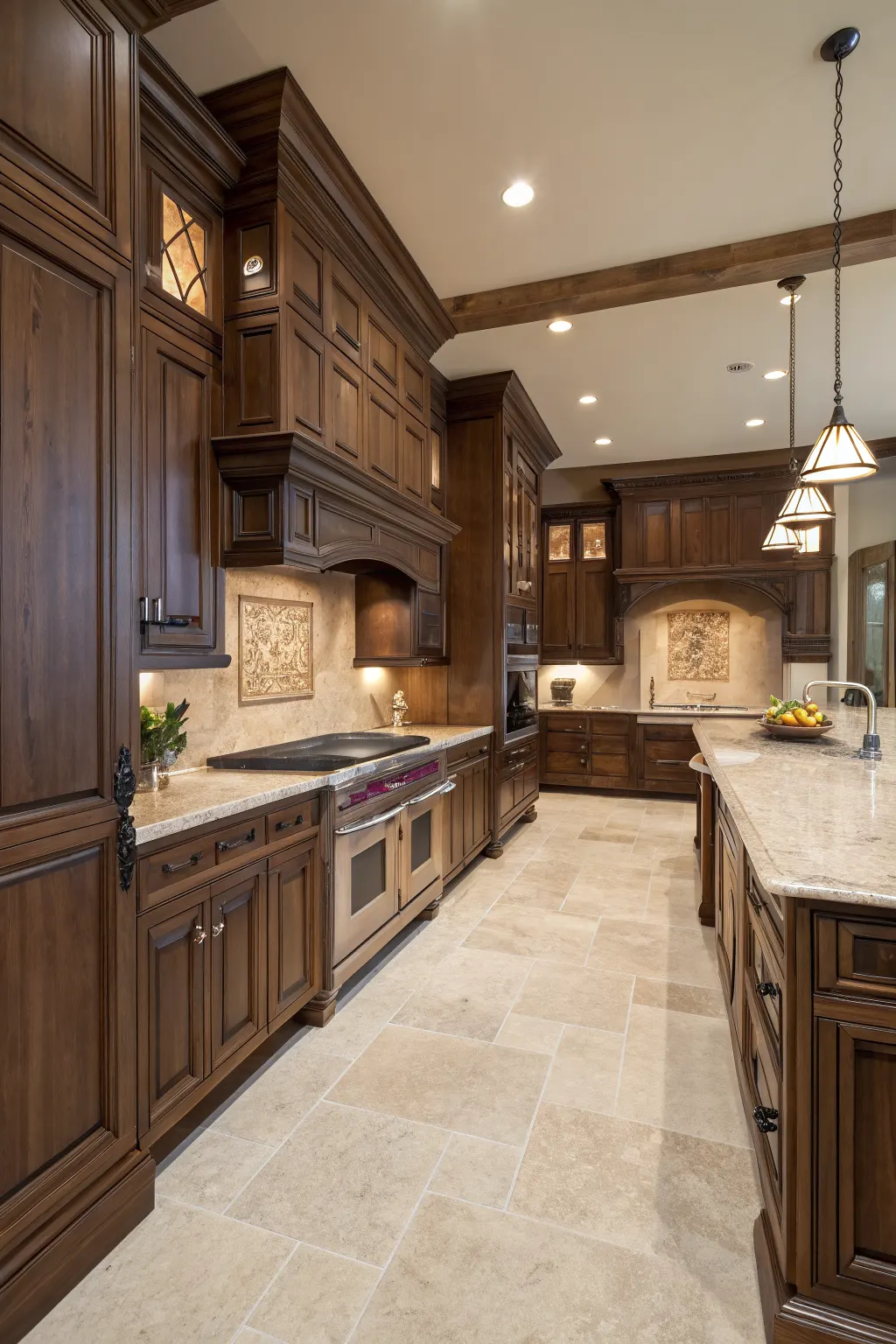
Deep walnut kitchen cabinets create a rich, upscale look with strong natural character. The dark brown tone adds warmth that black or charcoal sometimes lacks, making the room feel elegant rather than stark.
Walnut looks particularly beautiful in larger kitchens, especially when paired with light stone countertops and understated metal finishes. It also works well in refined modern kitchen design where you want richness without busy detailing. If your goal is depth and sophistication, walnut is hard to beat.
11. Sage Green Cabinets for a Calm Nature-Inspired Kitchen
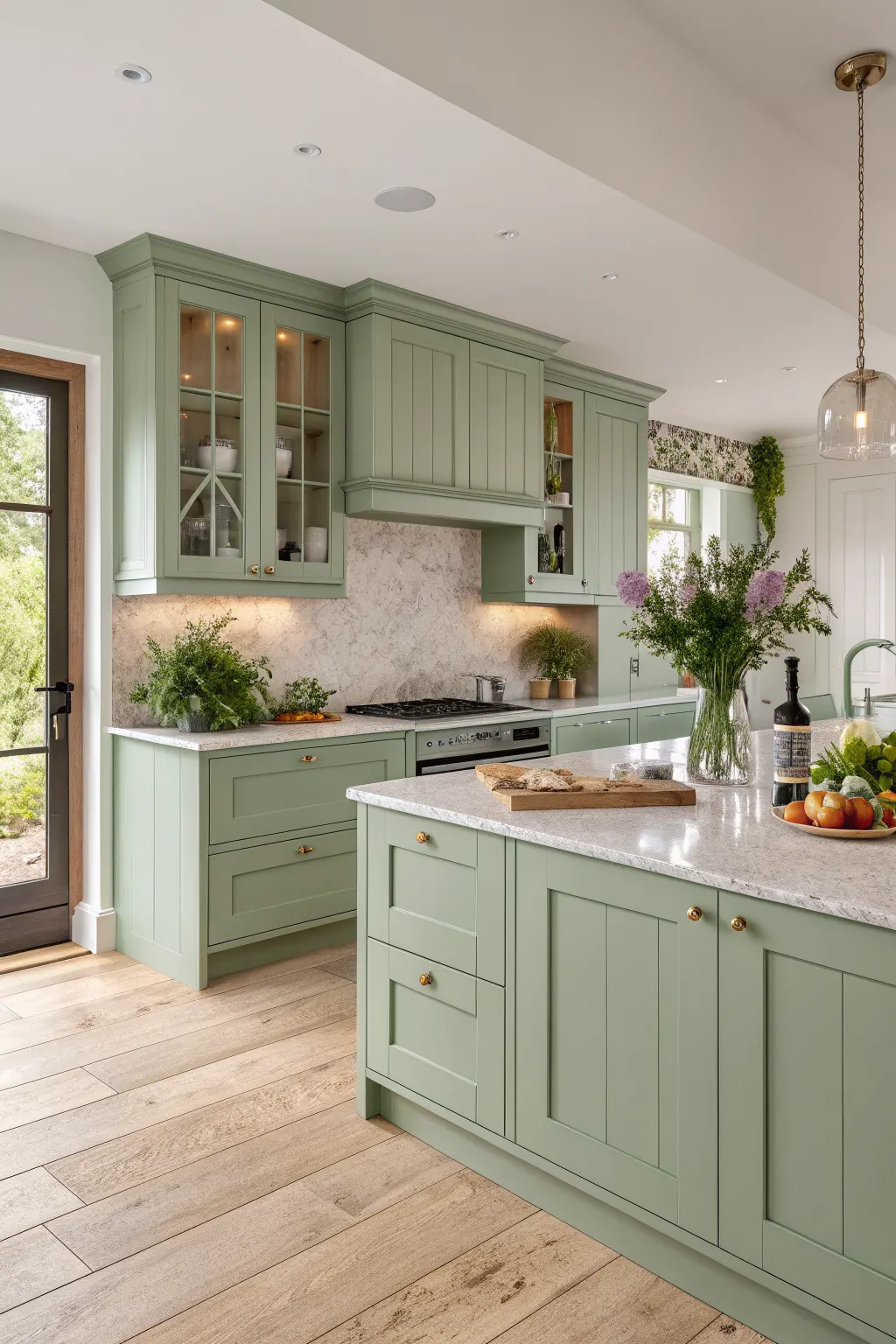
Sage green kitchen cabinets are soft, easy on the eyes, and ideal for creating a calm, nature-inspired room. This muted green has enough color to feel special without taking over the kitchen.
Sage works beautifully with brass hardware, oak shelving, creamy walls, and white counters. It is one of the best choices for a cozy kitchen because it feels relaxed and welcoming. If you want color but still need a peaceful everyday backdrop, sage is an excellent pick.
12. Olive Green Cabinets for Earthy Sophistication
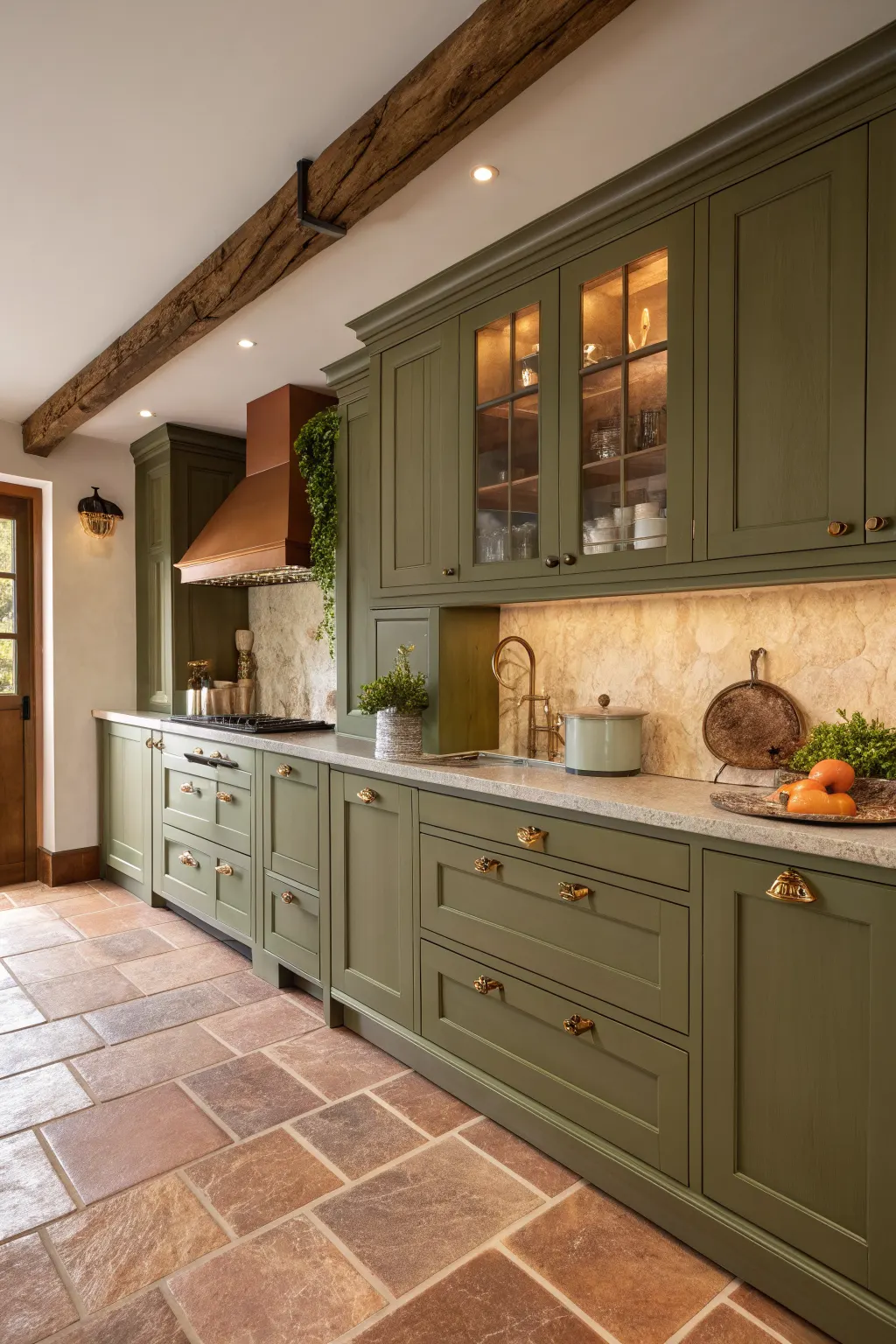
Olive green cabinets offer a deeper, more grounded version of green. They feel earthy and mature, with just enough moodiness to add interest. In kitchens with warm light, olive can look especially rich and inviting.
This shade pairs well with natural stone, terracotta, brushed brass, and wood accents. It is a strong fit for warm neutral kitchen palettes and for anyone who wants a color that feels stylish but not loud. Olive adds personality while staying connected to natural materials.
13. Forest Green Cabinets for Bold Character
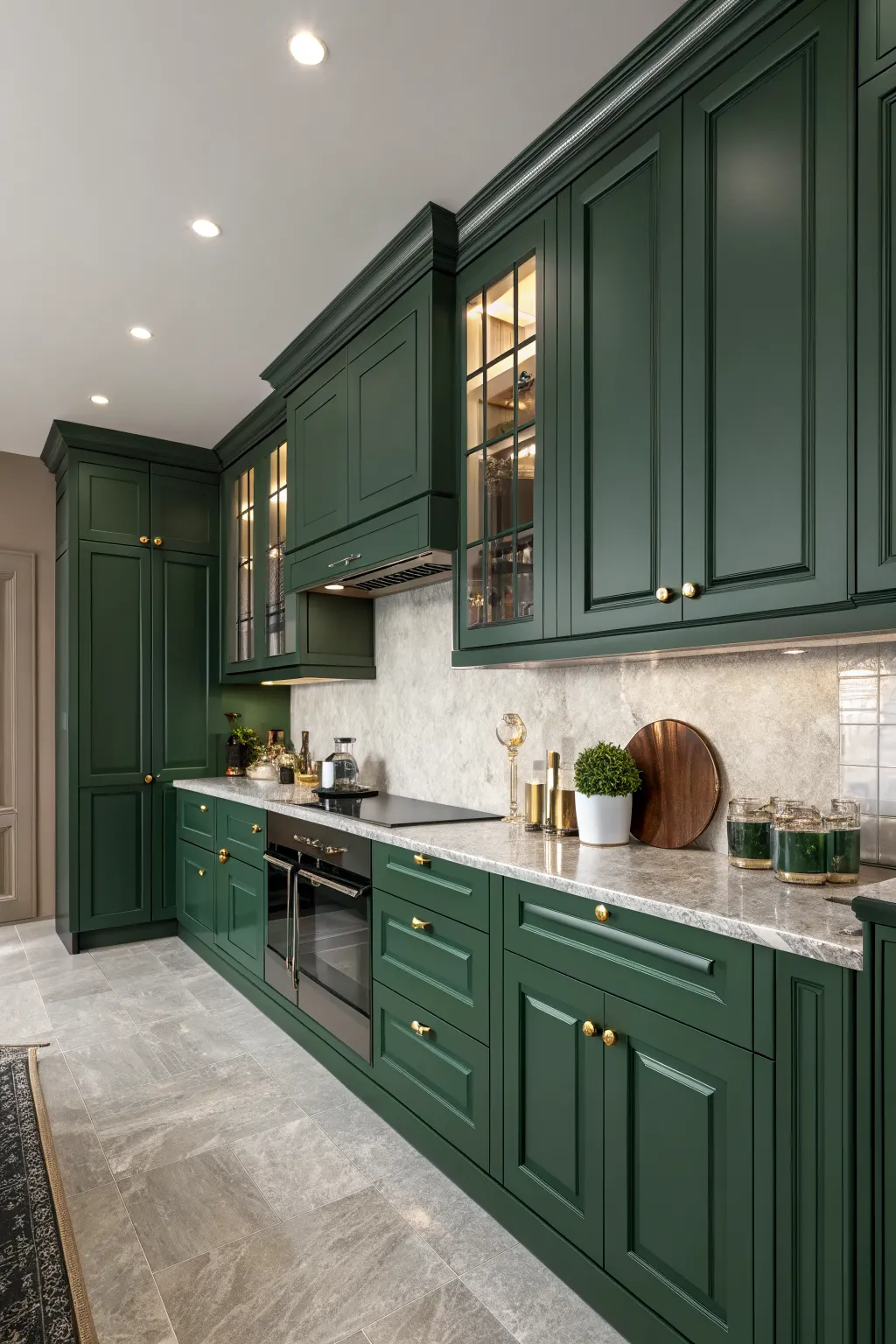
Forest green kitchen cabinets bring bold color and classic depth at the same time. This darker green can feel dramatic, but it also has a timeless quality when paired with traditional materials like stone countertops and warm metal hardware.
Use forest green when you want kitchen cabinets to be a focal point rather than a background finish. It works especially well in spaces with white walls, good ceiling height, or abundant natural light. The overall effect is strong, distinctive, and refined.
14. Dusty Blue Cabinets for a Relaxed Transitional Look
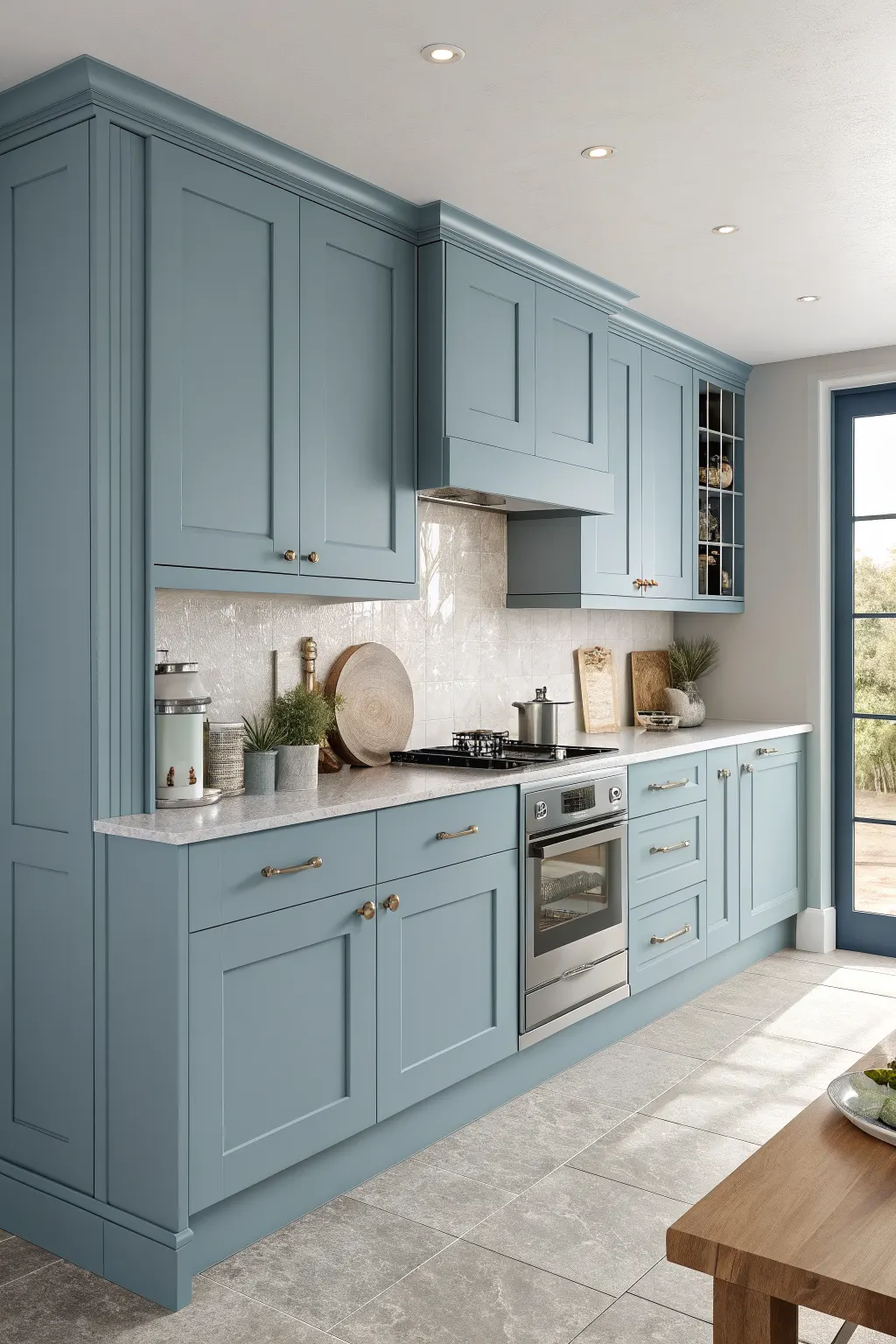
Dusty blue kitchen cabinets add color in a quiet, gentle way. Because the tone is muted, it feels softer than bright blue and easier to live with long term. This makes it ideal for transitional kitchens that mix classic and modern elements.
Dusty blue pairs nicely with brushed nickel, pale counters, and white subway tile. It is a good option for homeowners drawn to blue kitchen cabinets but not ready for a darker navy statement. The look is relaxed, fresh, and highly versatile.
15. Navy Blue Kitchen Cabinets for Timeless Depth
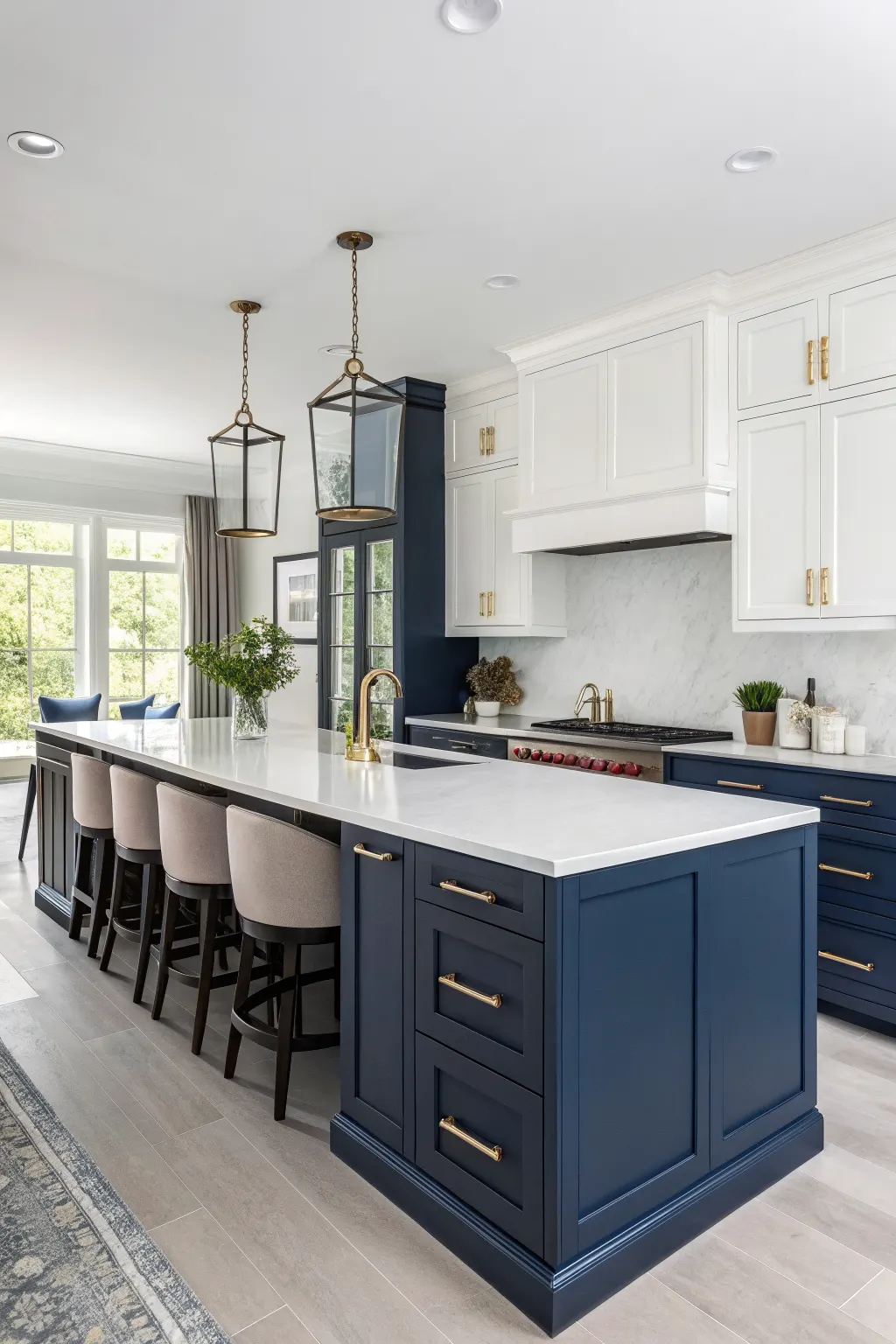
Navy blue kitchen cabinets remain a favorite because they deliver depth without feeling trendy in a short-lived way. Navy looks crisp with white counters, polished with brass, and tailored with black accents, making it one of the most adaptable bold colors for cabinetry.
You can use navy on all cabinets or reserve it for a large island. In many kitchens, navy provides enough contrast to feel custom while still acting like a neutral. If you are collecting modern kitchen ideas that feel classic too, navy deserves a spot at the top of the list.
16. Sky Blue Cabinets for an Airy Cottage Feel
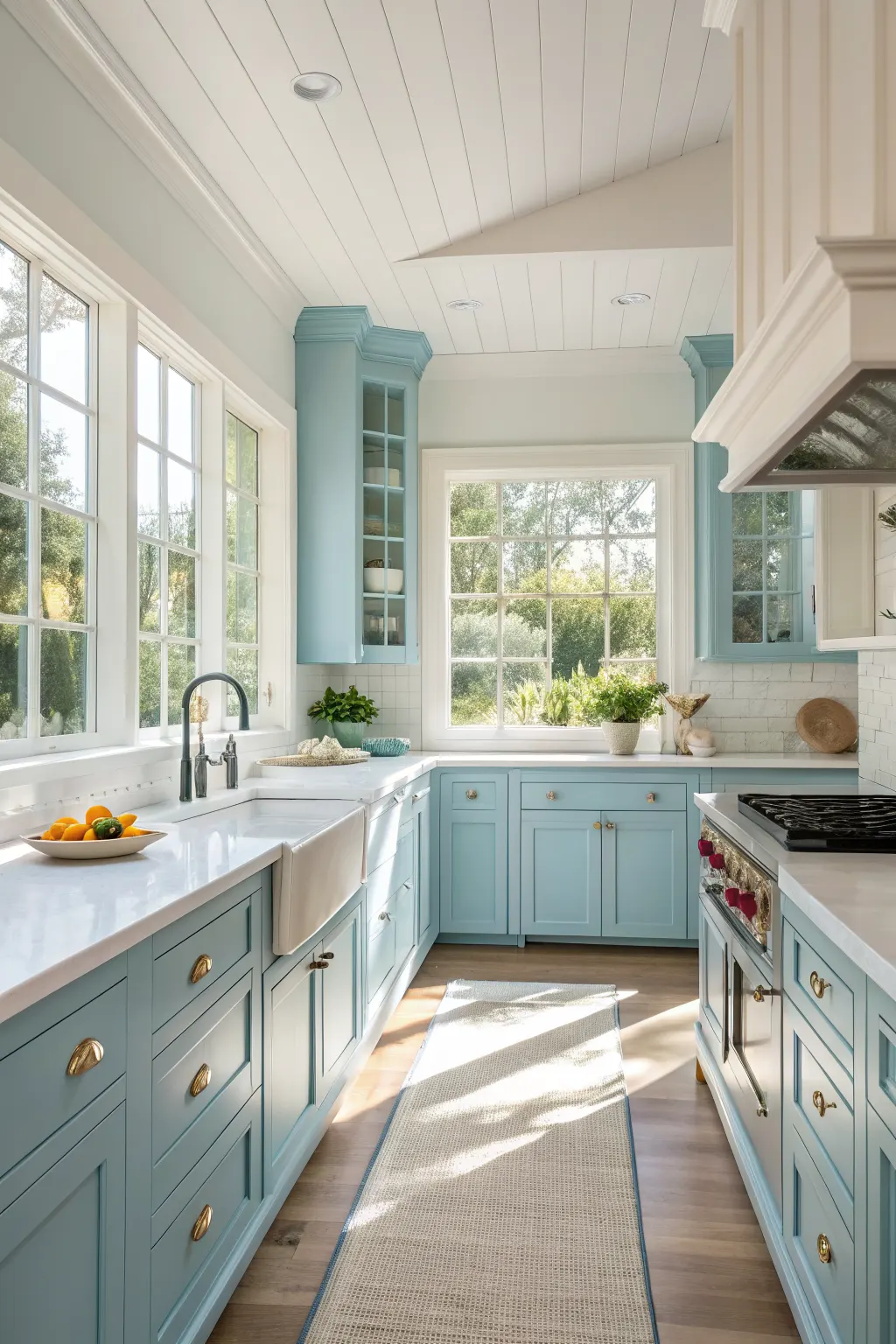
Sky blue kitchen cabinets bring a breezy, cheerful feel that works especially well in sun-filled spaces. This lighter shade can make a kitchen feel more playful and relaxed without becoming overwhelming.
In a small kitchen design, sky blue can open up the room much like white, but with more personality. It pairs best with white trim, pale counters, woven textures, and cottage-inspired details. If you want a softer color story with an easygoing mood, sky blue is a charming choice.
17. Teal Cabinets for a Creative Color-Forward Kitchen
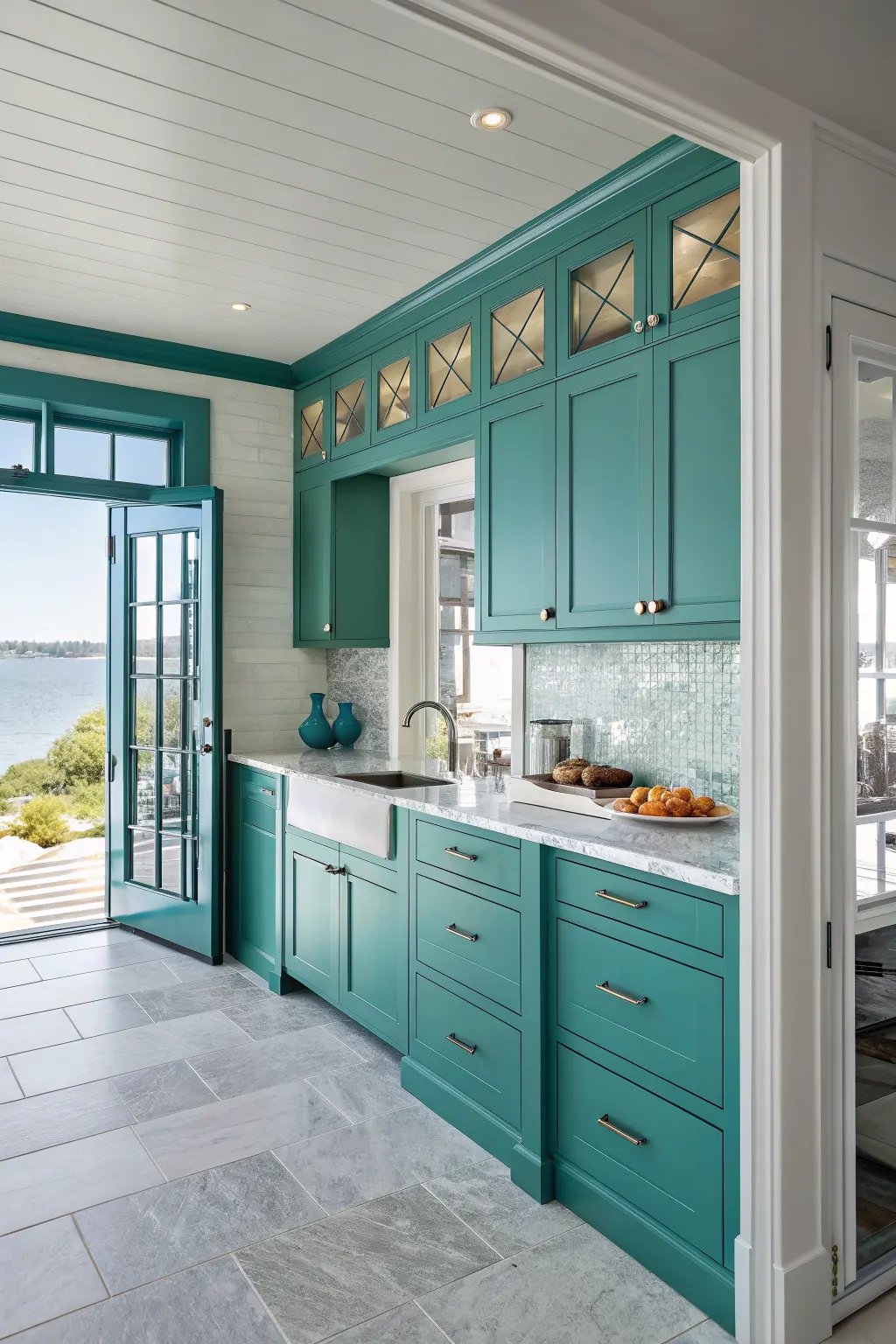
Teal kitchen cabinets blend blue and green for a look that feels energetic, artistic, and unexpected. Depending on the undertones, teal can swing coastal, vintage, or modern, which makes it more flexible than many people expect.
This shade looks best when the rest of the kitchen stays fairly controlled. Pair it with simple tile, natural wood, and restrained hardware so the color gets room to shine. Teal is ideal if you want kitchen cabinets with personality and a more individual look.
18. Blush Beige Cabinets for Subtle Warmth
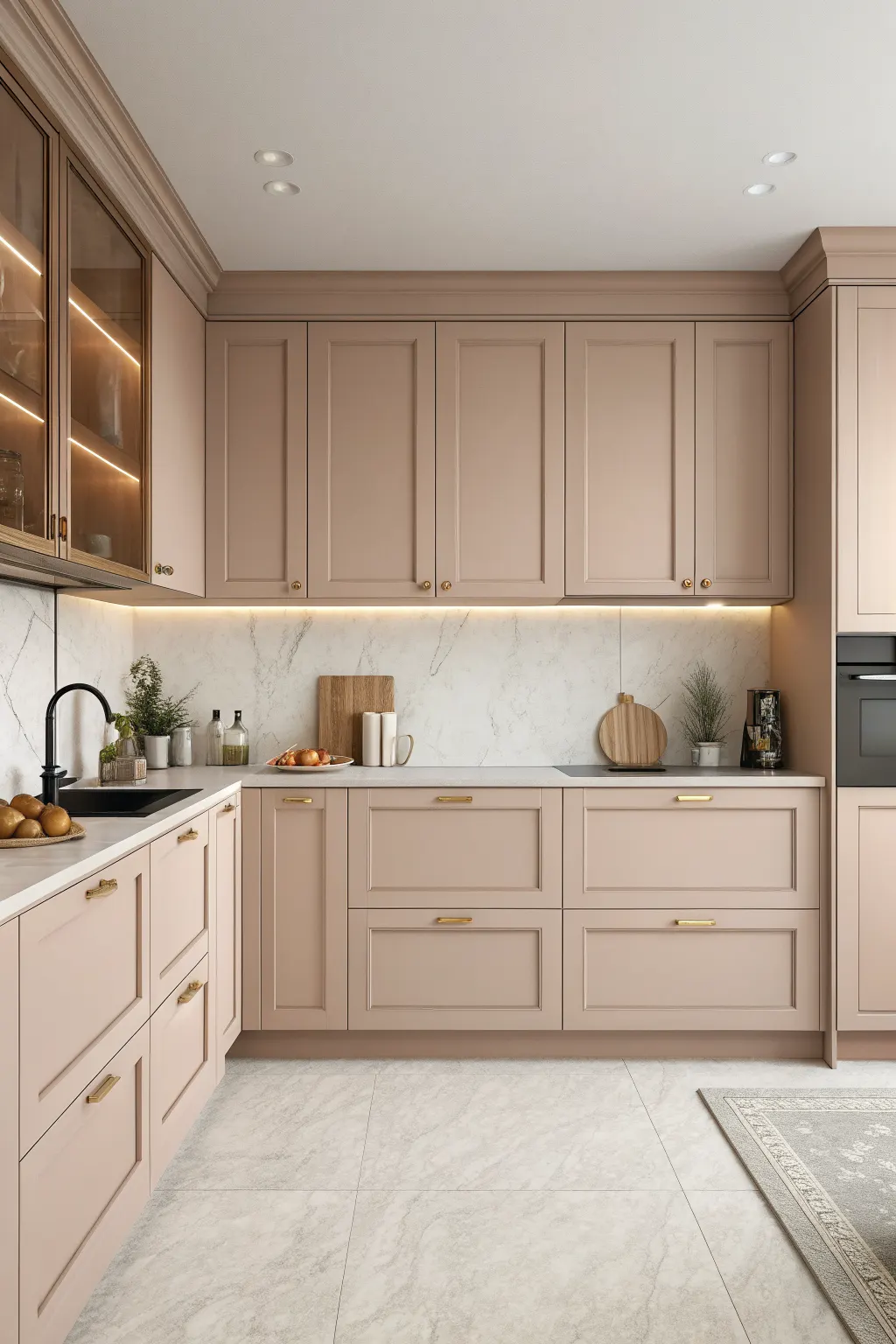
Blush beige cabinets offer a soft, warming neutral that feels a little different from standard cream or taupe. The faint rosy undertone keeps the color from feeling flat, yet it still reads neutral in most kitchens.
This is a smart choice for simple kitchen design where you want warmth and softness without obvious color. It pairs especially well with warm whites, light woods, and brushed brass. The result is subtle, polished, and quietly distinctive.
19. Terracotta Cabinets for Rustic Mediterranean Charm
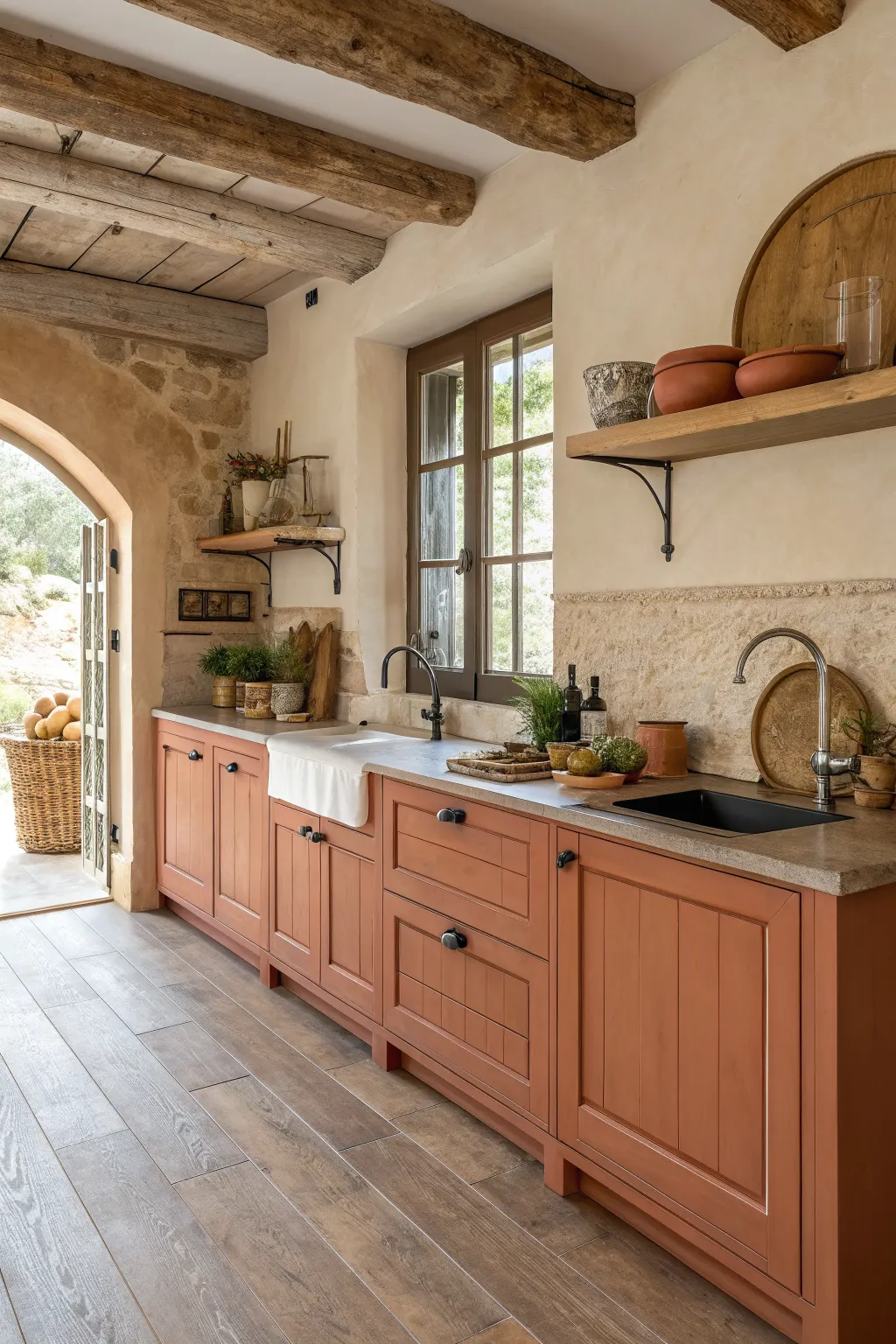
Terracotta-toned kitchen cabinets bring earthy warmth and a strong sense of character. This color feels especially at home with rustic textures, natural wood, aged metal, and light plaster-like walls.
Terracotta can work beautifully in homes that lean organic, collected, or Mediterranean-inspired. To keep it from feeling too heavy, balance it with cream countertops, open shelving, and plenty of light. If you want a kitchen that feels soulful and memorable, this color creates that instantly.
20. Buttercream Yellow Cabinets for Vintage Cheer
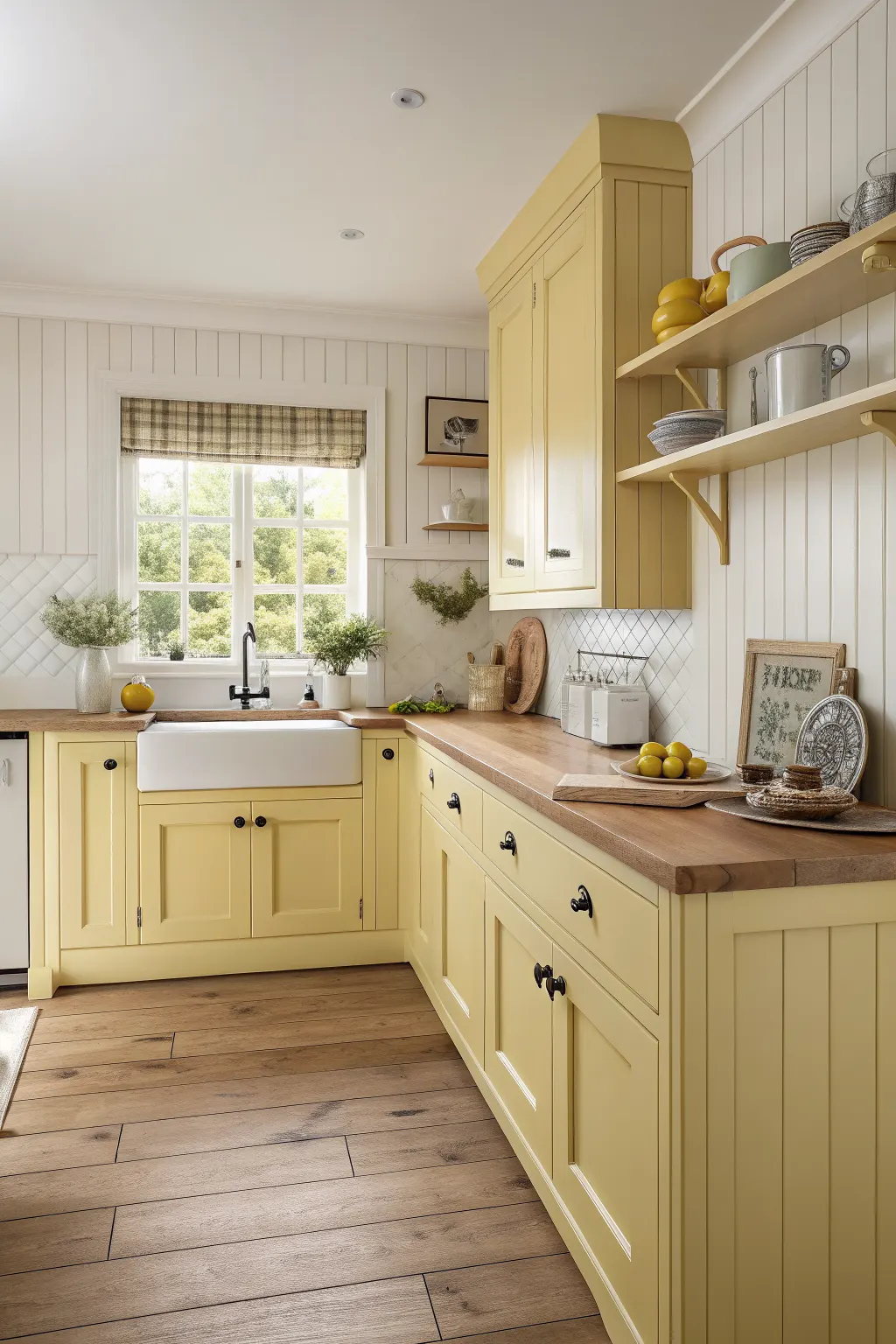
Buttercream yellow kitchen cabinets add a sunny, welcoming quality without the intensity of bright yellow. The softness of the tone keeps it gentle and livable, making it a great choice for kitchens that need warmth and charm.
This color fits older homes, cottage spaces, and anyone who wants a hint of vintage cheer. Pair it with white beadboard, simple hardware, and warm wood accents. In the right setting, buttercream can make the entire kitchen feel happier and more inviting.
21. Soft Mushroom Cabinets for Understated Elegance
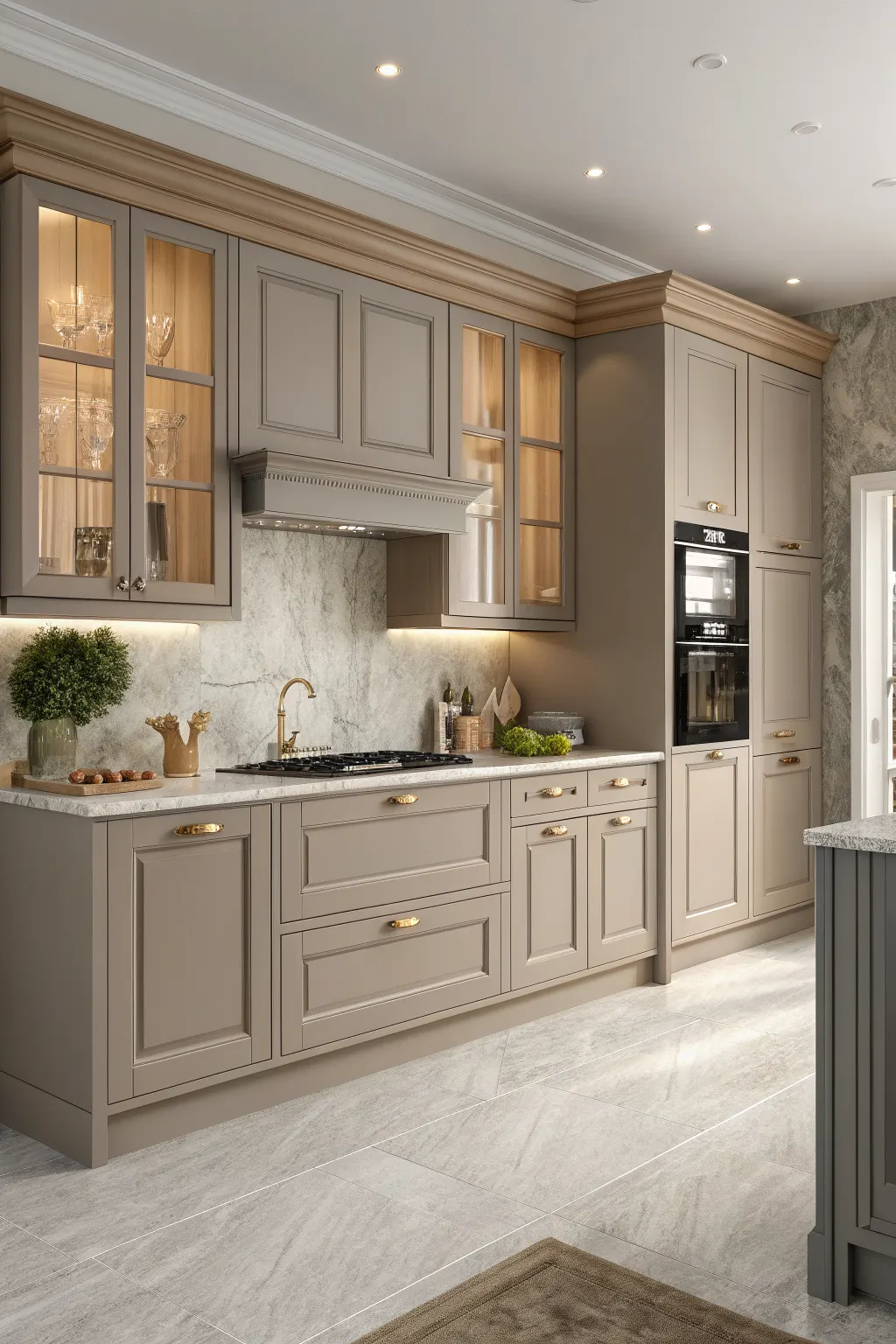
Soft mushroom kitchen cabinets sit in a sophisticated range between gray, taupe, and beige. They have enough depth to feel elevated, but they stay muted enough to work almost like a neutral backdrop.
Mushroom tones look especially good with layered textures such as stone, zellige-style tile, and natural wood flooring. If you want kitchen cabinets that feel custom and current without going dark or colorful, mushroom is a beautiful solution.
22. Two-Tone Cabinets with White Uppers and Dark Lowers
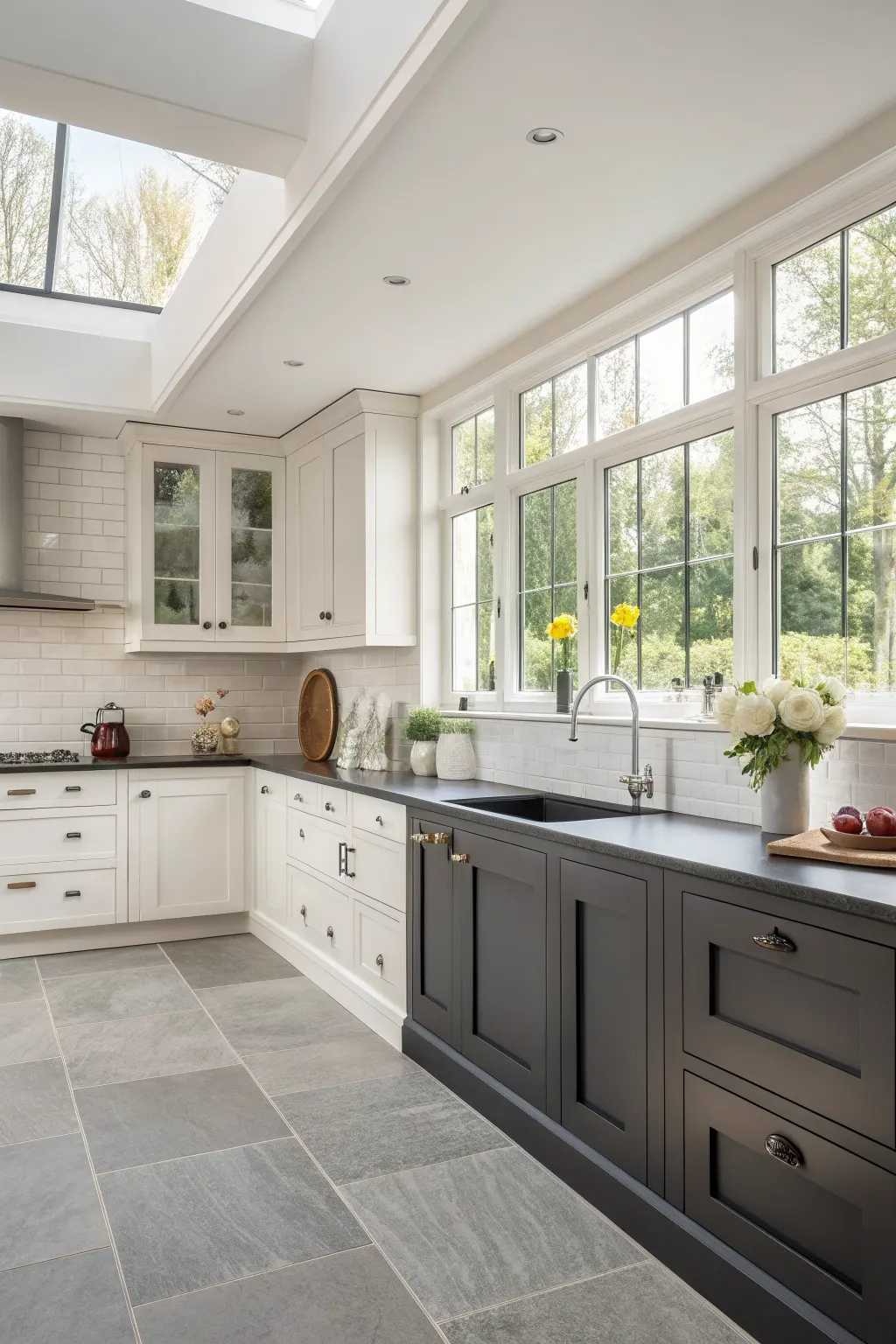
Two-tone kitchen cabinets with white uppers and darker lowers are a smart design strategy, especially in open kitchen design. White on top keeps the room feeling light and spacious, while darker base cabinets add grounding and hide everyday scuffs more easily.
This approach works well with navy, charcoal, olive, or warm taupe on the bottom cabinets. It also gives you contrast without fully committing the whole room to a dark color. For many homeowners, it offers the best balance between brightness and depth.
23. Contrasting Kitchen Island Color for a Focal Point
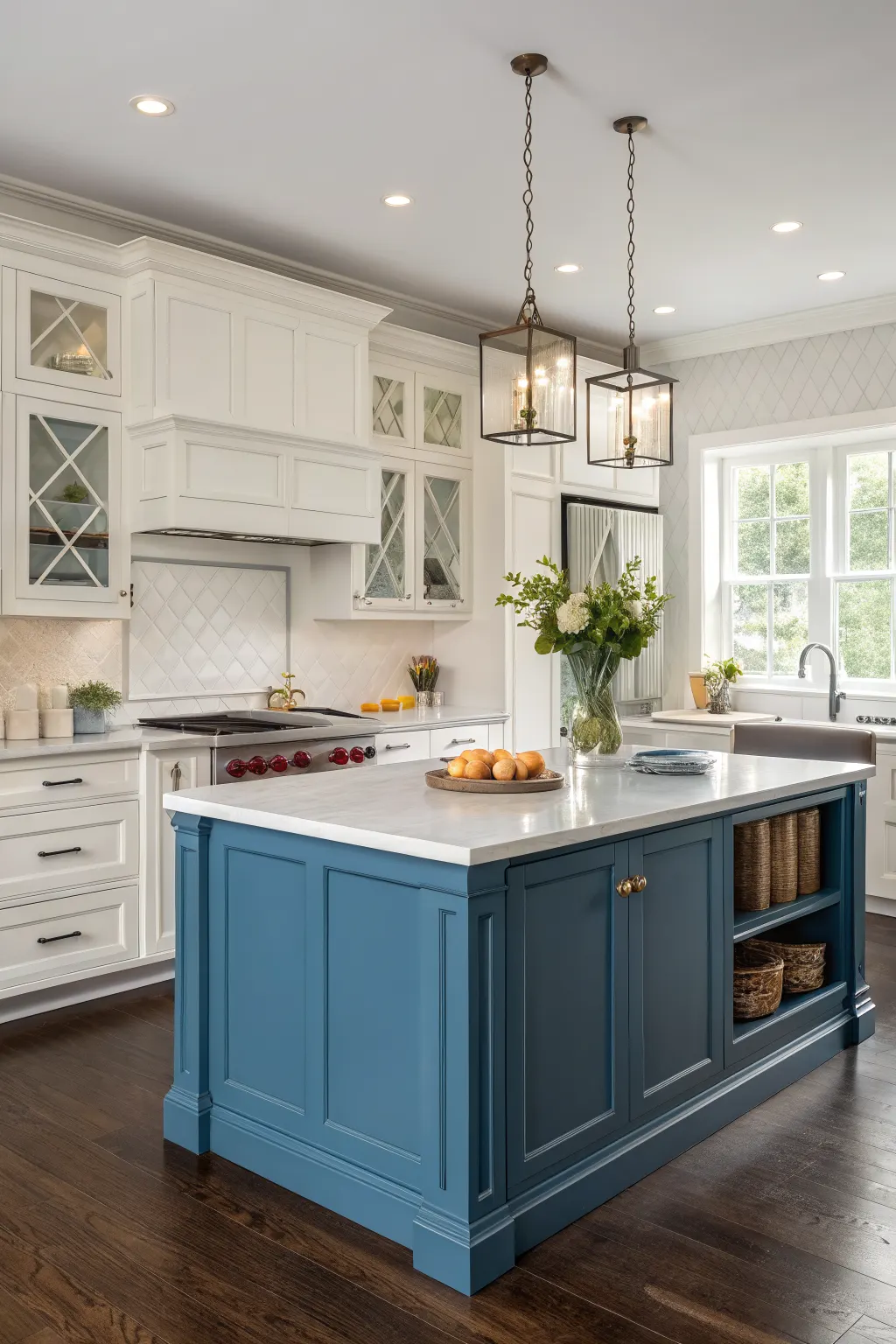
Using a different cabinet color on the island is one of the easiest ways to create a custom look. Even if the perimeter kitchen cabinets stay white, greige, or wood-toned, a contrasting island can add dimension and a clear focal point.
Navy, forest green, charcoal, and walnut tones all work well for island contrast. This idea is especially effective in larger kitchens where the island deserves visual weight. If you also want to upgrade fixtures, pairing a standout island with one of these kitchen island lighting fixtures can make the entire center of the room feel intentional.
24. Upper Cabinets in a Lighter Shade for Small Kitchens
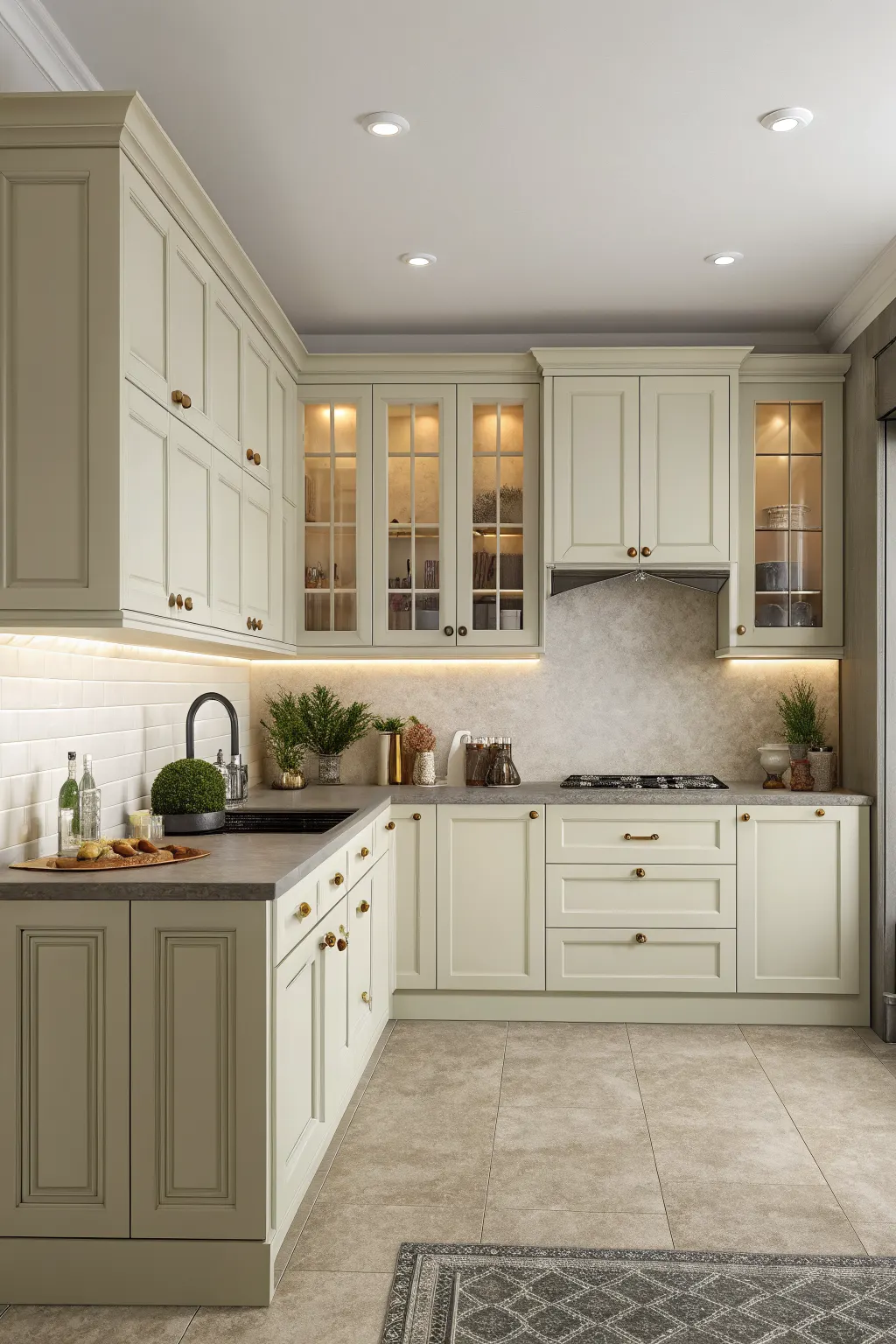
For very small kitchen ideas, lighter upper cabinets can make a major difference. Keeping the top cabinets white, off-white, or another pale neutral reduces visual heaviness and helps walls appear taller.
You can still add personality below with a medium or darker tone on the base cabinets. This layout is practical for compact rooms that need storage but cannot afford to feel boxed in. It is one of the smartest color strategies for small kitchen design because it changes how the room feels without altering the footprint.
25. Lower Cabinets in a Warm Neutral Tone for Everyday Practicality
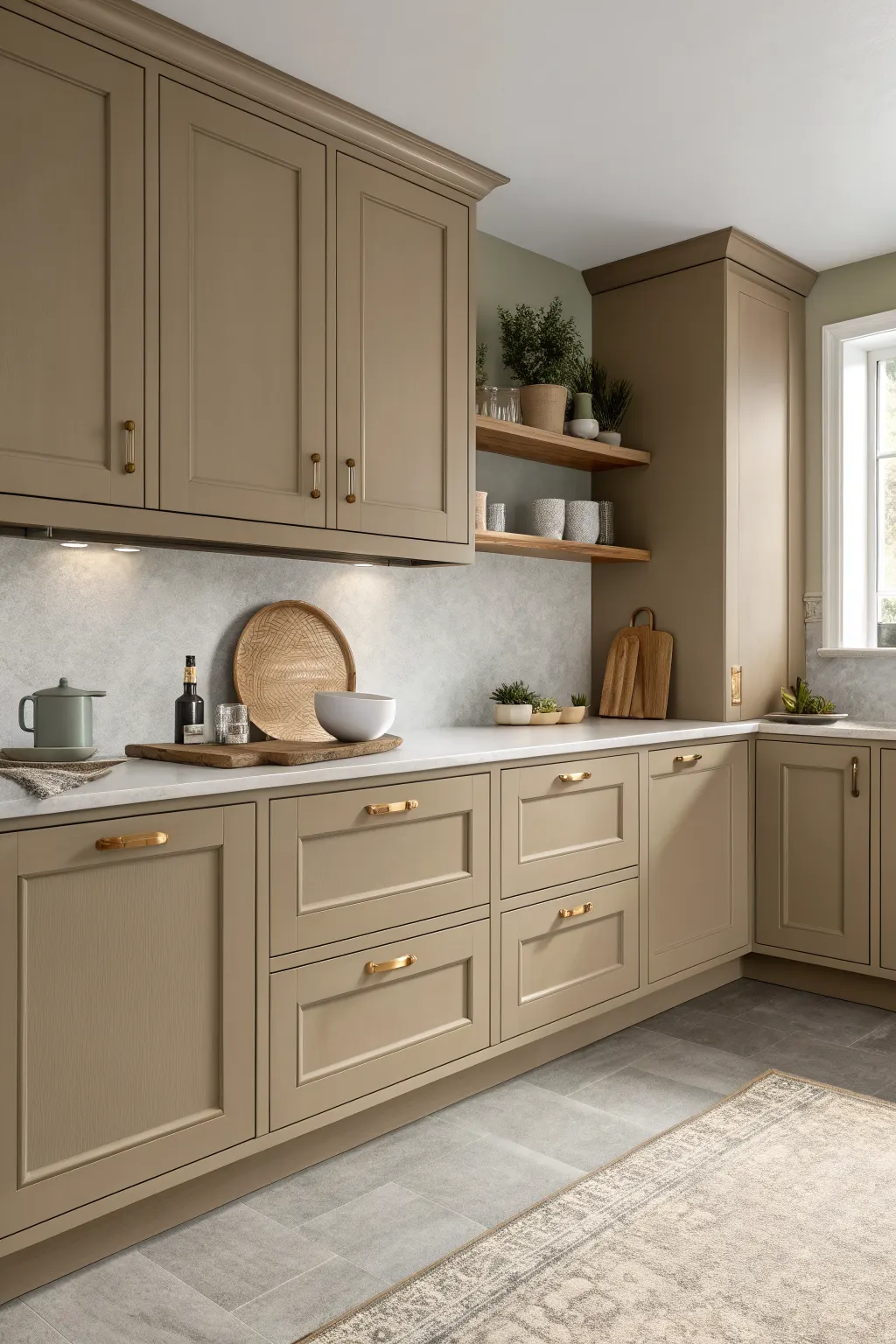
Warm neutral lower kitchen cabinets are both stylish and practical. Colors like taupe, mushroom, greige, and soft olive help conceal dust, scuffs, and minor wear better than pure white lower cabinets, which makes them easier to live with in a busy household.
This approach also keeps the kitchen looking warm and inviting instead of stark. Pair warm neutral lowers with lighter uppers, durable countertops, and easy-clean flooring for a balanced everyday setup. If you are comparing surfaces too, these guides to kitchen flooring options for heavy traffic and quartz kitchen countertops can help you complete the palette.
How to Choose the Right Kitchen Cabinet Color
Start with the size of the room and the amount of natural light. Lighter kitchen cabinets usually help small or dark kitchens feel bigger, while deeper colors can add richness in bright or open spaces. If your kitchen opens into other rooms, think about how the cabinet color will connect with nearby wall colors, flooring, and furniture.
Next, consider your countertops, backsplash, and appliances. Cool-toned cabinets often work best with crisp whites, grays, and stainless steel, while warm neutrals and wood tones pair better with creamier counters and brass or bronze hardware. Also think about the mood you want. A cozy kitchen may call for sage, taupe, or walnut, while a sleek modern kitchen design may suit black, charcoal, or pale gray.
Finally, be realistic about maintenance. Very dark cabinets can show dust, fingerprints, and smudges more easily, while bright white lowers may reveal scuffs faster. A beautiful color is important, but a livable one is even better.
Best Color Pairings for Countertops, Hardware, and Flooring
Some of the best kitchen cabinet combinations come from balancing tone and texture. White and off-white cabinets pair beautifully with marble-look quartz, warm woods, and brass hardware. Gray and greige cabinets work well with both polished chrome and matte black finishes. Green cabinets often look strongest with warm metals, natural wood, and creamy stone counters.
Flooring matters just as much. If your cabinets are cool-toned, consider flooring that softens the room so it does not feel too stark. If your cabinets are warm, avoid flooring that clashes with the undertone. For help comparing surfaces, explore options like kitchen flooring for busy homes or browse cabinet accents such as cabinet hardware for kitchen remodels.
Lighting can also shift how cabinet colors read. Under-cabinet lighting makes darker shades feel more intentional and helps backsplash materials stand out. If you are finishing a refresh, these under-cabinet LED lighting kits can help highlight your new color choice.
Paint Finish and Testing Tips Before You Commit
Before repainting or replacing kitchen cabinets, always test colors in the actual room. A shade that looks soft and warm in one kitchen may read gray, yellow, or much darker in another. Paint sample boards or the backs of a few doors and check them in morning light, afternoon light, and evening light.
Finish matters too. For many painted kitchen cabinets, satin or semi-gloss is preferred because it is easier to wipe clean than flat paint and still looks refined. Matte finishes can look beautiful on darker cabinets, but they may need more careful upkeep depending on the product and traffic level.
If you are tackling the project yourself, good prep and application tools make a big difference. Smooth cleaning, sanding where needed, and testing your finish first will help the final result last longer. For larger DIY refreshes, you may also want to see these paint sprayers for interior walls and these budget-friendly DIY home decor ideas for finishing touches around the space.
Conclusion
The best kitchen cabinet color is the one that fits your light, your layout, and the way you want the room to feel every day. Crisp whites can make a kitchen feel open, wood tones can add organic warmth, greens create calm, and darker shades bring contrast and polish.
Whether you are planning a full remodel or a simpler cabinet refresh, these kitchen cabinet color ideas can help you create a space that feels brighter, warmer, bolder, or more custom. Start with the mood you want, test a few shades carefully, and let your kitchen cabinets set the tone for the whole room.
